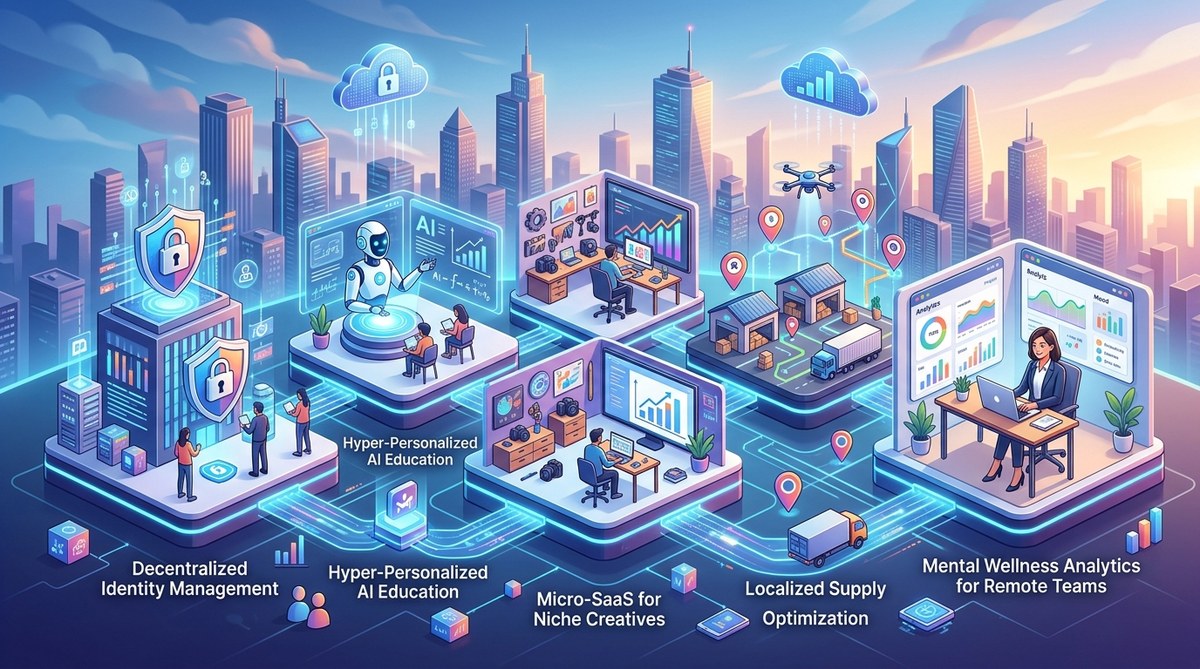
Most lists of SaaS ideas feel the same. They tell you to build an AI writing tool or a project management app. Those markets are already crowded, and competing there as a solo founder is brutally hard. The real money lives in the corners of the internet where big companies do not bother to look. These are micro niches. Small, specific problems that affect a concentrated group of people who are willing to pay for a solution. In 2026, the opportunity for profitable micro SaaS is bigger than ever because the tools to build and ship have never been cheaper or faster.
The most profitable micro SaaS niches in 2026 solve boring, repetitive problems for specific industries. Avoid general purpose tools. Focus on a single pain point for a small, identifiable customer group. You can build, launch, and reach profitability with under 100 customers if you choose a niche where the problem is painful and the alternatives are clunky spreadsheets or expensive agencies.
What Makes a Micro SaaS Niche Profitable
Not every small idea is a good business. You need three things to make money in a micro niche.
First, the problem must be painful. If a potential customer can ignore the issue for another week, they will not pay you. You want a problem that costs them money or time every single day.
Second, the audience must be reachable. A niche of 10,000 potential customers sounds small, but if they all hang out in one Facebook group or subscribe to one trade publication, you can reach them without spending a dime on ads.
Third, the solution must be simple to build. Micro SaaS does not mean low revenue. It means a narrow feature set. You can build an MVP in four to eight weeks and start charging immediately.
The Five Niches No One Is Talking About
Here are five niches that meet all three criteria. Each one has real examples and a clear path to your first paying customers.
1. Compliance Documentation for Independent Insurance Adjusters
Independent insurance adjusters work on a contract basis. They handle claims for multiple carriers. Every carrier requires different compliance paperwork. State regulations change constantly. Adjusters spend hours each week filling out forms and tracking certifications.
A micro SaaS that automates compliance documentation for this group solves a genuine pain point. You build a template engine that pulls adjuster data, fills in the right forms for each state and carrier, and sends reminders when certifications are about to expire.
The market is small but wealthy. Independent adjusters earn between $50,000 and $150,000 per year. They value time over almost anything else. Charge $49 per month. You only need 100 customers to hit $58,800 in annual recurring revenue.
Where to find them: Independent adjuster forums, LinkedIn groups for claims professionals, and state adjuster association newsletters.
2. Inventory Reconciliation for Small Craft Breweries
Craft breweries have a messy inventory problem. They track raw ingredients, work in progress, and finished goods across multiple tanks and kegs. Most use spreadsheets or pen and paper. The result is waste. They over order hops or let beer sit too long in a tank.
A micro SaaS that focuses only on brewery inventory reconciliation is a perfect vertical play. You do not need to build a full ERP. Just a tool that connects to their point of sale system, tracks tank levels, and alerts them when inventory is off by more than a set percentage.
There are over 9,000 craft breweries in the United States. Most have fewer than 20 employees. They are used to paying for specialized software. Price it at $79 per month. A 1% conversion rate of the total market gives you 90 customers and $85,320 in ARR.
Where to find them: The Brewers Association, regional craft beer festivals, and industry Facebook groups.
3. Automated Guest Communication for Small Wedding Venues
Wedding venues spend a huge amount of time answering the same questions from couples. What is the deposit schedule? Can we bring our own caterer? What time can we access the venue on the day of the wedding? These questions repeat for every booking.
A micro SaaS that automates guest communication for wedding venues can handle this. Build a system that sends scheduled emails and text messages based on the booking timeline. When a couple books, the system sends a welcome packet. Thirty days before the wedding, it sends a final checklist. The day after, it sends a thank you and a request for a review.
Wedding venues charge between $3,000 and $10,000 per booking. They have high margins and low tolerance for operational friction. Charge $99 per month. With 50 venues as customers, you hit $59,400 ARR.
Where to find them: WeddingWire, The Knot vendor directories, and local wedding planning groups on Facebook.
4. Billable Time Tracking for Court Reporters
Court reporters work on a per job basis. They show up to a deposition or hearing, record everything, and then bill by the page or by the hour. Most use manual time tracking or generic tools that do not understand their billing structure.
A micro SaaS built specifically for court reporters can handle their unique billing rules. They charge differently for rough drafts, expedited delivery, and certified copies. Your tool lets them log time, apply the correct rate, and generate an invoice that matches industry standards.
The National Court Reporters Association has about 15,000 members. Many are solo practitioners or work in small firms. They need this tool. Price it at $29 per month. If you capture just 200 users, that is $69,600 ARR.
Where to find them: NCRA conferences, state court reporter associations, and legal industry job boards.
5. Permit Status Tracking for Residential Solar Installers
Residential solar installers face a bottleneck in the permitting process. They submit applications to local municipalities and then wait weeks or months for approval. During that time, they have no way to track the status without calling the permit office.
A micro SaaS that automates permit status tracking can solve this. Your tool integrates with municipal permit portals, scrapes the status, and sends updates to the installer. When a permit is approved, the system triggers a notification and updates the installers calendar.
The solar installation market is growing fast. In 2026, there are over 12,000 residential solar companies in the US. Most are small operations with fewer than 10 employees. Charge $49 per month. A 1% conversion rate gives you 120 customers and $70,560 ARR.
Where to find them: Solar installer forums, industry events like Solar Power International, and state solar energy association mailing lists.
How to Validate These Niches in One Week
You do not need to build anything yet. Use this three step process to validate any of these ideas before writing code.
-
Create a landing page. Use Carrd or a similar tool. Write a headline that describes the problem. Add a pricing section and a signup form for early access. Do not promise a launch date yet.
-
Find your audience. Go to the communities listed for each niche. Post a question about their biggest frustration. Do not pitch your product. Just listen. If people describe the problem in the exact words you used on your landing page, you are on the right track.
-
Drive traffic to the page. Share the link in the communities where you have been participating. Aim for 50 to 100 signups. If you get zero, the problem is not painful enough. If you get more than 20, you have a viable business.
Common Mistakes When Choosing a Niche
Avoid these pitfalls that kill micro SaaS businesses before they start.
| Mistake | Why It Hurts | Better Approach |
|---|---|---|
| Choosing a niche you do not understand | You cannot build for people you have never talked to. | Pick a niche where you have personal experience or can interview 10 potential customers. |
| Building for consumers instead of businesses | Consumers churn fast and pay less. | Always target businesses, even if they are small. |
| Trying to solve every problem at once | Your MVP takes six months and nobody wants it. | Solve one specific pain point. Add features later. |
| Ignoring the distribution channel | A great product with no users is worthless. | Pick a niche where you already know how to reach the audience. |
Expert advice: “The best micro SaaS businesses solve a problem the founder has experienced firsthand. You understand the pain, you know the language, and you can find the first customers through your own network. Do not build for a market you have to research from scratch.” – Anonymous indie hacker who sold their micro SaaS for $500,000.
A Framework for Finding Your Own Niche
You can use this framework to find niches beyond the five listed here. It works every time.
- Write down every job you have ever had.
- For each job, list the most annoying manual task you had to do.
- Ask yourself: Is there a software tool that could automate this task?
- If the answer is yes and you cannot find a good tool on the market, you have a potential niche.
Most profitable micro SaaS ideas come from jobs people have already worked. If you spent a summer working at a plumbing supply company, you know exactly how they manage inventory. That knowledge is worth more than a fancy AI degree.
Your Next Steps
Pick one niche from this list or apply the framework to find your own. Spend this week doing research. Talk to three people in that industry. Build a simple landing page by Sunday. If you get early signups, start building a basic version. You can use our guide on how to build a SaaS MVP in 30 days without burning out to move fast.
Do not overthink this. The difference between someone who reads about micro SaaS and someone who builds one is action. Start with the smallest possible version of your idea. Charge money from day one. You will learn more from a single paying customer than from a year of planning.
Your Micro SaaS Journey Starts Now
The five niches in this article are real opportunities. They are not speculative. Each one has a clear customer, a painful problem, and a simple solution you can build alone. The market is waiting for you to show up. Pick one, validate it, and launch. That is how profitable micro SaaS businesses are built in 2026.