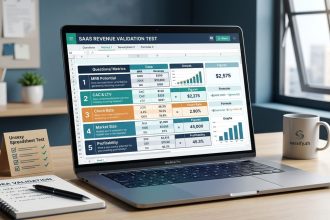
Starting a SaaS company feels electric. You have a vision. You can see the product, the dashboard, the happy customers. But here is the hard truth: most SaaS ideas fail before they ever ship. The reason is rarely bad execution. It is a bad foundation. The idea itself was never tested against reality.
You can avoid that trap. The process is called SaaS idea validation, and it does not require months of research or a big budget. A focused 10 minute audit can expose weak concepts early. It forces you to ask the questions that separate real problems from expensive hobbies.
SaaS idea validation is not about proving your idea is brilliant. It is about finding out if people will pay to solve a painful problem. Use the seven question audit to test pain, audience, willingness to pay, market size, competition, delivery, and timing. Weak ideas fail fast, strong ones get the green light in ten minutes.
Start With the Problem, Not the Product
Most founders fall in love with a product before they understand the problem. That is backwards. A tool nobody needs is just a hobby with a login page.
SaaS idea validation starts with the customer. The product is the last piece of the puzzle, not the first. Before you write a line of code, before you buy a domain, before you tell anyone your idea, you need to test the problem itself.
This article walks through a practical audit you can run in about ten minutes. It uses seven direct questions. Each one is designed to expose weak assumptions and reveal whether your idea deserves your time.
By the end, you will know if you should build, pivot, or walk away. And you will know before you sink months into development.
SaaS idea validation is not about proving you are right. It is about finding out if the problem is real, painful, and worth paying to solve. A 10 minute audit using seven targeted questions can filter out weak concepts before you write a line of code. You save months of work and focus energy on ideas with genuine market demand. The goal is to kill bad ideas early, not to fall in love with them.
The Real Cost of Skipping SaaS Idea Validation
Most founders skip validation because it feels slow. They want to build. They want to ship. They want to see their idea come to life.
But here is the hard truth: most SaaS ideas fail for reasons that have nothing to do with code quality. The product works. The design is clean. The pricing page is polished. And still, nobody pays.
The problem is not execution. The problem is the idea itself.
This is why SaaS idea validation matters. It is not a bureaucratic step. It is a way to test your assumptions before you burn months of your life. Before you spend money on a landing page, a logo, or a codebase, you need to answer a few uncomfortable questions.
This article walks through a practical 10 minute audit you can run on any SaaS concept. No fancy tools. No expensive courses. Just honest questions that separate ideas with real potential from polished distractions.
SaaS idea validation is not about proving your idea works. It is about finding out where it breaks before you build. Use the seven question audit to test pain, market size, willingness to pay, competition, distribution, technical risk, and founder fit. Weak ideas die fast, and strong ones get a clear path forward in about ten minutes.
Why Most SaaS Ideas Fail Before They Launch
The numbers are brutal. Most SaaS products fail, and they fail for reasons that have nothing to do with code quality or design polish. They fail because the idea itself was never validated. Founders skip the hard questions and fall in love with a solution before confirming anyone actually has the problem.
SaaS idea validation is the practice of stress testing a concept before you build. It is not a full market research report. It is not a 40 page business plan. It is a focused process that separates ideas worth pursuing from ideas that will drain your savings.
You do not need to spend weeks on this. You do not need a fancy tool or a data science team. You need honesty, a few targeted questions, and the willingness to let go of an idea that fails the test.
This article walks through a practical 10 minute idea audit. By the end, you will know whether your SaaS concept deserves more time or should be set aside.
SaaS idea validation is about finding problems worth solving, not proving your first instinct right. Ask who the customer is, what pain they feel, whether they pay for fixes, and if you can reach them. Kill weak concepts early, then spend your time on ideas with real demand, clear buyers, and a path to revenue.
Why Most SaaS Ideas Fail Before You Write a Line of Code
The hard truth? Most SaaS ideas are not bad because the code is hard. They fail because no one needs them. Founders fall in love with a feature, not a problem. They build for themselves, not for a customer. And they skip the validation step entirely.
SaaS idea validation is the process of testing your assumptions before you build. It is not about proving you are right. It is about finding out if your idea deserves your time, money, and attention. A good validation process takes a few hours, not a few months.
You do not need a landing page with 10,000 visitors. You do not need a complex survey tool. You need a simple structure, honest answers, and the willingness to kill your own idea when the evidence says no.
This guide walks through the exact questions that separate strong SaaS concepts from weak ones. Use it before you write a line of code.
Validating a SaaS idea is about killing weak concepts fast, not falling in love with them. Ask seven targeted questions about the problem, audience, willingness to pay, market size, distribution, competition, and timing. Each answer either moves the idea forward or ends it. This structured audit takes ten minutes and saves months of wasted build time.
Why Most SaaS Ideas Fail Before They Launch
Building software is the easy part. Building software people will pay for is the hard part. Every year, thousands of founders pour months into products that nobody asked for. The reason is rarely a lack of effort. It is usually a lack of SaaS idea validation before the code was written.
Validation is not a one time event. It is a mindset. You test, you learn, you adjust. The goal is to find out if your idea solves a real problem that enough people will pay to fix. If it does not, you save yourself months of wasted work.
This guide walks through the exact questions to ask before you build. Use them to kill weak concepts fast. Keep the ones that survive.
SaaS idea validation is about finding a painful, urgent problem worth solving, not falling in love with a feature. Before writing code, test demand, talk to real buyers, and confirm they will pay. Use the seven question audit to reject weak concepts fast. Then build a landing page, run small ads, and collect pre-commitments. Validate first, build second, and save months of wasted effort.
Why Most SaaS Ideas Fail Before They Launch
Building a SaaS product is risky. Very risky. Most new software products fail because the founder never checked if anyone actually wanted the thing. They build for months, launch to silence, and wonder what went wrong.
The fix is simple: validate your SaaS idea before writing code. And you do not need weeks or a big budget. A focused 10 minute audit can expose fatal flaws early. This article walks through seven questions that separate weak concepts from ideas worth building.
What Is SaaS Idea Validation?
SaaS idea validation is the process of testing assumptions about your product before you invest serious time and money. It answers one core question: will enough people pay for this to make it a viable business?
Validation is not about proving you are right. It is about finding out if you are wrong before the market does it for you. Founders who skip this step often build a polished product nobody wants. A structured audit helps you avoid that outcome.
The goal is simple. You want to confirm three things:
- Real people have the problem you think they have.
- They are already spending money or time to solve it.
- Your solution is meaningfully better than what they use today.
If any of those three points fails, the idea needs work or should be dropped.
Why Most SaaS Ideas Fail Before Launch
Most SaaS ideas fail before launch, not because the product is poorly built, but because nobody needs it. Founders fall in love with a solution and skip the hard part: proving that a real group of people will pay for it.
The numbers back this up. Studies consistently show that a large percentage of software products fail because they solve problems nobody actually has. That is not a coding problem. That is a validation problem.
You can avoid that trap. You just need to ask better questions before you write a line of code.
What SaaS Idea Validation Really Means
SaaS idea validation is the process of testing whether your concept solves a real problem for a specific group of people who are willing to pay. It is not about confirming your idea is clever. It is about confirming that someone will hand you money for it.
A good validation process does three things:
- It forces you to define the exact customer and the exact problem.
- It tests demand before you build anything.
- It reveals whether people will pay, not just say they like it.
Most founders skip this. They build first, then ask questions later. That approach burns months of work. The cost of validation is small. The cost of building the wrong thing is enormous.
SaaS idea validation is not about proving your idea is brilliant. It is about killing weak concepts before they consume your time. This guide walks through seven direct questions that expose flawed assumptions, empty markets, and painful build traps. Use them as a filter before writing code, and you will save months of effort.
Why Most SaaS Ideas Fail Before the First Line of Code
Building software is the easy part. Building software people will pay for is the hard part. Most failed SaaS products do not fail because the code was bad. They fail because the idea never solved a real problem, or the founder skipped validation and assumed demand existed.
SaaS idea validation is the process of testing an assumption before you write a single line of code. It saves you from spending months building something nobody wants. It also gives you the confidence to move forward when the signal is strong.
The good news? You do not need a massive budget or a complex research team. You need a clear head and a structured way to ask hard questions.
This article walks through seven questions that expose weak SaaS concepts fast. By the end, you will know whether your idea deserves more time, more research, or a graceful burial. You can also pair this with our guide on how to build a SaaS MVP in 30 days without burning out once you have a validated concept.
SaaS idea validation is a structured process, not a gut feeling. The seven questions in this audit help you pressure test demand, competition, willingness to pay, and your own ability to ship. In about ten minutes, you can eliminate weak concepts and focus on ideas with real market traction. A solid validation framework saves months of wasted development and gives you confidence before you write a single line of code.
Why Most SaaS Ideas Fail Before They Launch
The numbers are brutal. Most SaaS products fail not because the code was bad, but because nobody needed them. Founders build features for months, launch with a splash, and then watch the signups trickle to zero.
The problem is rarely execution. It is almost always the idea itself. A concept that sounds clever in your head can fall apart when you test it against real market demand.
That is why SaaS idea validation matters. It is the process of stress testing a concept before you spend months building it. You do not need a big team or a huge budget. You need a clear method and the honesty to follow through.
This guide walks through the 7 question audit that kills weak concepts fast. It also covers common mistakes, a practical scoring system, and the exact steps to run your own validation in about 10 minutes.
SaaS idea validation is not about proving your idea is brilliant. It is about proving it can survive contact with real users. Ask seven targeted questions that expose weak demand, hidden costs, and wrong timing. If an idea fails even one core test, kill it early. This saves months of work and keeps your focus on concepts with actual market traction. Ten focused minutes can save you years of wasted effort.
Why Most SaaS Ideas Fail Before the First Line of Code
The stats are brutal. Most SaaS products fail. The reasons are rarely technical. The code works. The design is fine. The product just solves a problem nobody has, or solves one that people refuse to pay for.
SaaS idea validation is the process of testing your concept before you build. It is not about proving you are right. It is about finding out if the market cares. And you can do this in about ten minutes with the right questions.
This article walks through a practical audit you can run on any SaaS idea. It will help you spot weak concepts early, before you spend months building something nobody wants.
Why Most SaaS Ideas Fail Before They Launch
The failure rate for SaaS products is brutal. Most new products never reach meaningful revenue. The cause is rarely bad code or weak marketing. It is almost always a weak idea.
Founders often fall in love with a solution they dreamed up. They skip the hard part: checking whether anyone actually needs it. They build a polished product that solves a problem nobody has, or a problem people have but refuse to pay to solve.
The fix is simple. Run your idea through a structured audit before you write a line of code. A ten minute review can save you six months of wasted effort.
SaaS idea validation is not about proving your idea is brilliant. It is about finding the weakest link before you build. Ask the right seven questions, and you can kill a bad concept in ten minutes. This saves you months of coding, marketing, and heartbreak. Use the audit below to test demand, pain, willingness to pay, and timing before writing a single line of code.
What Is SaaS Idea Validation and Why It Matters
SaaS idea validation is the process of testing whether people will actually pay for your product before you build it. It is not about confirming your idea is great. It is about finding out if it solves a real problem for a specific group of people.
Most founders skip this step. They fall in love with a feature, not a customer need. They build for months, launch to silence, and wonder what went wrong. The math is brutal. Studies consistently show that a large percentage of SaaS products fail, often because nobody needed them in the first place.
Validation is not a one time event. It is a habit. You test assumptions, gather evidence, and decide whether to keep going or walk away. The goal is not to prove you are right. The goal is to learn the truth before you spend a year building something nobody wants.
Why Most Founders Skip Idea Validation
Founders skip validation for understandable reasons. They feel pressure to move fast. They worry that taking time to validate means losing momentum. They fall in love with their own solution and assume the market will too.
The result is predictable. Months of building, a launch with a whimper, and a product that solves a problem nobody actually has. The SaaS graveyard is full of well built software that no one needed.
Validation is not a delay. It is a filter. It protects your time, your focus, and your savings.
What SaaS Idea Validation Really Means
SaaS idea validation is the process of testing an assumption before you write the first line of code. You are not trying to prove your idea is great. You are trying to find out if it solves a real problem for real people who will pay for it.
Think of it as a series of small experiments. Each one either builds confidence or kills the idea. The goal is to fail on paper, not after months of development.
A good validation process covers four areas:
- Demand: Do people already search for a solution or complain about this problem?
- Willingness to pay: Would someone hand over money each month?
- Audience access: Can you actually reach these buyers without a huge ad budget?
- Your fit: Do you understand this market well enough to build and sell?
If any one of those fails, the idea needs work or needs to be dropped.
Why Most SaaS Ideas Fail Before They Launch
The statistics are sobering. Somewhere around 60 to 90 percent of SaaS products never reach meaningful traction. That sounds harsh, but it is also the reality of building software without a clear market fit.
Most founders do not fail because they build badly. They fail because they validate poorly. They fall in love with an idea, skip the uncomfortable questions, and start coding before anyone confirms the problem is real.
The fix is not more time. The fix is a structured process. A short, brutal audit that forces you to look at the market, the buyer, and the competition before you write a single line of code.
This article walks through the exact questions and methods you can use to pressure test a SaaS idea in about ten minutes. No fluff, no theory. Just a practical filter.
SaaS idea validation is about killing weak concepts before they drain your time and savings. This audit uses seven targeted questions to test demand, willingness to pay, and build feasibility. By answering honestly, you can walk away from bad ideas in ten minutes and focus on products with a real chance of sustainable revenue and growth.
Why Most SaaS Ideas Fail Before Launch
You have an idea. It feels brilliant. The feature list is long, the demo looks sharp, and you can already picture the signup page. But here is the hard truth: most SaaS products fail not because the code was bad, but because nobody needed the tool in the first place.
The fix is not more building. It is more honest evaluation before you write a single line of code.
SaaS idea validation is the process of stress testing your concept against real market conditions. It answers one question: should this product exist? When done well, it saves you months of wasted effort and thousands of dollars. When skipped, it turns a promising idea into another abandoned side project.
The good news? You do not need a fancy research team or a large budget. You need a structured set of questions, a willingness to hear no, and about ten minutes of focused thinking. This article gives you that structure. Use it before you write a line of code, before you buy a domain, and before you tell anyone your “big idea.”
SaaS idea validation is not about proving your idea is brilliant. It is about finding a real problem worth solving, a specific audience that feels it, and a business model that supports a product. Use these seven questions to pressure test any concept in ten minutes and walk away knowing whether to build or move on.
Why Most SaaS Ideas Fail Before You Write a Line of Code
You have an idea. It feels great. The rush of building something new is powerful. But here is the hard truth: most SaaS products fail because nobody needs them. Not because the code was bad. Not because the marketing was weak. The idea itself was never validated.
SaaS idea validation is the process of testing your assumptions before you build. It is not about proving you are right. It is about finding out if a real problem exists, if people will pay to solve it, and if you can reach those people at a cost that makes sense. Skip this step and you are building on hope. Hope is not a strategy.
The good news? You do not need months of research or a big budget. A structured 10 minute audit can expose fatal flaws in almost any SaaS concept. This guide walks through the exact questions to ask, the signals to look for, and the traps to avoid.
SaaS idea validation is not about proving your idea is brilliant. It is about testing whether real people will pay for it. Use a structured audit to kill weak concepts early, before you write a line of code. Focus on painful problems, honest demand signals, and a niche you can actually reach. If an idea fails any of the seven core checks, move on fast.
What Makes a SaaS Idea Worth Your Time?
Most founders skip validation and start building. That is a mistake. A great product built for the wrong market still fails. The good news? You can test an idea in minutes if you ask the right questions.
SaaS idea validation is not about proving you are right. It is about finding out if the problem is real, painful, and worth paying for. The market decides. Not you, not your friends, not your mom.
Before you write a single line of code, run your idea through a structured audit. This article walks through the exact questions that kill bad concepts fast. Use them to save months of wasted effort.
Why Most SaaS Ideas Fail Before They Launch
Most SaaS products fail because the founder skipped validation. They built something polished that nobody needed. They fell in love with the solution instead of the problem.
The fix is simple: test your assumptions before you build.
Validation is not about proving you are right. It is about learning what is true. A good audit will save you from spending months on a product that nobody wants. It also helps you find the gaps where real demand lives.
The Real Cost of Skipping Validation
Skipping validation costs time, money, and confidence. You might spend six months building a tool that solves a problem nobody has. Or worse, you might solve a problem people have, but they refuse to pay for the fix.
The goal of SaaS idea validation is not to confirm your idea is brilliant. It is to find out if people will pay for it before you build it.
What Is SaaS Idea Validation?
SaaS idea validation is the process of testing an assumption before you write a line of code. You check whether real people have the problem, whether they want a solution, and whether they will pay for it.
Validation is not market research. It is not a survey with fifty questions. It is a focused, repeatable process designed to produce evidence. That evidence tells you whether to build, pivot, or walk away.
The cost of skipping this step is high. You can spend months building a product nobody wants. The fix is simple: run a structured audit before you invest your time.
Why Founders Skip Validation (And Why It Hurts)
Most founders skip validation because it feels slow. They want to build. They want to ship. They think talking to customers is a distraction from real work.
That instinct is dangerous.
A study often cited in startup circles notes that roughly 35% of SaaS failures trace back to a product with no market need. That number should scare you. It means more than a third of failed products were built for an audience that did not care.
Validation is not a one time event. It is a continuous loop. You test an idea, learn from real users, refine the concept, and test again. The founders who skip this step usually skip it because they are afraid of the answer. But a bad idea that dies in week one costs you a weekend. A bad idea that dies after twelve months of building costs you everything.
If you are looking for a structured process, the SaaS idea audit is a solid place to start. It walks through seven pointed questions that expose weak concepts before they eat your calendar.
Why Most SaaS Ideas Fail Before the First Line of Code
The number one reason SaaS products fail is not bad code. It is building something nobody needs. Founders fall in love with a feature, not a problem. They skip the painful part: checking whether real people would pay for the fix.
Validation is not about proving your idea is great. It is about discovering whether it can survive contact with real users. That changes how you ask questions, who you talk to, and what you build first.
Here is the hard truth. Most ideas fail because the founder skipped the boring part. They jumped straight to a landing page, a prototype, or even a paid ad campaign. They never checked if the problem was real, urgent, and worth money.
SaaS idea validation is the process of testing those assumptions before you write a line of code. It saves you months of wasted effort. It also keeps you from building something nobody wants.
SaaS idea validation is not about proving you are right. It is about testing whether real people will pay to solve a problem you have identified. Use a structured audit, talk to actual users, and watch for signals like willingness to pay. Weak ideas die fast when you ask the right seven questions before writing code.
Why Most SaaS Ideas Fail Before They Launch
The SaaS graveyard is full of products that looked great on paper. The founder spotted a problem, built a solution, launched it, and then heard crickets. That pattern repeats every single day.
Why? Because most founders skip validation. They fall in love with the idea, not the problem. They build for themselves instead of a real audience. They assume that because the idea makes sense to them, it will make sense to the market.
It doesn’t work that way. And the cost of being wrong is brutal. Months of development. Wasted marketing dollars. A product nobody asked for.
The good news? You can avoid this. A focused SaaS idea validation process takes minutes, not months. This guide walks you through a 10 minute audit that filters weak concepts before you write a single line of code.
SaaS idea validation is about finding a painful problem people will pay to solve, not falling in love with a feature. This 10 minute audit uses seven questions to pressure test your concept: who suffers, how badly, whether they already pay, and if your solution is truly different. Weak ideas fail fast. Strong ones earn the next step.
Why Most SaaS Ideas Die Before Launch
You have an idea. It feels brilliant at 2 a.m. The next morning, it still feels good. But feeling good is not evidence. Most SaaS products fail because founders skip the validation stage and go straight to building. They fall in love with a solution before confirming anyone actually feels the pain.
SaaS idea validation is not about proving you are right. It is about finding out if the problem is real, painful, and worth paying to fix. A structured audit takes ten minutes and saves months of wasted effort. Before you write a single line of code, run your concept through these questions.
Why Most SaaS Ideas Fail Before They Launch
The biggest reason new SaaS products die is not bad code. It is building something nobody wants. Founders often confuse a feature they love with a product the market needs. They spend weeks building, then realize their target audience does not feel the same urgency.
This is why SaaS idea validation matters. It forces you to test assumptions before you invest. It turns vague excitement into concrete evidence. And it helps you walk away from weak concepts early, while walking toward stronger ones with confidence.
The validation process does not need to be long. You can filter a weak idea in about 10 minutes using the right questions. That is the core promise of the SaaS idea audit approach: seven targeted questions that expose whether your concept has real legs or is just a clever solution to a problem nobody has.
SaaS idea validation is not about proving your idea is brilliant. It is about proving people will pay for it. Use a structured audit to test pain, audience, willingness to pay, and distribution before writing code. Weak ideas fail fast when you ask the right questions. Strong ideas survive because they solve a real, urgent problem for a specific group. Validate first, build later.
Why Most SaaS Ideas Fail Before They Launch
Building a SaaS product is a gamble. Most ideas never reach launch, and the ones that do often fail within a few years. The reason is rarely bad code. It is usually a weak idea that never solved a real problem.
The good news? You can test an idea before you write a single line of code. A structured SaaS idea validation process takes about 10 minutes and saves you months of wasted effort.
This article walks through seven questions that separate strong concepts from costly mistakes. Use them as a filter. If an idea fails more than two, it is not ready. Move on or reshape it.
SaaS idea validation is not about proving you are right. It is about finding out if strangers will pay to solve a real problem. In ten minutes, you can test demand, check willingness to pay, and spot fatal flaws. Use the seven questions in this audit to filter out weak concepts before you write a single line of code.
Why Most SaaS Ideas Fail Before They Launch
Aspiring founders often fall in love with an idea. They build a full product, launch it, and then watch it go nowhere. The reason is simple: they never validated the idea before building. SaaS idea validation is the process of testing whether people actually want your product before you spend months coding it.
The math is brutal. Most new SaaS products fail. The failure rarely comes from bad code. It comes from building something nobody needs.
You can avoid that trap. You just need a structured way to test your concept fast. That is what this article gives you. A repeatable audit you can run in about ten minutes. No spreadsheets, no complex frameworks, no paid tools required.
Why Most SaaS Ideas Die Before They Launch
The biggest mistake founders make is falling in love with a solution before confirming the problem. They build first and ask questions later. That order is backwards.
A strong idea survives contact with reality. A weak one collapses the moment someone asks a hard question. The difference is not how clever the concept sounds. It is whether real people will pay for it, use it, and keep using it.
Most failed SaaS products share the same pattern. The founder built something they wanted, not something the market needed. They skipped the messy work of talking to potential customers. They assumed that because a tool felt useful to them, it would feel useful to everyone else.
SaaS idea validation is the process of testing those assumptions before you write a single line of code. It does not require a huge budget. It does not require hundreds of interviews. It requires a clear set of questions and the discipline to answer them honestly.
This article walks through seven questions that separate strong SaaS ideas from expensive distractions. Use them as a filter before you build anything.
Validating a SaaS idea is about saying no faster, not saying yes louder. In 10 minutes, you can test demand, buyer urgency, competition, and your own unfair advantage. Weak ideas usually fail on pain level, willingness to pay, or market access. The 7 question audit filters those out before you build anything, saving months of wasted effort.
Why Most SaaS Ideas Fail Before They Launch
The numbers are sobering. Most SaaS products never reach meaningful revenue. The cause is rarely bad code or weak marketing. It is almost always a weak idea at the core. Founders skip the hard part, dreaming about features and pricing pages before confirming that anyone actually feels the pain the product solves.
That is why SaaS idea validation matters more than your tech stack, your landing page copy, or even your launch timing. A mediocre idea with great execution still fails. A strong idea with average execution can survive long enough for you to improve.
The good news? You do not need weeks of research or a big budget. A structured audit, done in about ten minutes, can expose fatal flaws before you write a line of code. This guide walks through the seven questions that separate promising SaaS concepts from expensive distractions. Use it before you build anything.
SaaS idea validation is about killing weak concepts early, not polishing them. Run every idea through a fast audit: define the exact user, confirm a painful problem, verify willingness to pay, check market size, assess competition, estimate acquisition cost, and test your unfair advantage. Ten focused minutes can save months of wasted building. That is the entire point of the process.
The Real Cost of Skipping SaaS Idea Validation
Most founders do not fail because they build badly. They fail because they build something nobody needs. The math is harsh. Studies consistently show that roughly one in three SaaS startups fail because they build a product without market demand. That is not a code problem. That is a validation problem.
SaaS idea validation is the process of testing your assumptions before you write a single line of code. It is not about proving your idea is brilliant. It is about finding out if real people will pay real money for it. When done right, it saves you months of wasted effort and thousands of dollars.
The challenge? Most founders skip it. They fall in love with an idea, start building, and only later discover nobody cares. That mistake is avoidable. You just need a structured way to pressure test your concept before you invest.
This guide walks through a practical SaaS idea validation framework. You will learn how to spot weak concepts, interview potential users, and decide whether to build or walk away.
SaaS idea validation is not about proving you are right. It is about finding out if anyone will pay before you build. Use a structured set of questions to test demand, competition, and willingness to pay. Spend 10 minutes on this audit to kill weak ideas early and focus your energy on concepts with real market potential.
Why Most SaaS Ideas Fail Before the First Line of Code
The stats are grim. Most SaaS products fail. Not because the code was bad, but because nobody needed the product. Founders skip validation, fall in love with an idea, and build for months before learning the market does not care. This is the trap.
You can avoid it.
SaaS idea validation does not require a huge budget or months of customer interviews. You just need a structured way to ask hard questions early. When you answer those questions honestly, weak concepts die fast. Strong ones earn your time and attention.
This article walks through a practical framework you can run in about ten minutes. It is built for founders who want to test an idea before writing a line of code. No fluff. No theory. Just a repeatable audit that separates real problems from expensive hobbies.
SaaS idea validation is about finding a painful, urgent, and reachable problem, not polishing a feature. Use the seven question audit to test demand, willingness to pay, and market access before writing code. Weak ideas fail early when you challenge assumptions with real conversations, not guesswork. A structured ten minute review can save months of wasted effort.
Why Most SaaS Ideas Fail Before They Launch
The numbers are brutal. Most SaaS products never reach meaningful revenue. The reason is rarely bad code or weak marketing. It is almost always a bad idea that never should have been built.
Founders fall in love with their own assumptions. They build features nobody asked for. They launch into crowded markets without a wedge. They skip validation and pay for it later.
The good news? You can avoid that fate. A structured SaaS idea validation process takes less time than you think. Ten focused minutes can separate a viable concept from a money pit.
This article walks through seven questions that will help you kill weak ideas before you invest months of work. No fluff, no theory. Just a practical audit you can run on your next SaaS concept.
Validating a SaaS idea means testing demand before building anything. Focus on real pain, willingness to pay, and distribution access. Use the 7 question audit to eliminate weak concepts fast. Talk to actual users, study competitors, and set clear pass criteria. Skip ideas that fail any core test.
Why Most SaaS Ideas Fail Before Launch
Building a SaaS product is a gamble. The odds are brutal. Most founders skip validation because they fall in love with the idea, not the problem. That is the first mistake.
SaaS idea validation is not about proving you are right. It is about discovering whether a real group of people will pay for your solution, and whether you can reach them profitably. A shiny dashboard, clever name, or well designed logo will not save a product nobody needs.
The good news? You can test an idea in a single focused session. You do not need months of market research or a big budget. You need a clear set of questions that expose weak concepts before they drain your time.
This guide walks through a practical SaaS idea validation process you can run in about ten minutes. It is built for founders who want to move fast but avoid the trap of building something nobody wants. Use it as a filter before you write a single line of code.
SaaS idea validation is about killing weak concepts before they consume your time. Ask seven sharp questions: who suffers, how badly, whether they pay, if the solution is buildable, if it beats current options, whether you can reach buyers, and if the market is growing. Answer honestly, and you will save months of wasted effort.
Why Most SaaS Ideas Fail Before They Launch
The numbers are brutal. Most SaaS products fail, and the reason is rarely bad code. It is usually a bad idea. Founders fall in love with a concept, build for months, and then discover nobody actually needs the product.
The fix is not more building. The fix is better validation.
SaaS idea validation is the process of testing your assumptions before you write a single line of code. It helps you answer one question: is this worth building? You can do this in ten minutes with the right questions. No spreadsheets required. No expensive courses. Just honest answers and a willingness to kill your own idea if it does not hold up.
This guide walks through a practical audit you can run today. It works for first time founders and experienced builders alike. By the end, you will know whether your SaaS idea deserves your time or whether it should be shelved.
SaaS idea validation is about killing weak concepts before they consume your savings. Ask seven focused questions about pain, audience, willingness to pay, competition, distribution, scope, and timing. If your idea fails three or more, it is not ready. Refine it, narrow it, or move on. Ten minutes of honest answers saves months of wasted building.
Why Most SaaS Ideas Die Before Launch
Most SaaS projects fail because the founder skipped validation. They built something polished that nobody needed. They spent months on features that solved a problem no one had. They launched to silence.
That pattern is avoidable. A structured idea audit helps you spot fatal flaws in an afternoon. Before you write a line of code, before you buy a domain, before you tell a single person about your big idea, run it through a filter that separates real opportunities from expensive distractions.
This guide gives you that filter. It is built for indie founders and small teams who want to build software people actually pay for. No fluff, no theory. Just practical questions that expose weak concepts fast.
Why SaaS Idea Validation Matters More Than Ever
The SaaS market is crowded. Every week, new tools launch with polished landing pages and aggressive pricing. Most of them fail. Not because the code was bad, but because nobody needed what they built.
Validation is the process of testing your assumptions before you write a line of code. It answers one question: should you build this at all?
Skipping validation is the most expensive mistake you can make. You can build a flawless product for a problem nobody has. That is a waste of months, money, and motivation.
The good news? You do not need a huge budget or a fancy research team. You need a structured method and the willingness to ask hard questions. This article walks you through a simple audit you can run in about 10 minutes. It will not make your idea bulletproof. It will kill the weak ones before they consume your life.
SaaS idea validation is not about proving your idea is great. It is about finding the fastest way to prove it is not. A 10 minute audit with the right seven questions can filter out weak concepts before you write a single line of code. Focus on real pain, paying customers, and a market that already spends money. If an idea fails these checks, it saves you months of wasted effort.
Why Most SaaS Ideas Fail Before They Launch
Most SaaS ideas fail quietly. Not because the code was bad or the design was ugly. They fail because nobody needed the product in the first place. Founders fall in love with a feature, not a problem. They build something polished and useful, but useful to almost nobody.
The fix is not more market research. It is a faster decision process. You need a way to test an idea before you write a line of code. That is what SaaS idea validation is all about.
Validation is not about proving you are right. It is about finding out if the problem is real, painful, and worth paying for. This article walks through a practical audit you can run in about ten minutes. It will not give you false confidence. It will give you clarity.
Why Most SaaS Ideas Fail Before They Launch
Most SaaS products do not fail because of bad code. They fail because nobody needs them. Founders build something clever, then search for a problem it solves. That is backwards.
The SaaS graveyard is full of well designed products with no market. The cause is usually the same: the founder skipped validation. They fell in love with the solution before confirming the problem was urgent, painful, and funded.
Validation is not a one time event. It is a habit. You test assumptions early, kill weak ideas fast, and double down only on concepts that survive real scrutiny. The 7 question audit gives you a repeatable way to do that in about ten minutes.
Before we get to the questions, let’s set the stage. You need a framework that separates your personal attachment from the market reality. That is what SaaS idea validation does. It forces you to look at the problem, the customer, and the economics before you write a single line of code.
SaaS idea validation is not about proving your idea is brilliant. It is about finding the truth before you invest months of work. The fastest path is a structured audit: define the buyer, confirm the pain is urgent, check the market size, study the competition, test willingness to pay, assess your unfair advantage, and decide to kill or continue. Ten focused minutes can save you years of building the wrong product.
Why Founders Skip Validation (And Pay for It Later)
Most founders skip SaaS idea validation because it feels like a delay. They already have the spark, the vision, the certainty. Validation feels like homework.
But here is the uncomfortable truth: the cost of building the wrong product is far higher than the cost of asking a few hard questions early. A weekend spent testing assumptions can save you from six months of building something nobody wants. That is the entire point of the idea audit.
You do not need a massive budget or a fancy research team. You need a structured set of questions, a willingness to hear no, and about ten minutes of honest thinking. This article walks through seven questions that expose weak SaaS concepts before they drain your time.
Why SaaS Idea Validation Matters More Than Ever
The SaaS market in 2026 is crowded. New tools launch every week. AI assistants help people build MVPs faster than ever. That means the cost of building went down, but the cost of choosing the wrong idea went up. You can waste months on a product nobody wants before you ever talk to a real customer.
Validation is not about proving your idea is perfect. It is about proving the problem is real and worth solving. If the problem is weak, no amount of clever engineering will save you.
Expert advice: The goal of SaaS idea validation is not to fall in love with your solution. It is to fall in love with the problem. When the problem is urgent, painful, and recurring, customers will forgive rough edges in your first version.
Why Most SaaS Ideas Fail Before the First Line of Code
Most founders skip validation. They build first, ask later. That is the most expensive mistake you can make. The 2026 SaaS landscape is crowded. Investors, customers, and even AI tools are pickier than ever. A polished product without a proven problem is just a hobby.
The good news? You do not need months to validate a concept. You need a clear process and the discipline to follow it. This article walks through a practical audit that helps you separate strong SaaS ideas from weak ones in about 10 minutes.
Before we dive in, here is the core idea:
SaaS idea validation is not about proving your concept is brilliant. It is about finding the truth before you build. Most founders skip this step and pay for it later. By asking seven focused questions, you can expose weak assumptions, identify real demand, and avoid spending months on a product nobody wants. A structured audit takes about ten minutes and can save you thousands of dollars and hundreds of hours. Validation is a habit, not a one time event.
Why Most SaaS Ideas Fail Before They Launch
The numbers are brutal. Most SaaS products fail. Not because the code was bad, or the design was ugly, but because nobody actually needed them. Founders fall in love with an idea and skip the messy part: checking if the problem is real, painful, and worth paying for.
SaaS idea validation is the process of testing your assumptions before you build. It is not a formal report or a 50 page document. It is a structured conversation with reality. You ask hard questions, you look for evidence, and you make a kill or go decision.
This article walks through a 10 minute idea audit. It is built around seven questions that expose weak concepts fast. If you are an aspiring founder, this framework will save you months of wasted effort. If you are already building, it will show you whether to pivot or push forward.
Before we start, here is the key takeaway.
SaaS idea validation is not about proving your idea is great. It is about finding a painful problem worth solving, a reachable audience that will pay, and a market with room to grow. Seven targeted questions can expose weak concepts in ten minutes. Use them before writing code, building features, or buying a domain. A bad idea filtered early saves months of wasted effort. This framework helps you kill weak concepts fast and focus only on ideas with real potential.
What Is SaaS Idea Validation, Really?
SaaS idea validation is the process of testing a concept before you write a line of code. It answers one core question: will enough people pay for this, month after month, to make it worth building? Too many founders skip this step and fall in love with a solution that nobody actually needs. The result? They spend months building a product that ends up in the graveyard of failed startups.
Validation is not about proving your idea is brilliant. It is about proving your idea is survivable. You want evidence that a specific group of people has a painful problem, that they are already spending money or time to solve it, and that your approach is meaningfully better than the alternatives.
The good news: you do not need a fancy lab or a big budget. You need a clear process, honest feedback, and the discipline to kill an idea when the evidence says no.
Below, you will find a practical framework for SaaS idea validation. It is built for solo developers and small teams who want to avoid wasting months on a product nobody needs.
SaaS idea validation is about proving demand before you write a line of code. Most founders fail because they validate the product, not the problem. Use the seven questions in this audit to test pain, willingness to pay, and market size. In ten minutes you can kill a weak concept and save months of wasted effort.
How to Validate a SaaS Idea Without Wasting Months
Every founder knows the feeling. You have a concept that keeps you up at night. The feature list is already mapped out in your head. You can almost see the dashboard. But before you write a single line of code, you need to test the idea against reality. SaaS idea validation is not a formality. It is the difference between building something people need and building something nobody opens.
The problem is that most founders skip this step. They fall in love with their own solution and skip the messy work of checking whether anyone actually cares. This article gives you a simple, structured way to pressure test your concept in about ten minutes. No fluff, no expensive tools, just honest questions that expose weak ideas before they drain your savings.
SaaS idea validation is not about proving your idea is brilliant. It is about finding the truth before you build. The 7 question audit helps you test the problem, the market, the willingness to pay, and your own stamina. Weak ideas die fast when you ask the right questions early, saving you months of wasted effort.
Why Most SaaS Ideas Fail Before Launch
The numbers are brutal. Most SaaS products fail. Not because the code was bad or the design was off. They fail because no one needed the product. Founders fall in love with an idea and skip the uncomfortable part: checking if anyone will actually pay.
SaaS idea validation is not a luxury. It is the difference between building something people need and building something you hope people need. A few honest conversations, some structured questions, and a willingness to hear “no” can save you months of work.
This article walks through a 10 minute audit. It uses seven questions that expose weak concepts fast. By the end, you will know whether your idea deserves more time or should be parked.
SaaS idea validation is not about proving your idea is great. It is about proving it is worth building at all. Use these seven questions to test demand, willingness to pay, and your own stamina before writing code. If an idea fails three or more checks, kill it early and move to the next concept. Ten minutes now saves ten months later.
Why Most SaaS Ideas Fail Before They Launch
The numbers are sobering. Most SaaS products never reach meaningful revenue. The cause is rarely bad code. It is almost always a weak idea that never deserved to be built.
Founders get excited about a feature, not a business. They fall in love with a solution and skip the part where they confirm people actually need it. That is why SaaS idea validation matters. It is the filter that separates a real business from an expensive hobby.
The good news? You do not need weeks of research or a big budget. You need a structured process and the willingness to ask uncomfortable questions.
This article walks through a practical audit you can run in about ten minutes. It will not guarantee success. It will kill weak concepts before they eat your weekends and savings.
Validating a SaaS idea is about finding real pain, not just clever features. You need to check if people will pay, if the problem is urgent, and if you can reach your buyers. This 10 minute audit helps you test demand, avoid costly assumptions, and kill weak concepts before they drain your time and budget.
Why Most SaaS Ideas Fail Before They Launch
The numbers are brutal. Studies vary, but many put SaaS failure rates somewhere between 68% and 90%. Most of those failures do not happen because the product was badly built. They happen because the idea itself was weak from day one.
Founders fall in love with their own concepts. They spend months building a polished tool for a problem nobody has, or a problem people have but will not pay to solve. The fix is not more coding. The fix is better SaaS idea validation before you write a single line of code.
Validation is not a one time event. It is a habit. It is the practice of testing your assumptions against reality, early and often, using cheap experiments and honest conversations. The goal is not to prove yourself right. The goal is to learn what is true.
This guide walks through a 10 minute idea audit that filters out weak SaaS concepts. It is built for founders who want to avoid wasting months on software nobody wants. Use it before you build anything, and revisit it whenever you add a major feature.
SaaS idea validation is not about proving your concept is brilliant. It is about finding the truth before you invest months of work. This 10 minute audit uses seven direct questions to expose weak assumptions, thin demand, and hidden costs. Run every idea through it, kill the losers fast, and keep only the concepts worth building.
Why Most SaaS Ideas Fail Before the First Line of Code
Most SaaS ideas fail because founders fall in love with the solution before they understand the problem. They build a tool, launch it, and then search for people who need it. That order is backwards. The market does not care how clever your code is. It cares whether your product solves a real pain.
The good news? You can test an idea before writing a single line of code. A structured SaaS idea validation process takes about ten minutes and saves you months of wasted effort. This article walks through seven questions that separate strong concepts from expensive distractions.
The Real Cost of Skipping SaaS Idea Validation
Skipping validation is the most expensive mistake a founder can make. You spend weeks building. You polish features nobody asked for. You launch with confidence, then watch the signup numbers stay flat.
The pattern is common. It is also avoidable.
Validation is not about proving your idea is brilliant. It is about testing whether a specific group of people will pay to solve a specific problem. If you cannot confirm that early, the idea is still a hypothesis.
Think of it this way. A great SaaS product is a solution wrapped in a business model. If the problem is weak, the solution does not matter. If the people experiencing the problem cannot be reached, the product stalls. If they will not pay, the product fails.
That is why SaaS idea validation is the first real milestone. It saves you from spending months building something nobody wants. And it takes far less time than most founders think.
SaaS idea validation is a structured process, not a gut feeling. You can test an idea in ten minutes by asking seven targeted questions that expose weak assumptions, thin markets, and hidden costs. The goal is to kill bad concepts early so you can spend your time building software people will actually pay for.
Why Most SaaS Ideas Die Before Launch
Most SaaS products fail because the founder skipped validation. They built something polished that nobody needed. The code was clean. The design was sharp. The problem was the idea itself.
Validation is not a luxury. It is the cheapest insurance you will ever buy. A few focused questions can save you months of development and thousands of dollars. The goal is not to prove your idea is brilliant. The goal is to find out if it has a chance before you commit.
This guide walks through a practical audit you can run in about 10 minutes. It is built for solo developers and small teams who want to test ideas without burning time or money.
What SaaS Idea Validation Actually Means
SaaS idea validation is the process of testing whether people will pay for your software before you build it. It is not a gut feeling. It is not a friend telling you the idea sounds cool. It is a structured check that separates real demand from wishful thinking.
When you validate early, you avoid months of building something nobody wants. You also avoid the trap of polishing a product that solves a problem people do not care about.
Think of validation as a filter. It removes weak concepts so you can focus your energy on ideas with a genuine chance of earning revenue.
Why Most SaaS Ideas Fail Before Launch
Most SaaS products do not fail because of bad code. They fail because nobody needs them. The founder fell in love with a solution before confirming the problem.
A few common patterns show up again and again:
- Building for yourself instead of a paying audience
- Assuming a pain point exists without talking to real users
- Skipping competitor research because the idea feels unique
- Confusing interest with willingness to pay
- Waiting too long to charge money
Each of these patterns is avoidable. The fix is a str