
Most founders waste months building products nobody wants. They chase shiny ideas instead of studying what already works. The smartest move? Learn how to reverse engineer SaaS products that are already making money. You’ll skip the guesswork and build on proven demand.
Reverse engineering successful SaaS products means analyzing their features, pricing, positioning, and customer feedback to identify market gaps and validated demand. This method reduces risk by building on proven business models rather than guessing. You’ll study what works, spot underserved niches, and launch with confidence knowing real customers already pay for similar solutions.
Why reverse engineering beats brainstorming
Traditional brainstorming produces untested ideas. You sit in a room and imagine problems that might exist.
Reverse engineering starts with proof. Someone already built the product. Customers already pay for it. Revenue numbers don’t lie.
You’re not copying. You’re learning from the market’s feedback loop. Every successful SaaS solved a real problem well enough that people opened their wallets.
The best part? You can do this research before writing a single line of code. You’ll know if demand exists before you invest months of your life.
The step-by-step framework
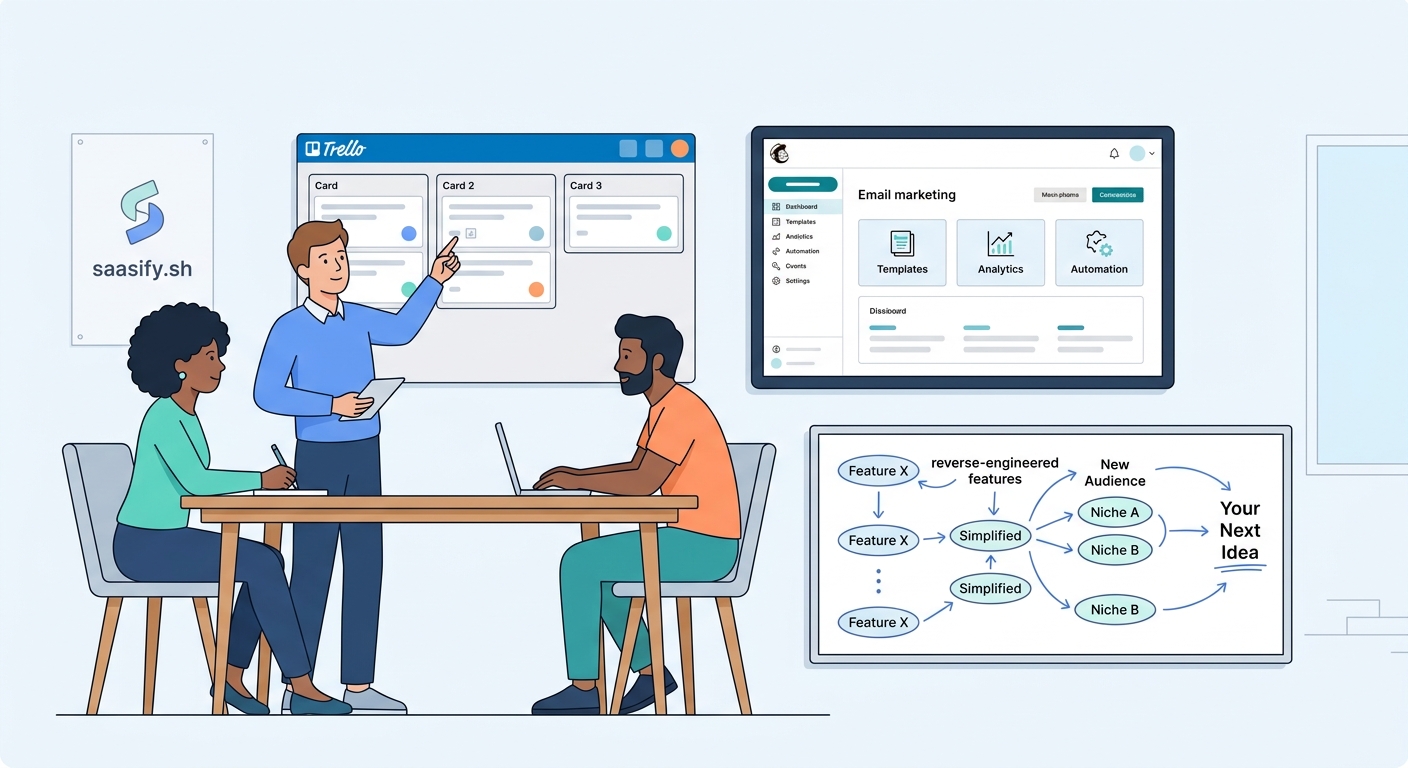
Here’s how to systematically break down any SaaS product and extract actionable insights.
1. Choose your target products
Start with products that have traction. Look for:
- Active users sharing screenshots on Twitter
- Regular updates on their changelog
- Job postings on their careers page
- Recent funding announcements
- High engagement on Product Hunt
Avoid brand new launches. You want products that survived at least 12 months. They’ve proven the market cares.
Pick 3 to 5 products in the same category. You’ll spot patterns across multiple examples rather than copying one company’s approach.
2. Map their core features
Sign up for free trials. Actually use the product for real tasks.
Don’t just click around. Solve a genuine problem with their tool. You’ll understand which features matter and which ones are just marketing fluff.
Create a spreadsheet with these columns:
| Feature Name | What It Does | User Benefit | Complexity Level |
|---|---|---|---|
| Email sequences | Automates follow-up emails | Saves 5 hours per week | Medium |
| Template library | Pre-built email templates | Faster setup for new users | Low |
| Analytics dashboard | Tracks open and click rates | Proves ROI to managers | High |
Rate complexity as low, medium, or high. This tells you what to build first in your own version.
3. Analyze their pricing strategy
Pricing reveals everything about positioning and target customers.
Study their tiers. What separates the $29 plan from the $99 plan? Usually it’s usage limits, team features, or advanced integrations.
Check if they offer:
- Free plans (land and expand strategy)
- Annual discounts (optimizing for cash flow)
- Enterprise pricing (targeting bigger customers)
- Usage-based billing (aligning cost with value)
Screenshot their pricing page monthly. Successful products adjust pricing as they learn. You’ll see what works by watching their changes.
4. Read every review you can find
Reviews tell you what the product does well and where it falls short.
Start with these sources:
- G2 and Capterra for detailed business reviews
- App Store and Play Store for mobile products
- Reddit threads mentioning the product name
- Twitter search for complaints and praise
- Product Hunt comments from launch day
Pay special attention to 2-star and 3-star reviews. Five-star reviews are too positive. One-star reviews are often angry rants. The middle ratings give balanced, specific feedback.
Create a document with two sections:
What users love:
– Fast customer support response times
– Clean, intuitive interface
– Reliable uptime and performance
What users complain about:
– Missing Slack integration
– Confusing onboarding process
– Expensive for solo founders
The complaints section is gold. Each complaint is a potential improvement for your version.
5. Track their marketing channels
How do they get customers? Follow their digital footprint.
Check these signals:
- Blog post frequency and topics
- SEO keywords they rank for (use Ahrefs or SEMrush)
- Paid ads on Google and Facebook
- Sponsorships on podcasts or newsletters
- Partnerships with complementary tools
- Content shared by their founders on social media
Join their email list. Study their onboarding sequence. Notice when they ask for upgrades or referrals.
Most SaaS companies focus on 2 to 3 main channels. You don’t need to copy all of them. Pick the channels that match your strengths.
6. Identify the gaps
Now comes the creative part. You’ve studied what exists. Time to spot what’s missing.
Look for these opportunity types:
Vertical niches: The product serves everyone. You could serve dentists specifically, or e-commerce stores, or real estate agents. Specialized positioning often beats general tools.
Simpler versions: Many SaaS products add features until they’re bloated. You could build a focused tool that does one thing exceptionally well. Think Basecamp versus Jira.
Better onboarding: If reviews complain about setup complexity, you could win by making your version easier to start. Sometimes the product is fine but the first experience is terrible.
Different pricing: Maybe they only offer monthly billing but customers want annual plans. Or they require credit cards for trials but users would prefer email-only signups.
Geographic focus: A product might work great in the US but ignore other markets. Localization, currency support, and regional compliance could be your edge.
Integration opportunities: Check what tools their customers use alongside the product. Build native integrations that the original product ignores.
“The best SaaS ideas come from using existing products and thinking ‘this is 80% perfect, but I’d pay extra for that missing 20%.’ That gap is your business.” – Indie founder who sold a $2M SaaS
Common mistakes to avoid
Reverse engineering sounds simple but founders mess it up in predictable ways.
Copying features without understanding why they exist. Every feature serves a purpose. Some features exist because of technical debt, not customer demand. Don’t blindly replicate everything.
Ignoring business model differences. A venture-backed company can afford to lose money acquiring customers. You probably can’t. Their strategy might not work for a bootstrapped business.
Focusing only on features. Features are visible but positioning, messaging, and customer support matter just as much. Study the complete customer experience.
Picking products that are too different from your skills. If you’re a solo developer, don’t reverse engineer a product that needs a sales team and enterprise contracts. Match the business model to your situation.
Forgetting to validate demand yourself. Just because a product exists doesn’t mean there’s room for another one. Talk to potential customers before building. Confirm they’d actually switch or pay for your version.
Tools that speed up the process
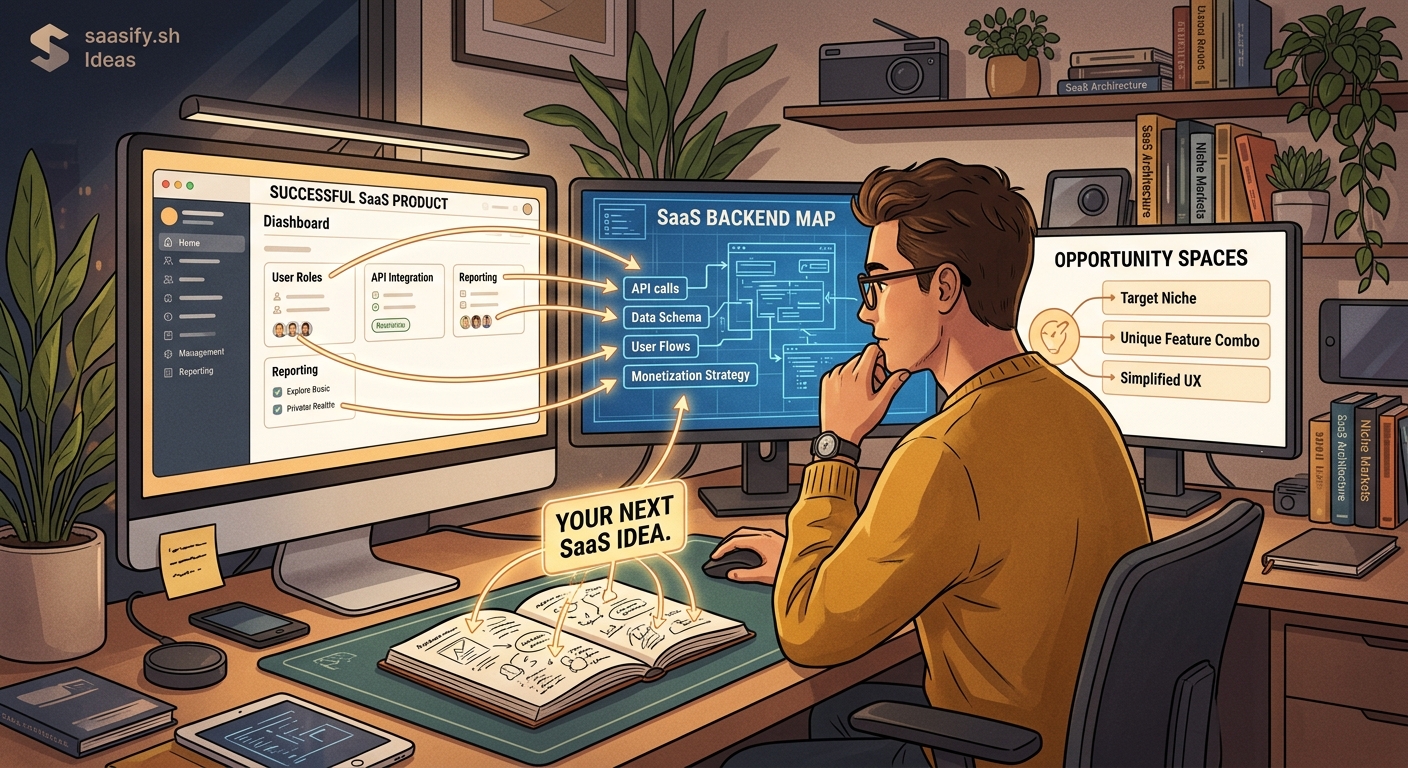
You don’t need expensive software but these tools help.
BuiltWith shows you what technologies a website uses. You’ll see their hosting, analytics, payment processor, and more. Useful for understanding their technical stack.
SimilarWeb estimates traffic and referral sources. You can’t see exact numbers without paying but the free version gives you a general sense of their reach.
Wayback Machine lets you see old versions of their website. Watch how their positioning and pricing evolved over time.
Hunter.io finds email addresses of team members. Reach out and ask questions. Many founders are happy to share lessons learned.
Notion or Airtable for organizing your research. Keep everything in one place so you can reference it while building.
Turning research into action
Research means nothing if you don’t build something with it.
Here’s how to move from analysis to execution:
Start with the smallest viable version. Pick the top 3 features from your analysis. Build only those. Ignore everything else for now.
Focus on one specific niche. Don’t try to compete with the general product. Serve a tight audience that the bigger product underserves.
Validate your idea before building by talking to 10 potential customers. Show them mockups. Ask if they’d pay. Get specific feedback.
Once you validate, build your MVP fast. Don’t spend six months perfecting features. Ship something usable in 30 days.
Start building an email list while you build. Share your progress. People love following along with a product’s creation.
Price your product strategically based on what you learned. If competitors charge $49/month, you might start at $29 to win early customers or at $79 if you offer something clearly better.
Consider whether to soft launch or go big based on your marketing strengths and the competitive landscape.
Real examples of successful reverse engineering
Let’s look at products that used this method.
Fathom Analytics studied Google Analytics. They saw privacy concerns in reviews and regulations like GDPR creating headaches. They built a simpler, privacy-focused alternative. Now they make millions in annual revenue.
Superhuman reverse engineered Gmail. They kept email’s core functionality but made everything faster with keyboard shortcuts. They charged $30/month when Gmail was free. Speed-obsessed professionals happily paid.
Webflow looked at WordPress and noticed designers hated writing code. They built a visual website builder that outputs clean code. They focused on the designer niche that WordPress served poorly.
Calendly saw that scheduling meetings required endless email back-and-forth. They made booking automatic. One link solves the whole problem. They didn’t invent scheduling but they made it 10 times easier.
Each of these companies started by studying existing solutions. They found specific weaknesses. They built focused alternatives. You can do the same thing.
Finding products worth studying
Where do you find SaaS products to reverse engineer?
Acquire.com lists profitable businesses for sale. Browse their SaaS category. You’ll see revenue numbers, tech stacks, and business models. Even if you don’t buy anything, you’ll learn what works.
MicroAcquire (now part of Acquire) shows smaller deals. These micro-SaaS products are closer to what you can build as a solo founder or small team.
Product Hunt launches new products daily. Filter by “SaaS” and sort by upvotes. Read the comments to see what people love and hate.
Indie Hackers features founders sharing revenue numbers and growth strategies. Search for products in your area of interest. Many founders openly discuss what worked and what failed.
Twitter is full of founders building in public. Follow hashtags like #buildinpublic and #indiehackers. You’ll see real-time updates about challenges and wins.
Browse profitable niches that established companies ignore. Smaller markets often have less competition and faster paths to revenue.
Measuring what matters
As you build your reverse-engineered product, track the right metrics.
Don’t obsess over vanity metrics like social media followers. Focus on numbers that indicate real business health:
- Trial signups (are people interested?)
- Trial-to-paid conversion rate (does your product deliver value?)
- Monthly recurring revenue (are you growing?)
- Churn rate (are customers staying?)
- Customer acquisition cost (can you afford growth?)
Build a revenue dashboard that shows these metrics at a glance. You’ll make better decisions when you see trends clearly.
Compare your metrics to the products you studied. If their free trial converts at 15% and yours converts at 3%, something’s wrong. Fix onboarding or adjust your target customer.
Staying legal and ethical
Reverse engineering is legal and ethical when done right.
You’re studying how products work, not stealing code or designs. You’re identifying market opportunities, not copying someone’s business.
Here’s what’s fine:
- Signing up for trials and using products
- Reading public reviews and documentation
- Analyzing pricing and positioning
- Building a better version that serves a different niche
Here’s what’s not okay:
- Copying exact designs or brand elements
- Stealing proprietary code or algorithms
- Impersonating another company
- Making false claims about competitors
Build something inspired by existing products but make it yours. Add your unique perspective. Serve your specific audience. Solve problems in your own way.
When to stop researching and start building
Analysis paralysis kills more SaaS ideas than bad execution.
You don’t need perfect information. You need enough insight to make an informed bet.
Stop researching when you can answer these questions:
- What problem does this solve?
- Who has this problem most acutely?
- What do existing solutions do well?
- What do existing solutions do poorly?
- What would make someone switch to a new solution?
If you can answer those five questions with specific details, you know enough. Start building.
Research should take days or weeks, not months. Set a deadline. Two weeks is usually plenty for thorough analysis.
Remember that building teaches you more than researching ever will. Real customers using your product will tell you what matters. Your first version will be wrong in some ways. That’s fine. Ship it anyway and learn from actual usage.
Making reverse engineering a habit
The best founders never stop studying the market.
Even after you launch, keep analyzing competitors. They’ll add features. They’ll change pricing. They’ll pivot to new audiences.
Set a monthly reminder to:
- Check competitor websites for changes
- Read new reviews on G2 and Capterra
- Search Twitter for mentions of competing products
- Review your own customer feedback for patterns
Markets evolve. Customer needs shift. New technologies emerge. Staying current means you can adapt before you fall behind.
Study successful founder stories to see how others navigated similar challenges. Learn from their wins and losses.
Your reverse engineering checklist
Here’s everything in one place:
- [ ] Pick 3-5 successful products in your target category
- [ ] Sign up and actually use each product for real tasks
- [ ] Map core features, benefits, and complexity levels
- [ ] Document pricing tiers and what separates them
- [ ] Read 50+ reviews across multiple platforms
- [ ] Track marketing channels and content strategy
- [ ] Identify gaps in features, positioning, or service
- [ ] Validate demand by talking to potential customers
- [ ] Choose your specific niche and differentiation
- [ ] Build the smallest viable version of your idea
- [ ] Set up metrics to track business health
- [ ] Launch and learn from real customer behavior
Print this checklist. Work through it systematically. Don’t skip steps.
Building on proven foundations
Reverse engineering isn’t about lacking creativity. It’s about being smart with your time and money.
Every successful product built on ideas that came before it. Google wasn’t the first search engine. Slack wasn’t the first chat app. Stripe wasn’t the first payment processor.
They studied what existed, found the gaps, and built something better for a specific audience.
You can do exactly the same thing. Start with products that already have customers and revenue. Learn what works. Spot what’s missing. Build your version that serves an underserved niche.
The market has already validated the core idea. Your job is to execute better for your specific audience. That’s a much safer bet than guessing at completely untested concepts.
Stop waiting for a lightning bolt of inspiration. Start studying successful products today. Your next business idea is hiding in plain sight.