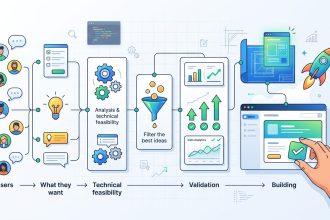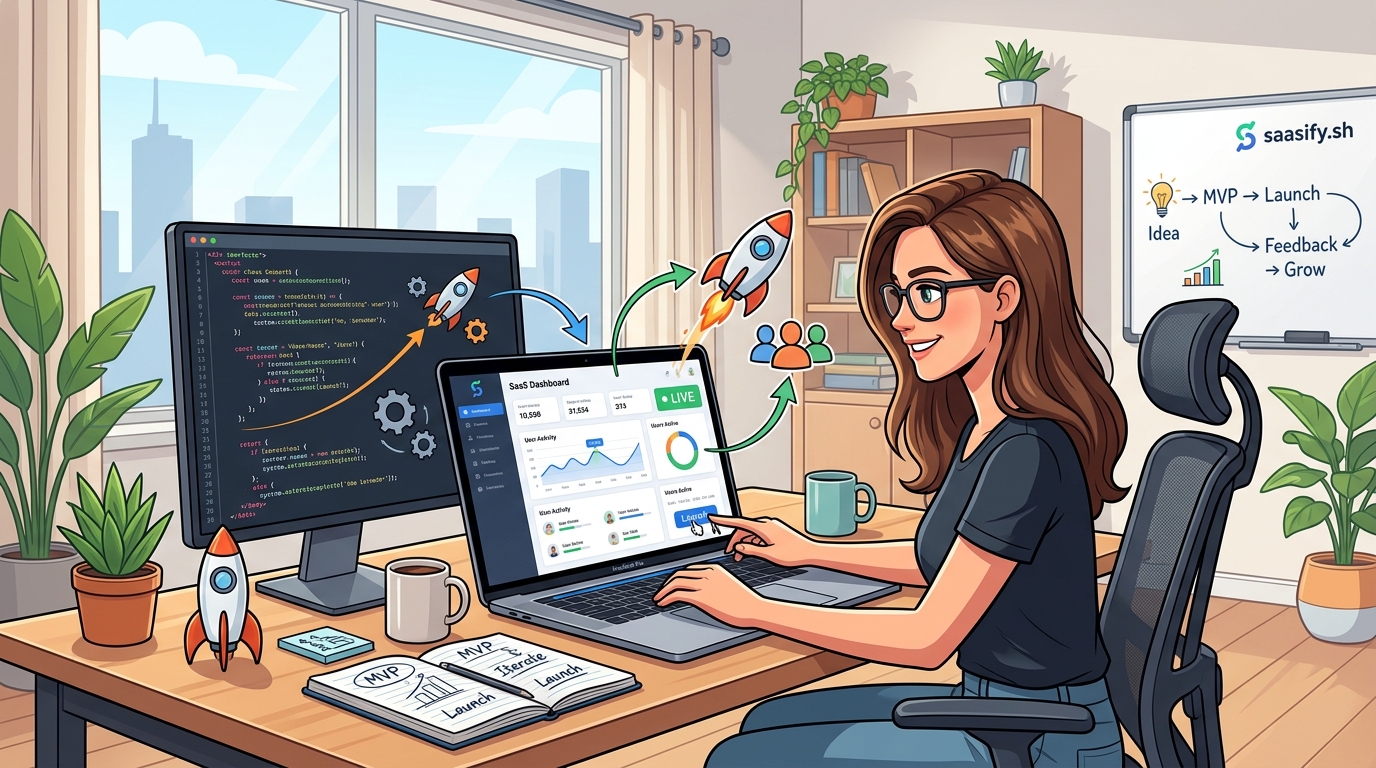
Your codebase has bugs. Your database queries could be faster. You wrote that authentication module at 2 AM and it shows.
But here’s what matters more: someone out there has the exact problem your SaaS solves. They’re looking for a solution right now. And they don’t care if your code passes every linting rule.
Perfect code is a myth that keeps founders stuck in development. Real users care about solutions, not implementation details. You can launch SaaS without perfect code by focusing on core functionality, accepting technical debt strategically, and iterating based on actual user feedback. Shipping an imperfect product beats building a perfect one that never launches.
Why code quality fears hold you back
Most developers have been trained to write clean code. That training becomes a trap when building a SaaS product.
You refactor the same function three times. You research the perfect state management solution. You spend a week setting up a testing framework before writing a single feature.
This perfectionism feels productive. It feels responsible.
But it’s actually procrastination dressed up as professionalism.
The real fear isn’t about code quality at all. It’s about putting your work in front of real people who might reject it. Fixing code feels safer than facing potential customers.
Here’s the truth: your first version will be rewritten anyway. User feedback will force you to change features you spent weeks perfecting. The architecture you agonized over will need to evolve as you learn what people actually want.
What “good enough” actually means
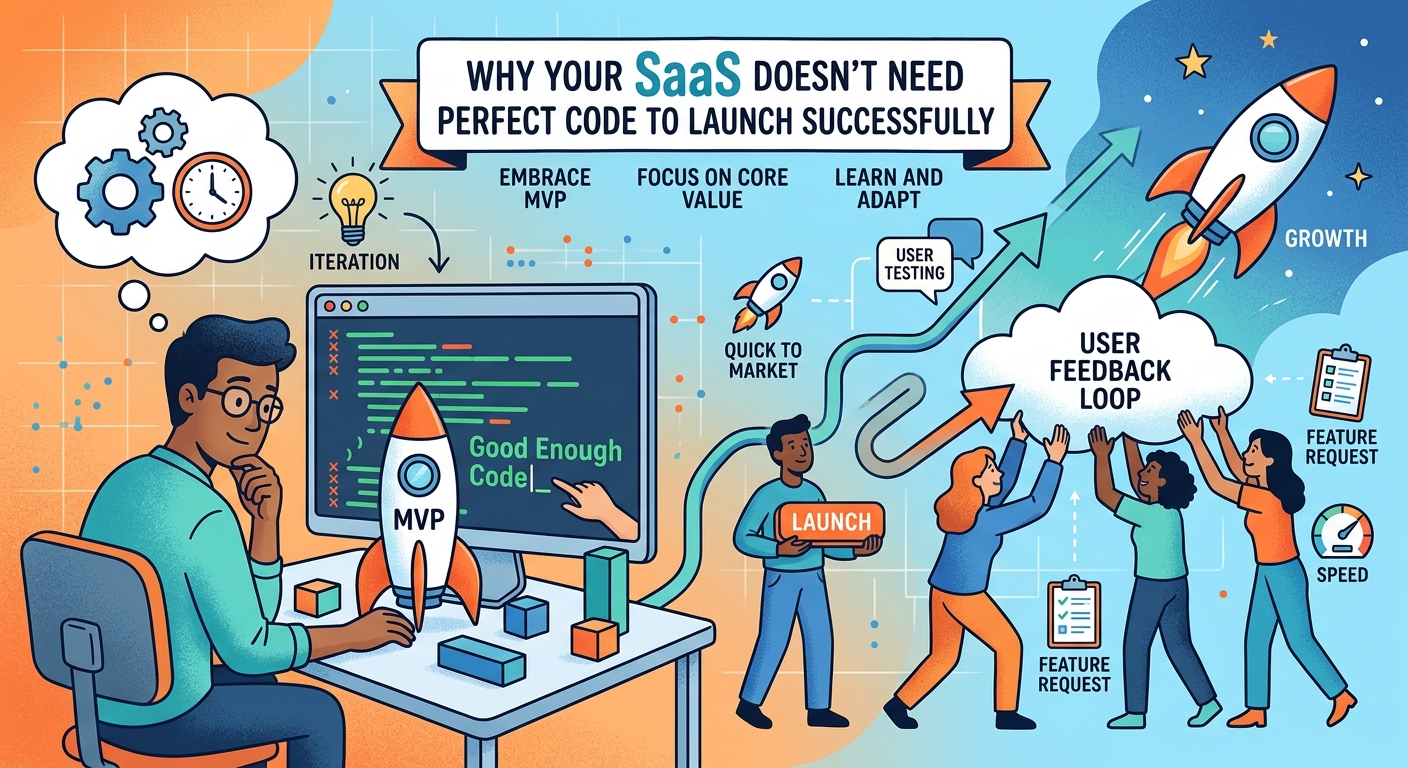
Good enough doesn’t mean sloppy. It means strategic.
Your code needs to work reliably for the core use case. It needs to handle errors gracefully. It should be secure enough that you can sleep at night.
But it doesn’t need to scale to a million users on day one. It doesn’t need 100% test coverage. It doesn’t need to follow every best practice from that senior engineer’s blog post.
Here’s a practical framework for deciding what matters:
Must have before launch:
– Core functionality works for the primary use case
– User data is stored securely
– Payment processing works correctly
– Basic error handling prevents crashes
– You can deploy updates without breaking everything
Can wait until after launch:
– Performance optimization beyond basic responsiveness
– Edge case handling for rare scenarios
– Comprehensive test suites
– Perfect code organization
– Automated deployment pipelines
The difference between these lists is simple. The first list affects whether users can get value from your product. The second list affects how pleasant it is for you to maintain the codebase.
Users care about the first list. Only you care about the second.
Real founders who shipped messy code
Let me tell you about Sarah. She built a scheduling tool for yoga instructors.
Her first version used a single massive JavaScript file. No build process. No component framework. Just vanilla JS that got the job done.
She launched with 47 known bugs in a spreadsheet. Her database had redundant fields because she changed her mind halfway through and didn’t want to migrate data.
That messy product got 12 paying customers in the first month. Those customers gave her feedback that completely changed her roadmap. She ended up rewriting 60% of the code based on what she learned.
If she’d waited for perfect code, she would have spent six more months building features nobody wanted.
Or take Marcus, who built a tool for freelance writers. His authentication system was held together with duct tape and prayers. He knew it. But it worked well enough to let users sign up and use the product.
He refactored it three months later when he had revenue and real usage patterns to inform his decisions. The second version was better because he knew what actually mattered to his users.
The technical debt you can afford
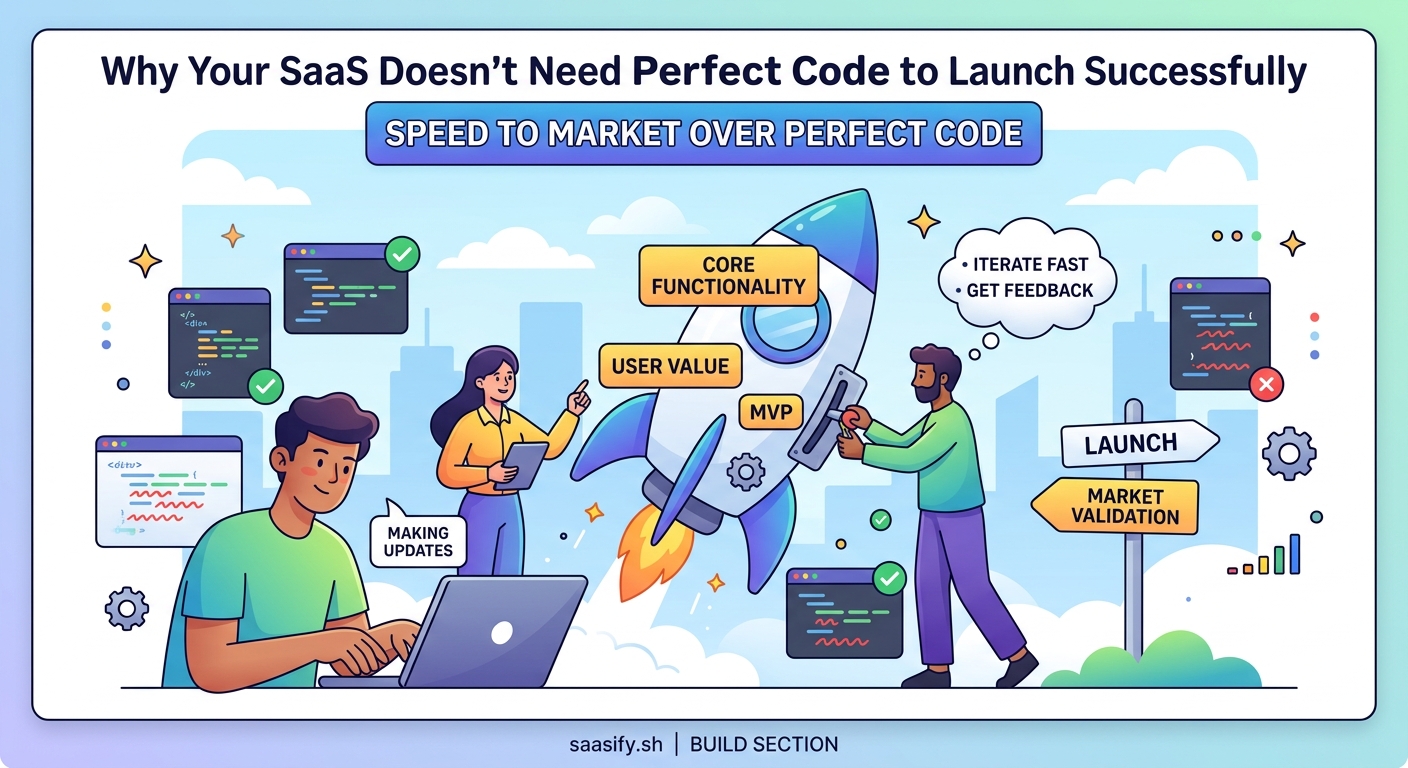
Not all technical debt is equal. Some debt will crush you. Some debt is just fine to carry.
Bad technical debt makes it hard to add features or fix bugs. It compounds over time until simple changes take days instead of hours.
Acceptable technical debt is code that works but isn’t pretty. It’s choosing a simpler solution over a more elegant one. It’s copy-pasting a function instead of abstracting it perfectly.
| Type of Debt | Safe to Carry | Risky to Ignore |
|---|---|---|
| Ugly but working code | Yes | No |
| Missing tests for core features | Maybe | Yes |
| Inefficient database queries | Yes | Only at scale |
| Security vulnerabilities | No | Yes |
| Hard-coded configuration | Yes | No |
| No error logging | No | Yes |
| Messy file organization | Yes | No |
| Missing input validation | No | Yes |
The pattern here is clear. Anything that affects security, data integrity, or your ability to debug problems needs to be solid. Everything else can wait.
When you launch SaaS without perfect code, you’re making a calculated bet. You’re betting that learning from real users is more valuable than having pristine code.
That bet pays off almost every time.
How to ship faster without breaking everything
Speed doesn’t mean recklessness. It means focus.
Here’s a step-by-step process for launching without getting stuck in perfectionism:
-
Define your absolute minimum feature set. Write down the one thing users must be able to do. Not the ten things that would be nice. The one thing.
-
Build that feature with the simplest possible implementation. Use libraries instead of building from scratch. Choose boring, proven technologies over exciting new ones.
-
Add basic error handling and logging. You need to know when things break. You don’t need to handle every possible edge case.
-
Test the happy path manually. Click through your app like a user would. Does it work? Good enough.
-
Deploy to a small group. Friends, beta users, anyone willing to try it. Get real usage data.
-
Fix only the bugs that prevent core functionality. Everything else goes in a backlog.
-
Ship to more users. Repeat the cycle.
This process feels uncomfortable if you’re used to polishing everything. That discomfort is the point. You’re training yourself to ship before you feel ready.
“The first version of everything is always embarrassing. The only way to get to the second version is to ship the first one.” – Indie founder who sold their SaaS for seven figures
Choosing your tech stack for speed
Your technology choices matter less than you think. But they matter more than zero.
The best stack is the one you already know. Seriously. Don’t learn a new framework just because it’s trendy. Don’t switch languages because someone on Twitter said it’s better.
Use what you can build with fastest. For most developers, that means:
- A framework you’ve used before
- A database you understand
- A hosting platform you can deploy to without reading documentation
- Libraries that solve common problems instead of reinventing wheels
If you’re torn between options, understanding how to choose the right tech stack for your indie SaaS without analysis paralysis can help you make decisions faster.
The “right” choice is the one that gets you to launch fastest. Not the one that looks best on your resume.
Database design that won’t haunt you
Your database is the one place where mistakes hurt more later. But “not haunting you” is a much lower bar than “perfectly normalized.”
Here’s what actually matters:
- Use UUIDs or auto-incrementing IDs consistently. Pick one pattern and stick with it.
- Add created_at and updated_at to every table. You’ll want this data later.
- Don’t delete data, mark it as deleted. Soft deletes save you from so many headaches.
- Index your foreign keys. This takes five seconds and prevents performance disasters.
What doesn’t matter yet:
- Perfect normalization
- Optimal data types for space efficiency
- Complex indexing strategies
- Partitioning or sharding
You can fix almost any database problem later with migrations. The exceptions are fundamental design choices like using the wrong primary key type or not having timestamps.
Focus on those few critical decisions. Everything else can evolve. For more on what to avoid, check out these database design mistakes that will haunt your SaaS later.
When to refactor and when to ship
You’re staring at a function you wrote last week. It works, but it’s ugly. You could make it better.
Should you refactor or should you ship?
Here’s the decision tree:
Refactor now if:
– The code is so confusing you can’t add features without breaking things
– You’re copying the same logic in three or more places
– You found a security issue
– The current implementation makes the app noticeably slow
Ship now if:
– The code works correctly
– It’s just not as elegant as you’d like
– You’re the only one who will read it
– Refactoring would delay learning from users
Most of the time, the answer is ship. You can always refactor later when you have revenue and users who care about the product.
The code that never ships helps nobody. Messy code that solves a real problem helps people today.
Building features users actually want
Perfect code for the wrong feature is worthless. Messy code for the right feature is gold.
This is why shipping early matters so much. You don’t know what features matter until real people use your product.
You might think users need a dashboard with 15 different charts. They might just want a single number that tells them if they’re on track.
You might build a complex permission system with roles and groups. They might just need a simple “share this link” button.
The only way to find out is to put something in front of them and watch what happens. Learning about building SaaS features users actually want starts with shipping and observing.
Every hour you spend polishing features before launch is an hour you could spend learning what features to build next.
Handling the inevitable bugs
Your product will have bugs when you launch. That’s not a failure. That’s normal.
What matters is how you handle them:
-
Set up error logging from day one. Use Sentry, Rollbar, or even just a simple logging service. You need to know when things break.
-
Respond to bug reports within 24 hours. You don’t need to fix everything immediately, but you need to acknowledge it.
-
Triage ruthlessly. Some bugs prevent core functionality. Fix those first. Some bugs are annoying but don’t stop users. Those can wait.
-
Be honest with users. Tell them you’re a small team (or solo founder) moving fast. Most people are surprisingly forgiving if you’re responsive and transparent.
Your early users aren’t expecting perfection. They’re expecting you to care and to fix problems when they arise.
Security basics you can’t skip
There’s one area where “good enough” doesn’t apply: security.
You don’t need enterprise-grade security infrastructure. But you do need these basics:
- Hash passwords properly. Use bcrypt or a similar proven library. Never store passwords in plain text.
- Use HTTPS everywhere. Let’s Encrypt is free. There’s no excuse.
- Validate and sanitize user input. Prevent SQL injection and XSS attacks.
- Keep dependencies updated. Set up automated alerts for security vulnerabilities.
- Use environment variables for secrets. Never commit API keys or passwords to your repo.
These aren’t optional. They’re the minimum viable security posture. Get them right before you launch.
Everything else (penetration testing, security audits, compliance certifications) can come later when you have users and revenue.
The monolith versus microservices trap
Here’s a debate that wastes countless hours: should you build a monolith or use microservices?
For a solo founder or small team launching a SaaS product, the answer is almost always monolith.
Microservices add complexity. They require more infrastructure, more deployment coordination, more debugging across service boundaries. That complexity only pays off at scale.
Start with a simple, monolithic application. One codebase. One deployment. One database.
You can split things apart later if you need to. But you probably won’t need to. Plenty of successful SaaS companies run on monoliths serving thousands of customers.
If you’re still debating this, read more about whether to build your SaaS with a monolith or microservices.
The simple architecture wins every time at the start.
Payment integration done right
Getting payments working is scarier than it should be. But it’s also simpler than you think.
Use Stripe, Paddle, or Lemon Squeezy. Don’t build your own payment processing. Don’t even think about it.
These services handle the complexity. They deal with PCI compliance, international payments, tax calculations, and subscription management.
Your job is to:
1. Add their SDK to your project
2. Create a checkout flow
3. Handle webhooks for subscription events
4. Update user access based on payment status
That’s it. You can add payments to your SaaS in one weekend if you don’t overthink it.
Don’t spend weeks building a custom billing system. Use the tools that exist. Focus your energy on the product that makes money, not the plumbing that collects it.
Testing strategies for solo founders
You should test your code. But you don’t need comprehensive test coverage before launch.
Here’s a realistic testing approach:
Manual testing:
– Click through every user flow yourself
– Try to break things
– Test on different browsers
– Have a friend try to use it
Automated testing:
– Write tests for critical business logic (payment processing, data calculations)
– Add tests when you fix bugs to prevent regression
– Skip tests for UI components unless they’re complex
Monitoring in production:
– Set up error logging
– Track key metrics (signups, payments, core feature usage)
– Watch for patterns in bug reports
This approach catches most problems without slowing you down. You can add more comprehensive testing later when you have revenue to justify the time investment.
Deployment and infrastructure
Your deployment setup should be boring. Boring is reliable.
Use a platform that handles infrastructure for you. Vercel, Netlify, Railway, Render, or Heroku all work great. They cost more than managing your own servers, but they save you hours of DevOps work.
You can optimize costs later when you’re paying hundreds per month instead of tens. Right now, your time is worth more than the infrastructure savings.
Set up:
– Automatic deployments from your main branch
– A staging environment for testing
– Database backups
– Basic monitoring
That’s enough to run a SaaS product serving hundreds or even thousands of users.
Validation before you write code
The biggest code quality mistake is writing perfect code for a product nobody wants.
Before you spend months building, spend a week validating. Talk to potential users. Build a landing page. Get people to sign up for a waitlist.
You can validate your SaaS idea before writing a single line of code using mockups, no-code tools, or even just conversations.
This validation doesn’t need to be perfect either. You’re looking for signals that people have the problem you’re solving and they’re willing to pay for a solution.
Once you have that signal, build the simplest version that delivers value. Then iterate based on what you learn.
Preparing for your launch day
Launch day doesn’t need to be perfect. It needs to be functional.
Make sure:
– The core feature works reliably
– Users can sign up and pay
– You can monitor errors and usage
– You have a way to communicate with users (email list or in-app messaging)
Everything else is nice to have. You don’t need a perfect landing page, comprehensive documentation, or a polished onboarding flow.
You need something that works well enough for early adopters to try. Those early users are forgiving. They want to be part of something new.
If you want more structure, creating a launch day runbook that prevents last-minute chaos can help you stay organized without overplanning.
Learning from your first users
Your first users are gold. They’ll tell you what’s broken, what’s confusing, and what’s missing.
Listen to them. Not just their feature requests, but the problems they’re trying to solve.
When someone asks for a feature, ask why they need it. What are they trying to accomplish? Often, there’s a simpler solution than what they requested.
Track:
– Which features get used most
– Where users get stuck
– What questions they ask
– Why people churn
This data is more valuable than any amount of pre-launch planning. It tells you where to focus your development time.
Growing without breaking things
As you get more users, you’ll need to improve your code. But you can do it gradually.
Add monitoring so you know what’s slow. Optimize the slowest parts first. Add tests for the features that break most often. Refactor the code that’s hardest to work with.
You don’t need to fix everything at once. You need to improve the parts that are causing the most pain.
This measured approach keeps you shipping new features while gradually paying down technical debt.
When to hire help
At some point, you might need help with your code. But not as soon as you think.
You can get pretty far as a solo developer. Many successful SaaS founders run their entire product alone until they hit significant revenue.
Consider hiring when:
– You’re spending more time maintaining code than building features
– Technical problems are causing customer churn
– You have revenue to support a developer salary
– You’ve validated product-market fit
Before that point, your time is better spent on customers and growth than on code quality.
Your messy code is your competitive advantage
Here’s the counterintuitive truth: your willingness to ship imperfect code is an advantage.
Big companies can’t move this fast. They have processes, code reviews, compliance requirements, and stakeholders. They need months to ship what you can build in weeks.
Your competitors who are still perfecting their code haven’t launched yet. They’re losing time while you’re learning from real users.
Your messy code gets you to market faster. It lets you learn faster. It helps you find product-market fit while others are still debating architecture patterns.
Ship it today
You’ve been working on your SaaS for weeks or months. You know it’s not perfect. You know there are bugs you haven’t fixed and features you haven’t built.
Ship it anyway.
The code you’re embarrassed by today will be rewritten in six months based on what you learn from users. The perfect code you’re waiting to write might be for features nobody wants.
Your future self will thank you for launching now. Your users don’t care about your code quality. They care about whether you solve their problem.
Stop refactoring. Stop adding “just one more feature.” Stop waiting for perfect.
Launch your SaaS. Learn from real users. Iterate based on feedback.
That’s how you build something people actually want to pay for.