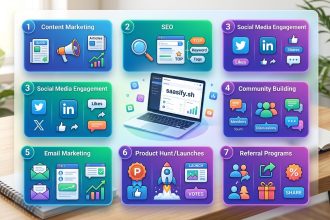
You’ve built something people might actually pay for. The code works. The UI doesn’t make eyes bleed. Now you need people to know it exists before launch day.
Most developers treat marketing like a last-minute deployment. They push code to production, tweet once, then wonder why nobody shows up. A pre-launch marketing plan for developers changes that pattern. It gives you a structured runway to build awareness, collect emails, and create momentum before your product goes live.
A 30-day pre-launch marketing plan turns your launch from a silent release into a coordinated event. Focus on building an email list, creating shareable content, engaging niche communities, and preparing distribution channels. This framework requires no budget, just consistent daily action across validation, content creation, community engagement, and launch preparation activities.
Why developers need a different marketing approach
Marketing advice written for startups with funding doesn’t translate to solo builders. You don’t have a team. You can’t hire an agency. You’re shipping features during the day and trying to figure out Twitter at night.
The good news is that technical founders have advantages most marketers lack. You understand the problem deeply. You can create technical content that actually helps people. You know where developers hang out online.
The challenge is turning those advantages into a system that runs alongside your build schedule without causing burnout.
The 30-day timeline breakdown
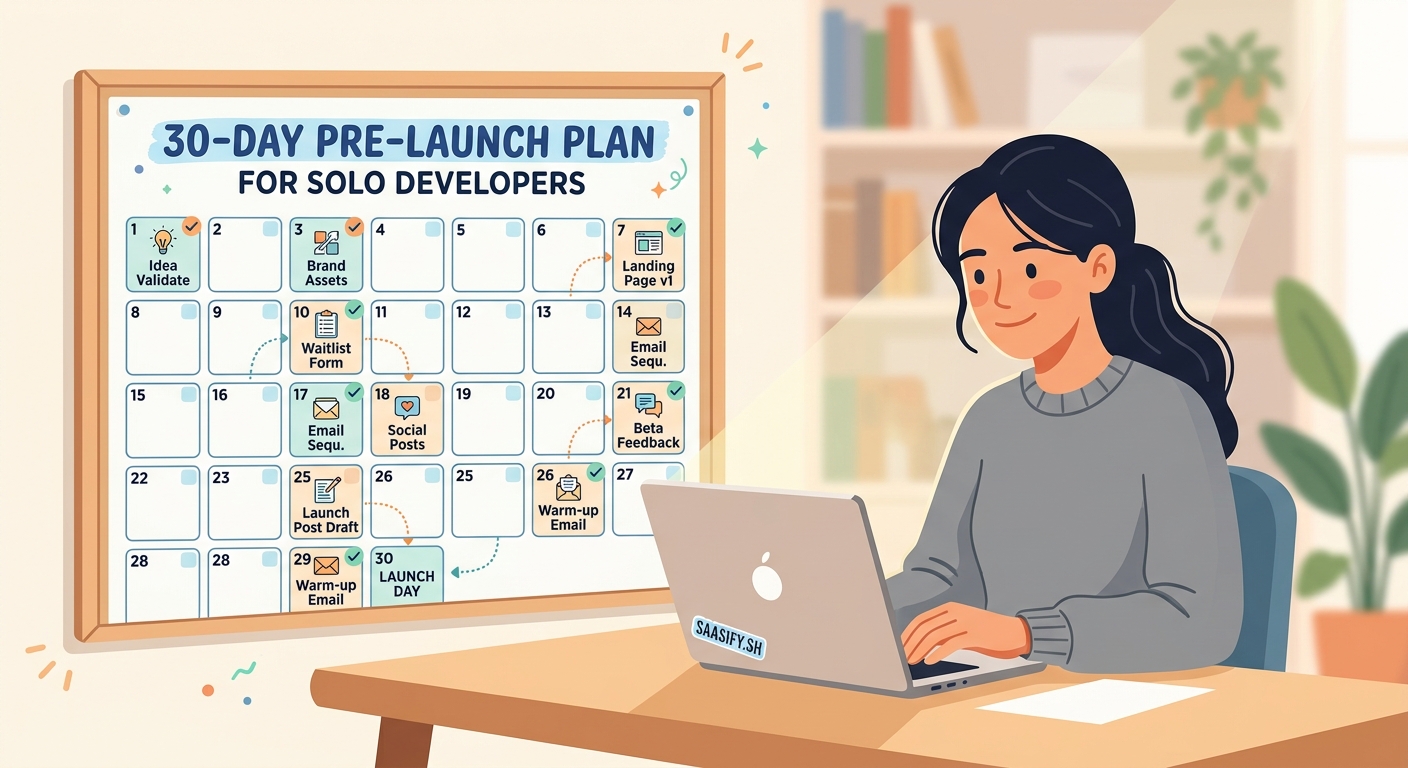
A month gives you enough runway to build momentum without dragging out the process until you lose interest. Here’s how the days break down by focus area.
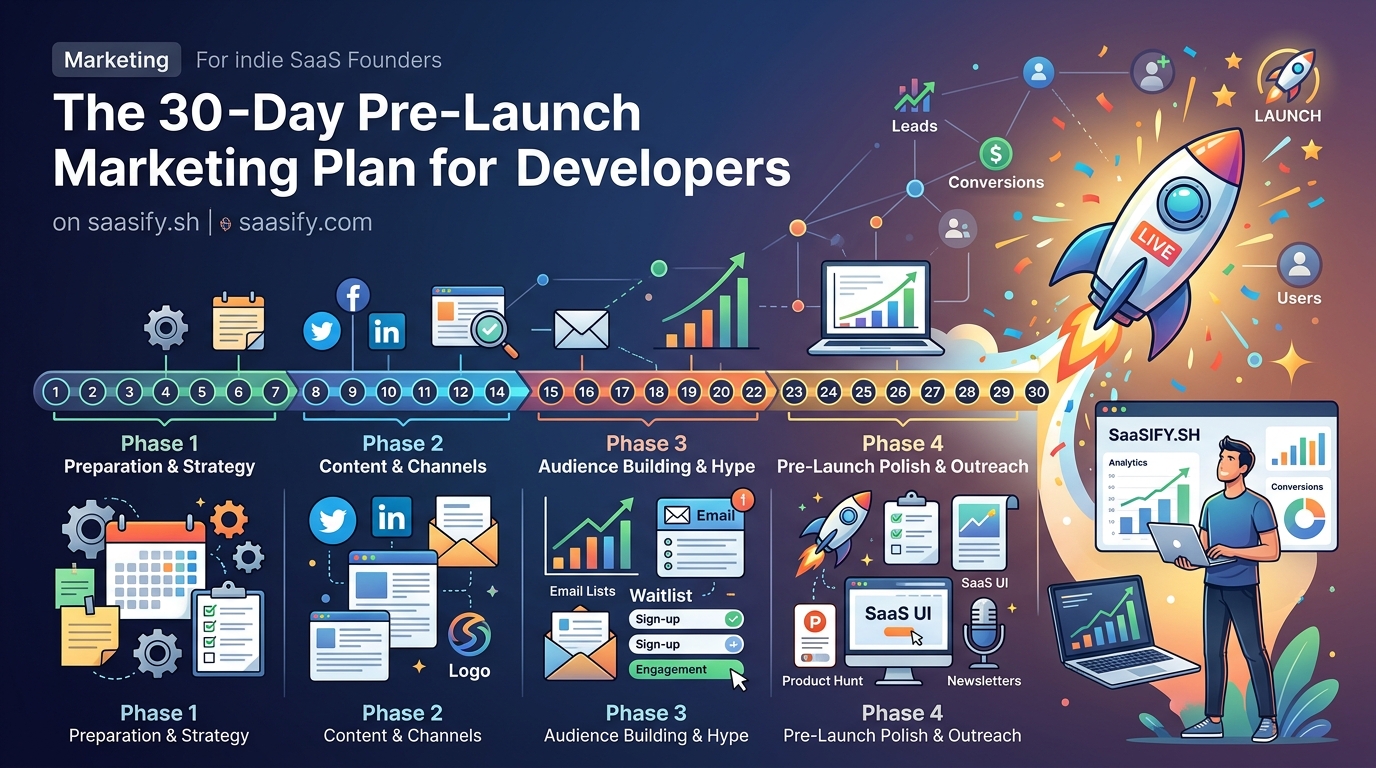
Days 1-7: Foundation and validation
- Set up landing page with email capture
- Write your positioning statement
- Identify three distribution channels
- Create social media accounts
- Start documenting your build process
- Validate your idea with target users
- Set up analytics tracking
Days 8-15: Content creation and community
- Publish first blog post or tutorial
- Share build updates on Twitter/X
- Join relevant Reddit communities
- Answer questions on Stack Overflow related to your domain
- Record demo video
- Create comparison content
- Engage with potential users daily
Days 16-23: Amplification and outreach
- Guest post on relevant blogs
- Appear on podcasts or YouTube channels
- Run small beta program
- Share case studies or examples
- Create shareable assets (templates, tools, guides)
- Build relationships with potential advocates
- Prepare Product Hunt launch materials
Days 24-30: Launch preparation
- Finalize launch messaging
- Schedule launch day content
- Prepare support documentation
- Set up monitoring and alerts
- Brief beta users on launch plans
- Create launch day runbook
- Test payment flows and onboarding
Building your pre-launch landing page
Your landing page needs one job: collect emails from people interested in your solution. Not interested in SaaS in general. Not interested in staying updated. Interested in solving the specific problem your product addresses.
Start with a clear headline that states the problem and outcome. “Stop losing customer data when your API fails” beats “The modern API monitoring solution.”
Add three bullet points explaining the core benefits. Keep each under ten words. Focus on outcomes, not features.
Include social proof if you have any. Beta user quotes work. Logos work if you have permission. Numbers work if they’re real.
End with an email signup form. Single field. Clear button text. No “Subscribe to our newsletter” language. Try “Get early access” or “Join the beta” instead.
The landing page conversion tactics that work for established products work during pre-launch too.
Content strategy for technical founders
You have an unfair advantage in content creation. You can explain technical concepts clearly because you live in them daily. Most marketing content about developer tools is written by people who don’t code.
Here are content types that work well during pre-launch:
- Problem breakdowns: Explain why the problem exists and current workarounds
- Build logs: Share what you’re building and decisions you’re making
- Comparison posts: Show how your approach differs from existing solutions
- Tutorial content: Teach something related to your domain
- Case studies: Show real examples of the problem and your solution
Publish on your own blog first. Then adapt for platforms like Dev.to, Hashnode, or Medium. Each piece should link back to your landing page naturally.
Avoid pure promotional content. If 90% of your content helps people solve problems and 10% mentions your product, you’re in good shape.
Distribution channels that actually work
You need three channels minimum. Not ten. Not one. Three gives you diversification without spreading too thin.
Find subreddits where your target users gather. Read for a week before posting. Contribute genuinely to discussions. When you share your content, make it valuable first, promotional second.
The Reddit marketing guide covers the nuances of each community type.
Twitter/X
Share build updates, technical insights, and engage with others in your space. Reply to relevant tweets. Don’t just broadcast. The platform rewards conversation over announcements.
Developer communities
Depending on your niche, this might be Stack Overflow, GitHub Discussions, Discord servers, or Slack communities. Go where your users already ask questions.
Email outreach
Find people who’ve written about the problem you’re solving. Send personalized emails. Not templates. Actual personalized messages that reference their specific work.
Here’s what works in cold email outreach for SaaS products.
The daily action checklist
Consistency beats intensity during pre-launch. Thirty minutes daily outperforms three-hour weekend binges.
Here’s a realistic daily checklist:
- Post one build update or insight on Twitter/X
- Engage with five relevant posts or comments
- Answer one question in your domain (Reddit, Stack Overflow, forums)
- Work on one piece of content (writing, recording, designing)
- Send three personalized outreach emails
- Review and respond to landing page signups
This takes 30-45 minutes if you’re focused. Do it before you start coding or after dinner. Make it a habit, not a motivation-dependent activity.
Building your email list strategy
Every signup represents someone willing to give you their email address before your product exists. That’s valuable signal.
Set up a simple welcome sequence:
Email 1 (immediate): Thanks for signing up. Here’s what to expect. Ask one question about their biggest challenge.
Email 2 (3 days later): Share a helpful resource related to the problem. No product pitch.
Email 3 (7 days later): Show a preview or explain your approach. Invite feedback.
Email 4 (14 days later): Update on progress. Share launch timeline.
Keep emails short. Two hundred words maximum. One clear point per email. Always include a way to reply.
The email list building tactics that work for established founders work during pre-launch too.
Creating shareable launch assets
You need assets people can share when they talk about your product. Create these during the pre-launch period:
- Demo video: Two minutes maximum. Show the problem, solution, and result. No fancy editing required. Loom works fine.
- One-pager: PDF that explains what you’re building and why. Make it visual.
- Comparison table: Your approach versus existing solutions. Be fair but clear about differences.
- Template or tool: Something useful related to your domain that people can use immediately.
Each asset should stand alone. Someone should understand your value without reading anything else.
Coordinating your launch strategy
The last week before launch determines whether you have momentum or silence. Coordinate activities across channels.
Seven days before: Email your list with launch date. Ask them to mark calendars.
Three days before: Share behind-the-scenes content. Build anticipation without being annoying.
Launch day: Post everywhere simultaneously. Twitter, Reddit, Product Hunt, Hacker News, your blog, email list. Coordinate timing for maximum visibility.
Day after launch: Thank supporters. Share early results. Keep momentum going.
Deciding between a soft launch or big launch depends on your product and audience.
Common pre-launch mistakes to avoid
Here’s what trips up most technical founders during pre-launch.
| Mistake | Why it happens | Better approach |
|---|---|---|
| Waiting until product is perfect | Engineering mindset applied to marketing | Launch with core features working |
| Broadcasting instead of engaging | Treating social media like RSS | Reply more than you post |
| Ignoring email list | Focusing only on social followers | Prioritize owned channels |
| Generic messaging | Trying to appeal to everyone | Speak to specific user pain |
| No launch day plan | Assuming organic discovery | Coordinate multi-channel push |
| Skipping analytics setup | Focusing only on building | Track from day one |
The biggest mistake is starting marketing the day before launch. Give yourself the full 30 days.
Measuring pre-launch success
Track metrics that matter during pre-launch:
- Email signups: Raw number and daily growth rate
- Landing page conversion rate: Visitors to signups
- Content engagement: Comments, shares, replies
- Community participation: Upvotes, responses, mentions
- Beta user feedback: Qualitative insights and feature requests
Don’t obsess over vanity metrics. A hundred engaged email subscribers beats a thousand random followers.
Building in public as a strategy
Sharing your build process creates natural content and accountability. Document decisions, challenges, and progress.
This works especially well on Twitter/X where developers appreciate transparency. Share revenue goals, feature priorities, and technical decisions.
The pros and cons of building in public depend on your personality and product type.
Getting your first beta users
Beta users give you feedback, testimonials, and potential advocates. Find them through:
- Direct outreach to people discussing the problem
- Posts in relevant communities offering early access
- Replies to your content who show genuine interest
- Referrals from existing connections
Keep beta groups small. Ten engaged users beats fifty passive ones. Give them direct access to you. Ask for brutal honesty.
Set clear expectations about what beta means. Bugs exist. Features are incomplete. Their feedback shapes the final product.
Preparing for different launch scenarios
Your launch might go viral or might barely register. Prepare for both.
If launch exceeds expectations:
- Have support documentation ready
- Know your scaling limits
- Prepare additional content to maintain momentum
- Have a system for prioritizing feature requests
If launch underperforms:
- Don’t panic on day one
- Keep engaging with early users
- Analyze what worked and what didn’t
- Plan follow-up launch activities
- Consider alternative distribution channels
Most launches fall somewhere in the middle. A few hundred signups, dozens of trials, handful of paying customers.
Content calendar template
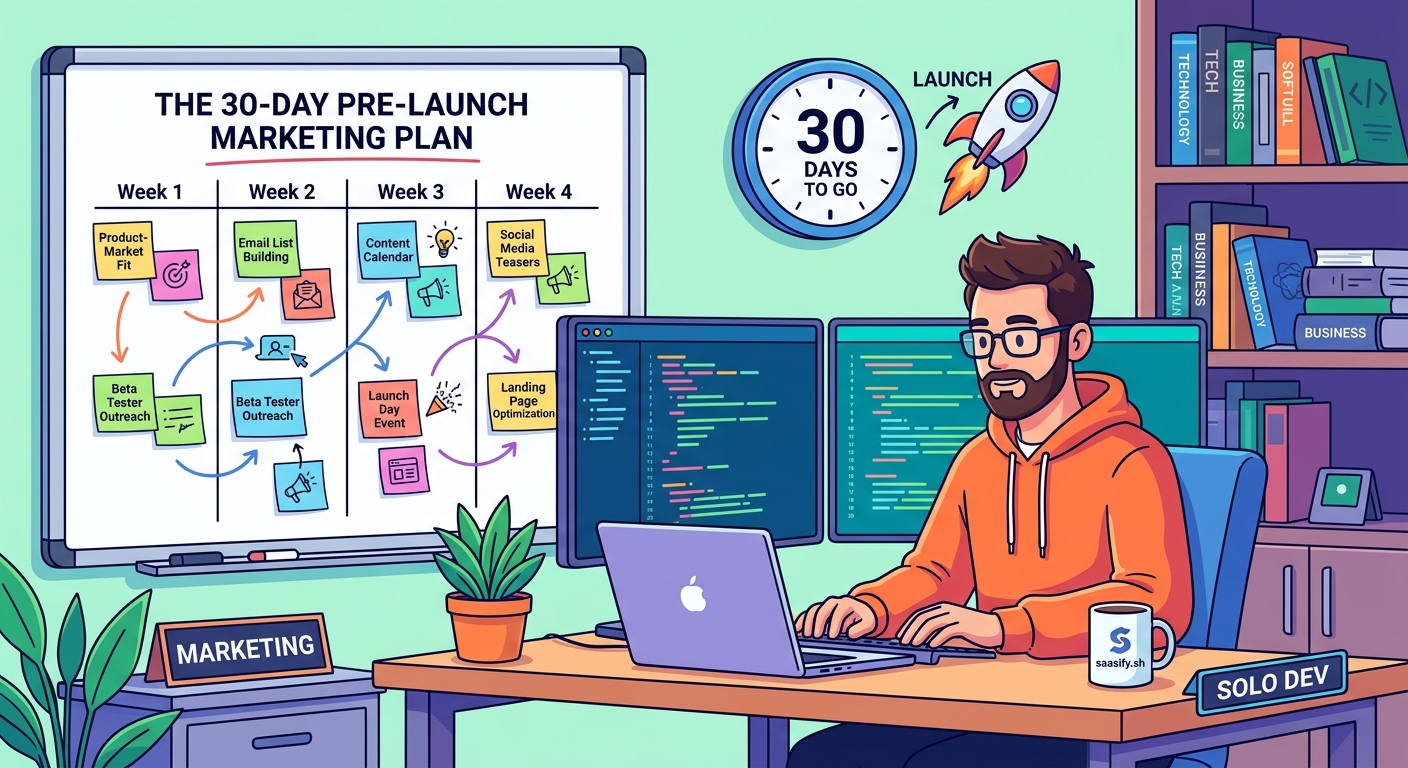
Here’s a simple framework for planning your 30 days:
Week 1:
– Monday: Landing page live, first Twitter post
– Wednesday: First blog post published
– Friday: Join three relevant communities
Week 2:
– Monday: Second blog post or tutorial
– Wednesday: Share build update with screenshots
– Friday: First round of outreach emails
Week 3:
– Monday: Demo video published
– Wednesday: Guest post or podcast appearance
– Friday: Beta program announced
Week 4:
– Monday: Launch announcement to email list
– Wednesday: Final feature showcase
– Friday: Launch day coordination
Adjust based on your schedule and energy levels. Consistency matters more than perfection.
Your marketing tech stack
Keep tools simple during pre-launch:
- Email: ConvertKit, Mailchimp, or Buttondown
- Analytics: Plausible, Fathom, or Google Analytics
- Landing page: Carrd, Webflow, or custom HTML
- Social scheduling: Buffer or Hypefury
- Video: Loom or OBS for screen recording
Don’t spend time comparing tools. Pick one in each category and move forward.
What to do when motivation drops
Marketing feels awkward for most developers. You’ll have days where posting feels pointless.
Push through those days with minimum viable effort. One tweet. One reply. One email. Keep the streak alive even when results feel invisible.
The difference between successful launches and failed ones often comes down to showing up consistently during the uncomfortable middle weeks when nothing seems to be working.
Results compound. Week one feels like shouting into the void. Week three starts generating replies. Week four creates momentum.
Turning pre-launch into post-launch momentum
Your pre-launch work doesn’t stop at launch. The assets, content, and relationships you built become your foundation for growth.
Keep the daily habits. Keep creating content. Keep engaging communities. Add customer success and retention to your focus.
The low-cost marketing channels that work during pre-launch continue working after.
Making the plan work for your schedule
Thirty days sounds manageable until you remember you’re also building the actual product. Here’s how to make both work:
Block 30-45 minutes daily for marketing activities. Same time each day. Treat it like a standup meeting with yourself.
Batch similar tasks. Write multiple tweets at once. Record several video updates in one session. Send outreach emails in batches.
Use weekends for longer content creation. Blog posts, tutorials, and demo videos need focused time.
Don’t try to be everywhere. Three channels done well beats seven done poorly.
Starting your 30-day countdown
Pick your launch date. Count back 30 days. That’s when your marketing starts.
Set up your landing page today. Write your first piece of content tomorrow. Join your first community this week.
The plan works when you work the plan. No secret tactics. No growth hacks. Just consistent, focused effort across a structured timeline.
Your product deserves more than a silent launch. Give it the runway it needs to find the people who need it most.