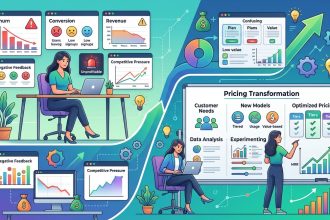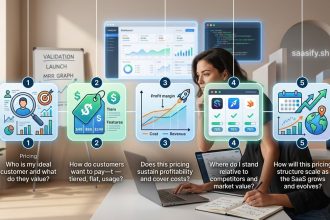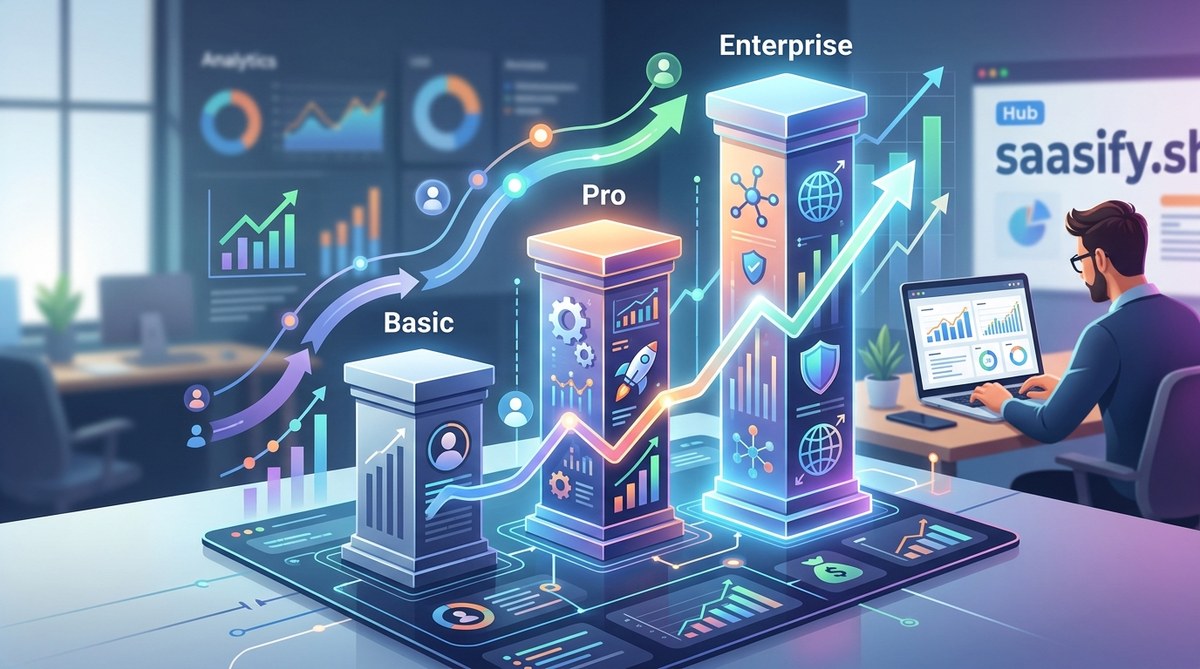
Building a solid pricing strategy is one of the most impactful steps you can take to grow your SaaS. But many founders and product managers stumble when trying to decide how to set up their pricing tiers. Should they go for simple flat rates or create multiple levels that cater to different customer segments? How do you design tiers that encourage users to upgrade without causing confusion? Getting this right can lead to happier customers, increased revenue, and a stronger brand.
Effective SaaS pricing tiers balance value, simplicity, and flexibility. They help maximize customer lifetime value by catering to different needs while reducing churn and fostering loyalty.
Understanding how to craft the right SaaS pricing tiers is crucial for long-term success. It is not just about setting prices but about creating a structure that aligns with your customers’ expectations and your growth goals. Well-designed tiers can motivate customers to upgrade, reduce support complexity, and improve your revenue predictability.
Why SaaS pricing tiers matter for your growth
Pricing tiers are more than just different price points. They are a strategic tool to segment customers based on their needs, willingness to pay, and usage patterns. When structured properly, tiers can:
- Maximize revenue through up-selling opportunities.
- Reduce churn by offering more tailored options.
- Encourage users to start small and upgrade as they see value.
- Simplify decision-making for customers.
- Increase perceived value by offering clear, differentiated options.
A good tier system supports your product’s positioning. For instance, a free or low-cost plan can attract early users, while premium tiers serve power users and enterprise clients. Balancing these tiers allows you to grow your customer base while maintaining healthy margins.
How to design SaaS pricing tiers that work
Designing effective tiers involves a combination of understanding your customers, your product, and your business model. Follow these steps to create a tier structure that aligns with your goals:
-
Identify customer segments and their needs.
Look at your current users or target market. Are there distinct groups? For example, small teams, growing startups, or large enterprises may require different features and support levels. Conduct surveys or interview potential users to understand their priorities. -
Define core value differentiators.
What makes each tier unique? Focus on features, usage limits, support options, or integrations. Clear differences help customers see the value in upgrading. -
Set price points that reflect customer willingness to pay and your costs.
Use market research, competitor analysis, and your own cost structure to determine prices. Remember that pricing should be consistent with the value delivered and your positioning. -
Create a logical progression.
Ensure that higher tiers offer genuine enhancements over lower ones. Customers should feel that upgrading provides real benefits. Avoid creating tiers that are too similar or that make decision-making hard. -
Balance simplicity and flexibility.
Too many tiers can confuse users, while too few may limit growth. Typically, three to five tiers work well. Use a bulleted list for easy scanning: -
Basic plan: core features for casual or new users.
- Standard plan: additional features for growing teams.
- Premium plan: advanced capabilities for power users.
-
Enterprise plan: custom options for large organizations.
-
Test and iterate.
Launch with your initial setup but gather data. Monitor conversion rates, churn, and customer feedback. Adjust tiers or prices as needed.
Practical tips for tiered SaaS pricing
- Use usage-based or feature-based differentiation to add clarity.
- Offer a free tier or trial to lower barriers and attract early users.
- Use psychological pricing tactics, like anchoring higher-priced tiers.
- Clearly communicate the benefits and differences of each tier.
- Avoid overwhelming users with too many options.
Common pitfalls and how to avoid them
| Technique | Mistake | How to avoid it |
|---|---|---|
| Multiple tiers | Too many options create decision fatigue | Keep options simple, ideally three to five tiers |
| Flat pricing | Failing to segment customers | Use value or usage differentiation to encourage upgrades |
| Rigid tiers | Not allowing flexibility | Offer custom or add-on options for unique needs |
| Confusing features | Overlapping tiers | Clearly differentiate features and benefits |
“The goal of tiered pricing is not just to increase revenue but to match your product’s value with your customer’s needs. When customers see a clear path to more value, they are more likely to upgrade.” – SaaS pricing strategist
Techniques for effective SaaS pricing tiers
- Value-based differentiation: Focus on the core benefits that matter most to each customer segment.
- Usage thresholds: Offer tiers based on usage limits, such as API calls or storage.
- Feature bundling: Package features together to create perceived value.
- Psychological pricing: Use charm pricing or anchor higher-priced options to make lower tiers seem more attractive.
Mistakes to steer clear of
- Creating too many similar tiers that confuse buyers.
- Underpricing or overpricing, leading to lost revenue or unhappy customers.
- Ignoring customer feedback during initial launches.
- Not aligning the tiers with your overall business strategy.
How to implement and test your SaaS tiers
- Start simple with three main tiers: free, standard, premium.
- Monitor key metrics like conversion rate, churn, and upgrade frequency.
- Gather customer feedback regularly to understand pain points or unmet needs.
- Iterate based on data. If a certain tier is underperforming, adjust features or pricing.
- Consider adding add-ons for flexibility without cluttering your main tiers.
Final thoughts on mastering SaaS pricing tiers
Getting your SaaS pricing tiers right is an ongoing process. It requires understanding your customers deeply, testing different configurations, and being willing to adjust. Remember, the goal is to create a structure that encourages growth, increases lifetime value, and keeps customers happy.
Your pricing strategy can become a powerful growth engine when aligned with your product and market. Take the time to analyze your user base, segment thoughtfully, and experiment with different tier configurations. Small adjustments can lead to big results.
As you implement these principles, keep in mind that transparency and simplicity often outperform complex, opaque models. Customers appreciate clarity and value, which ultimately leads to loyalty and higher revenue.
Start small, learn fast, and refine your SaaS pricing tiers regularly. Your efforts will pay off as your customer base grows stronger and more engaged.
Refining your SaaS tiers for long-term success
Building effective SaaS pricing tiers is a dynamic process. It’s about balancing the needs of your users with your revenue goals. Over time, as your product evolves and your customer base expands, revisit your tiers to ensure they remain aligned.
Keep testing new ideas, listening to customer feedback, and adjusting your approach. With a thoughtful strategy, your SaaS can grow sustainably while delivering real value to your users. Remember, the right pricing tiers are a cornerstone of a thriving SaaS business.