Copying a winning SaaS product isn’t theft. It’s smart business.
The best founders don’t always invent something new. They take what works, make it better for a specific audience, and execute faster than the original. This approach has launched countless profitable businesses, from small micro-SaaS tools to multi-million dollar companies.
Cloning successful SaaS business models means identifying proven products, validating demand in underserved markets, and building differentiated versions faster than competitors. This strategy reduces risk, shortens validation cycles, and lets you focus on execution instead of unproven ideas. The key is adding meaningful improvements, not creating identical copies.
Why cloning works better than starting from scratch
Building something completely new sounds exciting. But it’s also the riskiest path to profitability.
When you clone a successful SaaS business, you’re starting with proof that people will pay for the solution. The market already exists. The problem is validated. Your job is execution, not convincing the world they need your product.
Most founders waste months on ideas nobody wants. They build features users ignore. They price products incorrectly because they have no reference points.
Cloning eliminates these problems. You can see what works, study pricing models that convert, and learn from competitors’ mistakes before writing a single line of code.
The difference between cloning and copying is simple. Copying creates an identical product. Cloning takes a proven concept and makes it better for a specific audience or use case.
Finding products worth replicating
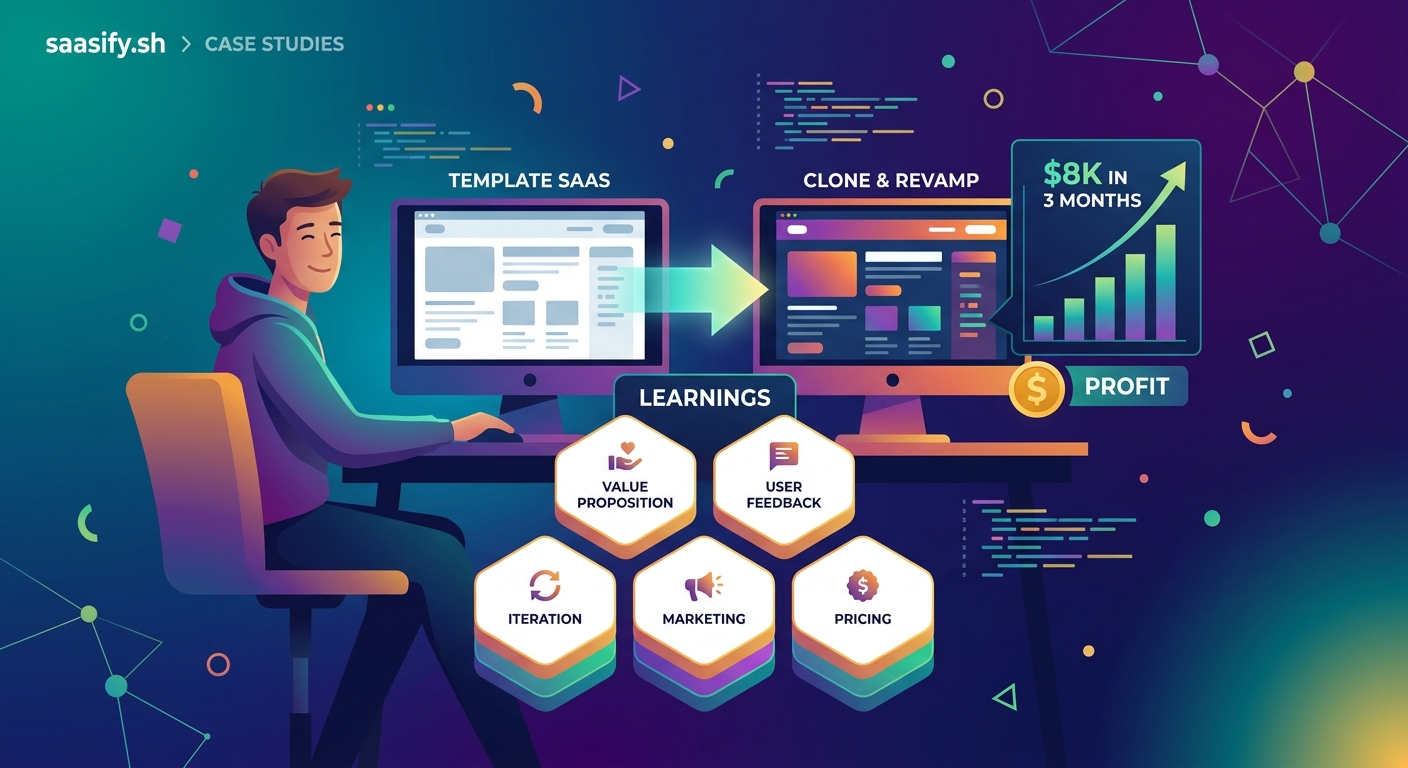
Not every successful SaaS makes a good clone target. You need products with clear gaps, underserved audiences, or technical implementations you can improve.
Start by looking at products with these characteristics:
- Monthly recurring revenue above $10K but below $1M
- Simple core features that solve one problem well
- Complaints in reviews about missing features or poor support
- High pricing that excludes smaller customers
- Technical debt that slows down the original product
The sweet spot is established products that stopped innovating. They’ve proven the market exists but gotten comfortable with their position.
How to reverse-engineer successful SaaS products to generate your next idea covers specific techniques for analyzing competitors and finding opportunities they’re missing.
Where to find clone-worthy products
Browse these sources weekly to spot patterns:
- Product Hunt collections sorted by upvotes and comments
- G2 and Capterra reviews filtered by 3-star ratings
- Indie Hackers product pages with revenue data
- Reddit threads where people ask for alternatives
- Twitter complaints about expensive or bloated software
Look for products where users say “I love this but I wish it had…” That’s your opening.
Validating demand before you build
Just because a product is successful doesn’t mean your version will be. You need to validate that your specific angle has demand.
The pre-build validation process
Follow these steps before writing code:
- Identify three specific improvements over the original product
- Find 10 people who currently use the competitor
- Ask them if your improvements would make them switch
- Build a landing page describing your version
- Drive 100 visitors and measure signup rate
- Get 20 email addresses from interested users
- Interview 5 of them about pricing
This process takes one week. If you can’t get 20 signups from 100 visitors, your angle isn’t different enough.
How to validate your SaaS idea before writing a single line of code provides templates and scripts for each validation conversation.
Questions that reveal real demand
Ask potential users these specific questions:
- What made you choose the current product over alternatives?
- What frustrates you most about using it daily?
- What features would make you switch to a competitor?
- How much do you currently pay per month?
- What’s the maximum you’d pay for a better version?
The answers tell you if your improvements matter enough to drive switching behavior.
Building your differentiated version
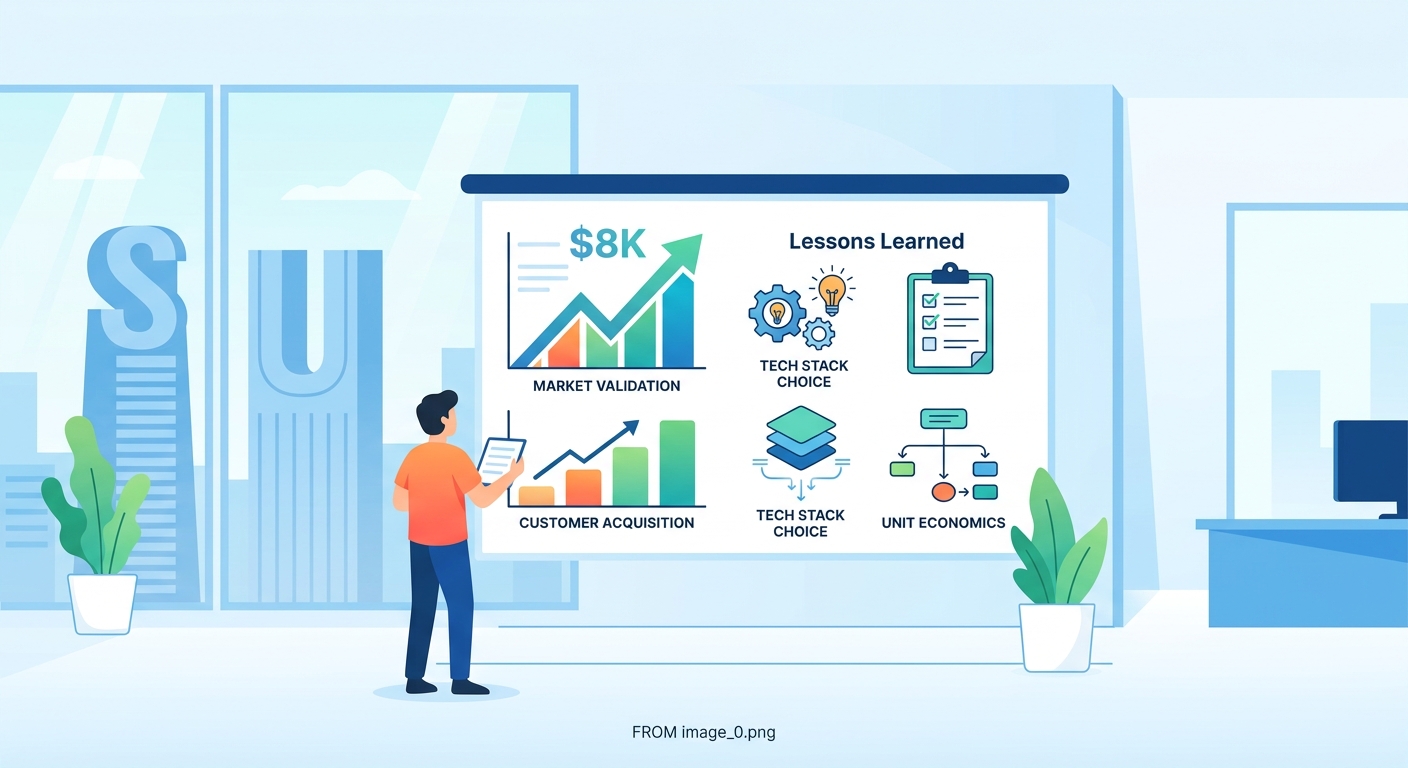
Your clone needs meaningful differences. Small UI changes won’t convince users to switch from established products.
Focus on one of these differentiation strategies:
Vertical specialization: Build for a specific industry the original product serves poorly. A general invoicing tool becomes invoicing software for freelance photographers with industry-specific templates and workflows.
Pricing model shift: Take an expensive enterprise product and create a self-service version for small businesses. Or flip a freemium product into a premium-only offering with better support.
Technical improvement: Rebuild with modern architecture that’s faster, more reliable, or easier to integrate. Users care about performance and stability.
Feature simplification: Remove 80% of features and perfect the core 20% that users actually need. Charge less and attract customers overwhelmed by bloated competitors.
Geographic focus: Localize for markets the original product ignores. Add language support, local payment methods, and region-specific features.
Building SaaS features users actually want: a developer’s validation framework helps you prioritize which improvements to build first.
The MVP feature set
Your first version needs just enough to prove your differentiation. Include:
- Core functionality that matches the original product
- Your primary differentiator fully implemented
- Basic user authentication and billing
- Minimal but functional UI
- Simple onboarding flow
Everything else can wait until you have paying customers.
How to build a SaaS MVP in 30 days without burning out provides a realistic timeline for solo developers.
Pricing strategies that convert switchers
Pricing a clone is easier than pricing an original product because you have reference points.
Start by analyzing the competitor’s pricing:
| Pricing Approach | When to Use | Typical Conversion Rate |
|---|---|---|
| 30% cheaper | Targeting price-sensitive users | 15-20% of visitors |
| Same price, more features | Competing on value | 10-15% of visitors |
| 2x more expensive, premium positioning | Serving underserved high-end market | 5-10% of visitors |
| Usage-based vs fixed tiers | Different cost structure | 12-18% of visitors |
The safest approach is matching their pricing but offering more value. This positions you as the obvious choice without triggering a race to the bottom.
How to price your SaaS product when you have zero customers walks through specific pricing calculations and experiments.
Testing price points with early users
Offer your first 50 users a choice between two pricing tiers. Track which tier converts better and what feedback you get about perceived value.
Don’t grandfather everyone at launch pricing. Give early adopters a discount code that expires after 12 months. This lets you test higher prices with new users while rewarding early supporters.
Getting your first customers from competitor users
The fastest path to revenue is converting users who already pay for similar products.
Direct outreach strategies
Find competitor users through:
- LinkedIn searches for job titles that use the product
- Twitter users who mention the competitor by name
- Review sites where people list their current tools
- Industry-specific forums and communities
- Product-specific Facebook or Slack groups
Send personalized messages that acknowledge their current solution and explain your specific improvement. Don’t trash the competition. Focus on what you do better.
Template that works:
“I noticed you use [Competitor] for [use case]. I built [Your Product] specifically for [your niche] with [specific improvement]. Would you be interested in trying it? I’m offering the first 20 users 50% off for life.”
Content that attracts switchers
Write comparison content that ranks for searches like “[Competitor] alternative” or “best [category] for [your niche].”
Make honest comparisons. List what the competitor does well and where your product excels. Users trust balanced reviews more than one-sided sales pitches.
7 low-cost marketing channels that actually work for micro-SaaS covers distribution strategies that don’t require advertising budgets.
Avoiding legal problems when cloning
Cloning is legal. Copying code, design, or branding is not.
What you can legally replicate
You’re free to build software that:
- Solves the same problem as another product
- Uses similar features and workflows
- Targets the same customer base
- Competes directly on functionality
Ideas and business models can’t be copyrighted. Only specific implementations can.
What crosses the line
Never copy:
- Source code or proprietary algorithms
- Exact UI designs or visual layouts
- Brand names, logos, or color schemes
- Marketing copy or documentation
- Customer data or user lists
Build your product from scratch. Study how competitors work, then implement your own version using different code and design.
If you’re unsure about specific features, consult a lawyer who specializes in software IP. The investment is worth avoiding lawsuits later.
Common mistakes that kill SaaS clones
Most failed clones make predictable errors. Avoid these:
Building an identical copy: If your product looks and works exactly like the original, users have no reason to switch. Add meaningful improvements or serve a different audience.
Underestimating customer loyalty: Switching costs are real. Users need compelling reasons to migrate data, learn new tools, and change workflows.
Ignoring customer support: Clones often succeed by offering better support than established competitors. Don’t automate everything. Talk to your users.
Competing on features alone: Feature parity isn’t enough. You need better execution, clearer positioning, or superior user experience.
Starting price wars: Competing only on price attracts customers who’ll leave for the next cheaper option. Compete on value instead.
The best clones don’t try to replace the original product. They serve a specific segment better than the general-purpose solution ever could. Find your niche and own it completely.
Scaling beyond the initial clone
Once your clone reaches profitability, you have options.
Some founders stay focused on their niche and optimize for profit. Others expand features and compete more directly with the original product. Both paths work.
The key is making an intentional choice. Don’t drift into feature bloat by copying every competitor update. Stay focused on what makes your version different.
Scaling from $1K to $10K MRR: what actually changes in your growth strategy covers tactical shifts as your clone grows.
When to pivot vs double down
Consider pivoting if:
- Your differentiation isn’t compelling enough to drive switching
- The original product copied your improvements
- Customer acquisition cost exceeds lifetime value
- You’ve discovered a better opportunity while building
Double down when:
- Users consistently praise your specific improvements
- Organic growth continues without paid acquisition
- Competitors can’t easily replicate your advantage
- You’re genuinely excited about serving your niche
Most successful clones succeed by staying focused on their original differentiation and executing better than competitors.
Making your clone strategy work
Cloning successful SaaS business models is about smart execution, not theft. You’re taking proven concepts and making them better for specific audiences.
The founders who succeed with this approach validate quickly, build focused products, and serve their niches better than general-purpose competitors ever could.
Start by finding one product with clear gaps. Validate that your improvements matter to real users. Build the minimum version that proves your differentiation. Then focus everything on serving your first customers better than anyone else could.
The market doesn’t need another identical product. But there’s always room for someone who executes better, serves a niche more deeply, or solves the same problem in a meaningfully different way.