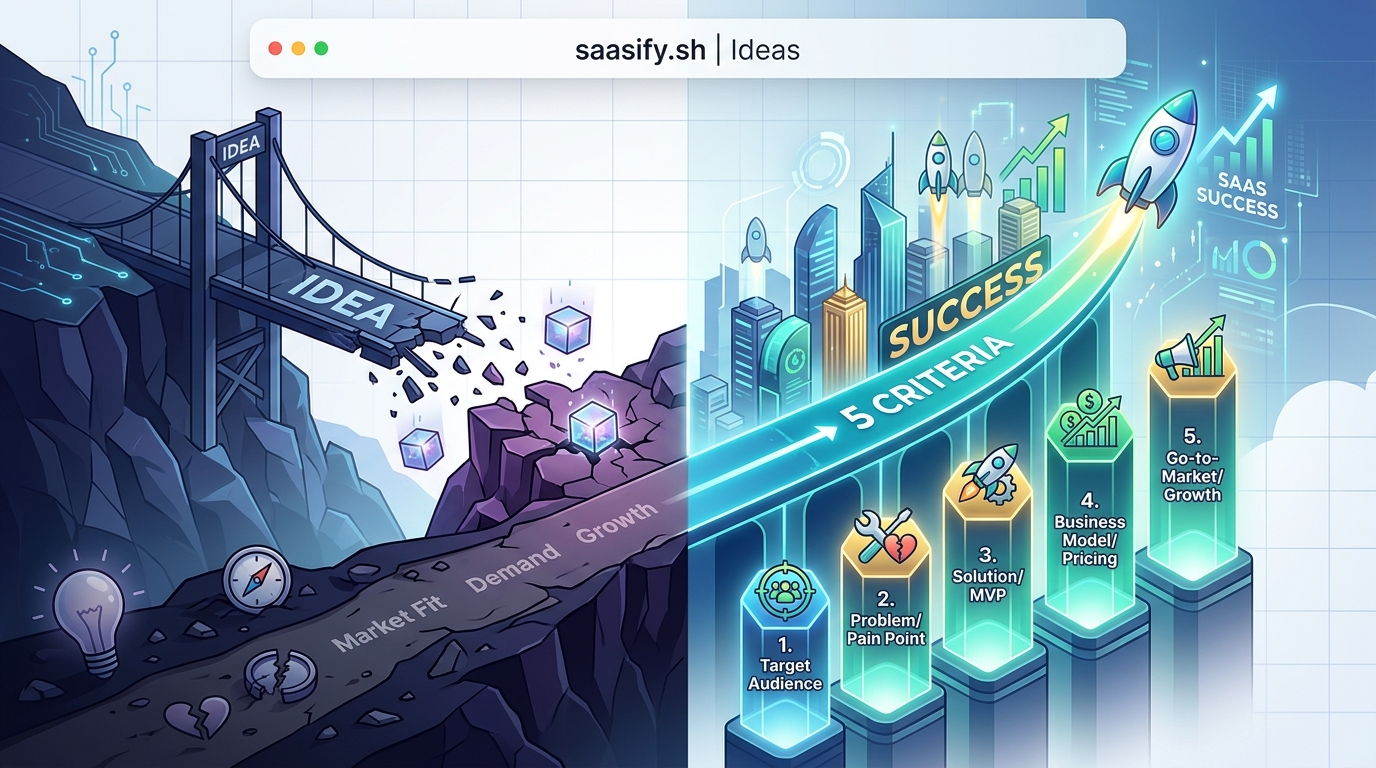
Building a SaaS product feels like the ultimate entrepreneurial dream. You write code, launch, and watch recurring revenue roll in while you sleep. Except most founders wake up to a different reality. Over 90% of SaaS startups shut down before reaching meaningful traction. The graveyard is full of well-built products that nobody wanted, perfectly coded solutions to problems that didn’t exist, and brilliant features that users never discovered.
SaaS startups fail primarily because founders build solutions before validating problems, price incorrectly from day one, ignore distribution channels, run out of runway before finding [product-market fit](https://en.wikipedia.org/wiki/Product-market_fit), and measure vanity metrics instead of actionable data. Success requires systematic validation, strategic pricing, early distribution planning, realistic financial modeling, and focusing on metrics that actually predict growth and retention.
Building without validation kills more startups than bad code
The most common failure pattern starts with a founder who spots what seems like an obvious gap in the market. They spend six months building the perfect solution. They launch. Crickets.
The problem wasn’t the execution. It was the assumption.
Most founders skip the uncomfortable work of validation because it feels slower than just building. But validating your SaaS idea before writing code saves months of wasted effort.
Here’s what proper validation looks like:
- Talk to 30 potential users before writing any code. Not friends. Not family. Real people who experience the problem daily.
- Ask about their current solution. If they’re not paying for something already (even a clunky workaround), the pain isn’t strong enough.
- Get them to pre-pay or join a waitlist. Words are cheap. Money and email addresses show real intent.
- Build a landing page and run $100 in ads. If you can’t get clicks at $2 CPC, you won’t get customers at $50 MRR.
The founders who succeed don’t have better ideas. They validate harder.
Pricing mistakes compound over time
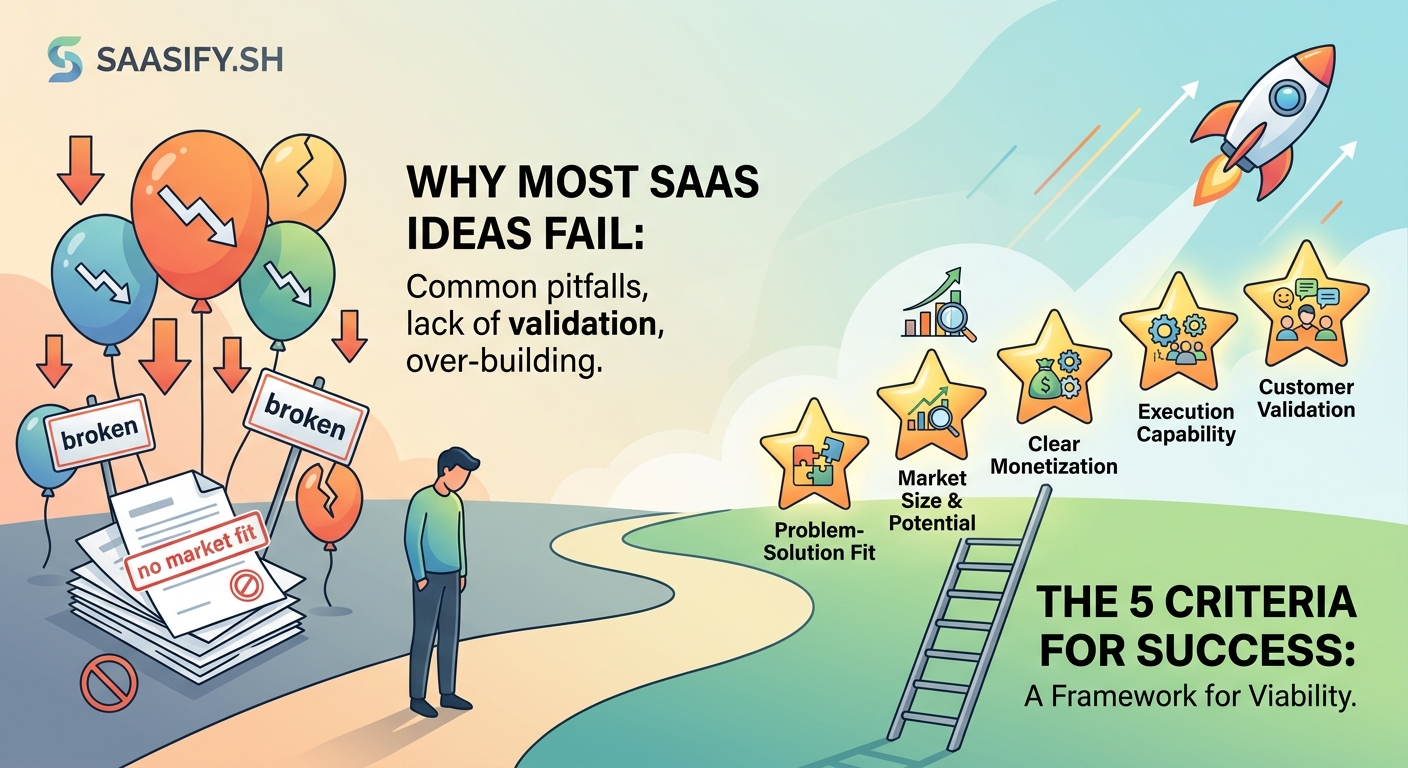
Pricing is where most founders lose before they even start. They pick a number that “feels right” or undercut competitors by 50% to seem like a bargain.
Both strategies fail.
Underpricing signals low value. It attracts tire-kickers who churn fast and complain loudly. It also makes unit economics impossible. If your product costs $9/month and your customer acquisition cost is $47, the math never works.
Overpricing without clear differentiation scares away early adopters who might have evangelized your product.
Here’s the framework that actually works:
| Pricing Mistake | Why It Fails | Better Approach |
|---|---|---|
| Copying competitor pricing | Ignores your different cost structure and value prop | Calculate your costs, then test 3 price points |
| Starting too low to get traction | Attracts wrong customers, impossible to raise later | Price for your ideal customer segment, not everyone |
| One-size-fits-all pricing | Leaves money on table from power users | Create clear value-based tiers with usage limits |
| No annual discount | Loses predictable cash flow | Offer 2 months free for annual commitment |
The founders who nail pricing early don’t guess. They run structured experiments and track what actually converts.
Pricing your SaaS when you have zero customers requires a different approach than optimizing pricing at scale.
Distribution gets ignored until it’s too late
Building a great product is table stakes. Getting it in front of buyers is the actual game.
Most technical founders treat marketing as something they’ll “figure out later.” By the time later arrives, they’ve burned through their runway and have 47 users.
Distribution needs to be part of your strategy from day one. Not after launch. Before you write the first line of code.
Ask yourself these questions:
- Where do your target users hang out online right now?
- What search terms would they use when looking for a solution?
- Who already has their attention and trust?
- What content would they actually want to read?
If you can’t answer these specifically, you’re not ready to build.
The best indie founders pick a distribution channel before they pick features. They choose problems that exist in communities they already have access to. They build products that naturally generate word-of-mouth.
Finding distribution channels that work matters more than having the most features.
“I spent 8 months building the perfect project management tool. I spent 2 weeks thinking about how to get users. That ratio should have been reversed.” – Failed SaaS founder, post-mortem blog
Running out of money before finding fit
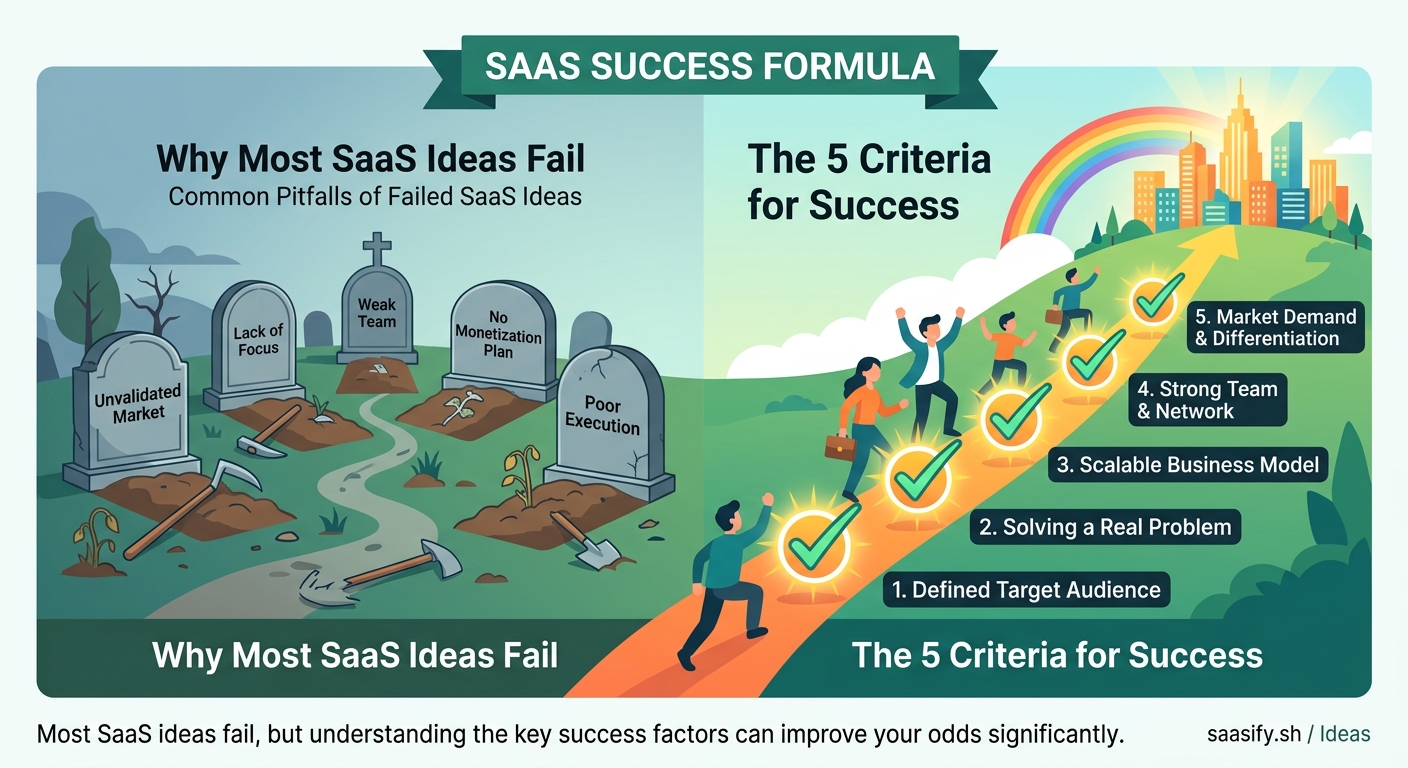
Cash flow kills more startups than competition.
The typical pattern looks like this: Founder quits their job with $30k saved. Spends 4 months building. Launches. Gets 15 paying customers in month one. Thinks they’ve made it. Burns through savings in month 8. Shuts down in month 11.
The problem wasn’t the product. It was the timeline.
Finding product-market fit takes longer than you think. Getting to $10k MRR takes longer than getting to $1k MRR. Scaling from $10k to $50k takes longer than both combined.
Here’s how to avoid the cash crunch:
- Keep your day job longer than feels comfortable. Launch while employed. Quit only after hitting $3k MRR for three consecutive months.
- Build an MVP in 30 days, not 6 months. Every extra month of development is a month you’re not learning from real users.
- Charge from day one. Free users give you false validation and drain support resources.
- Track burn rate weekly. Know exactly how many months of runway you have at all times.
The founders who make it aren’t the ones with the biggest savings. They’re the ones who extend their runway long enough to iterate into something that works.
Building a SaaS MVP without burning out means ruthlessly cutting scope and shipping fast.
Measuring the wrong things creates false confidence
Signups feel good. Total users looks impressive on a dashboard. Monthly active users sounds like a real metric.
None of them predict success.
The vanity metrics trap is seductive. You can always find a number that’s going up. Website visitors increased 40% this month. Email list grew by 200 people. Twitter followers hit 1,000.
Meanwhile, revenue stays flat.
Here are the only metrics that matter in the first year:
- Paying customers (not signups, not trials, not “interested” leads)
- Monthly recurring revenue (actual money hitting your bank account)
- Churn rate (percentage of customers who cancel each month)
- Customer acquisition cost (total marketing spend divided by new customers)
- Time to first value (how long until a new user gets their first win)
If your churn rate is above 10% monthly, you don’t have a growth problem. You have a product problem. If your CAC is higher than 3 months of customer lifetime value, you don’t have a scaling problem. You have a unit economics problem.
Track these five numbers weekly. Ignore everything else until you hit $10k MRR.
Technical debt becomes technical bankruptcy
Every shortcut you take in the first three months will haunt you in month six.
Founders racing to launch often skip the boring infrastructure work. No proper database schema. No real error handling. No thought about how things will scale. Just ship and fix it later.
Later arrives faster than you think.
At 100 users, the hacky solution works fine. At 500 users, things start breaking. At 1,000 users, you spend more time firefighting than building new features. At 2,000 users, you’re rebuilding the entire system while trying to keep existing customers happy.
The solution isn’t to over-engineer everything. It’s to make smart architectural decisions early that don’t lock you into painful rewrites later.
Focus on these areas from day one:
- Database design that supports multi-tenancy properly. Avoiding database mistakes saves months of migration pain.
- Authentication that can scale. Choosing between OAuth, magic links, or traditional login matters more than you think.
- Payment processing that handles edge cases. Failed payments, prorated upgrades, and refunds need to work correctly.
- Basic monitoring and alerting. You need to know when things break before customers tell you.
Technical founders often get this backwards. They obsess over framework choice but ignore data modeling. They debate monolith versus microservices but skip error handling.
Choosing your tech stack matters less than getting the fundamentals right.
Solving problems nobody wants solved
The graveyard is full of products that work perfectly but solve problems users don’t actually have.
This happens when founders fall in love with their solution before validating the problem. They build the thing they wish existed, not the thing people will pay for.
The pattern looks like this:
- Founder has an idea
- Founder builds for 6 months
- Founder launches to their network
- Friends say “cool idea” but don’t sign up
- Founder adds more features
- Still no traction
- Founder pivots or shuts down
The fix is simple but uncomfortable. Talk to users constantly. Not to pitch your solution. To understand their problems.
Ask these questions:
- What’s the most frustrating part of your workflow right now?
- How much time do you spend on this problem weekly?
- What have you already tried to fix it?
- How much would solving this be worth to you?
If they’re not already spending time or money trying to solve the problem, it’s not a real problem. It’s a nice-to-have.
Finding problems people actually want solved requires talking to users, not just building in isolation.
Launching wrong compounds failure
Most founders think about launch as a single day event. They prepare for Product Hunt. They write a launch announcement. They post on Twitter. Then they wonder why traffic disappears after 48 hours.
Launch isn’t a day. It’s a process that starts weeks before and continues weeks after.
The founders who get launch right do this:
- Build an audience before building the product. Share progress updates. Collect emails. Create anticipation.
- Coordinate multiple channels simultaneously. Product Hunt alone won’t save you. You need Reddit, Twitter, communities, and email working together.
- Have a follow-up sequence ready. The people who visit on launch day but don’t convert need nurturing, not abandonment.
- Prepare for the traffic spike. Creating a launch day runbook prevents disasters.
The biggest launch mistake is treating it like the finish line instead of the starting gun.
Understanding why launches fail in the first 72 hours helps you avoid the common traps.
Building features users don’t need
Feature bloat starts innocently. A customer requests something. You build it. Another customer asks for something else. You build that too. Six months later, your app has 47 features and new users feel overwhelmed.
More features don’t make a better product. They make a more confusing product.
The best SaaS products do one thing exceptionally well. They solve a specific problem for a specific user better than any alternative. Then they stop.
Every feature you add creates:
- More code to maintain
- More bugs to fix
- More documentation to write
- More confusion for new users
- More support questions to answer
Before building any feature, ask:
- Does this solve a problem for at least 30% of users?
- Will this make the core value proposition clearer or muddier?
- Can we solve this with configuration instead of code?
- What’s the opportunity cost of building this instead of improving the core?
Building features users actually want requires a validation framework, not just a feature request list.
The hardest skill for founders is saying no. To customers. To ideas. To scope creep.
Ignoring retention while chasing acquisition
Getting new customers feels like progress. Watching existing customers leave feels like failure.
Most founders focus on the wrong end of the funnel. They optimize landing pages. They run ads. They post on social media. All while their churn rate sits at 15% monthly.
Here’s the math that kills startups: If you add 100 customers per month but lose 15% of your base monthly, you need exponential growth just to stand still.
At 1,000 customers, you lose 150 per month. You need 150 new customers just to break even. At 2,000 customers, you lose 300 per month. The treadmill keeps speeding up.
Fix retention before scaling acquisition.
- Onboard users properly. The first 10 minutes determine if they stay or leave.
- Deliver value in the first session. Don’t make them wait for setup or integrations.
- Identify at-risk users early. If someone hasn’t logged in for 7 days, reach out.
- Talk to churned customers. They’ll tell you exactly what went wrong.
Focusing on retention versus acquisition determines whether you’re building a leaky bucket or a growing business.
A 5% monthly churn rate is sustainable. A 15% monthly churn rate is terminal.
Competing on features instead of positioning
When founders don’t know how to differentiate, they add features. They look at competitors and try to match every checkbox. They build feature comparison tables showing they have everything the big players have, plus three more things.
This strategy fails because you’re competing on the wrong axis.
Customers don’t buy feature lists. They buy solutions to specific problems. They buy from companies they trust. They buy experiences that feel designed for them.
The best positioning isn’t “we do everything they do, but cheaper.” It’s “we’re the only solution built specifically for [your narrow target audience].”
Examples that work:
- Not “project management for everyone” but “project management for architecture firms”
- Not “email marketing software” but “email marketing for Shopify stores”
- Not “CRM for sales teams” but “CRM for real estate agents”
The narrower your positioning, the easier everything becomes. Marketing becomes clearer. Feature decisions become obvious. Pricing becomes justifiable.
Choosing between horizontal and vertical SaaS determines your entire go-to-market strategy.
Avoiding the patterns that predict failure
The data is clear. SaaS startups fail for predictable, avoidable reasons.
They build before validating. They price without strategy. They ignore distribution. They run out of money. They measure vanity metrics. They accumulate technical debt. They solve problems nobody has. They launch wrong. They bloat features. They leak customers. They compete on features.
Each mistake alone is survivable. Combined, they’re fatal.
The founders who make it don’t have better ideas or more funding. They systematically avoid these traps. They validate obsessively. They price strategically. They distribute early. They extend runway. They track real metrics. They build smart. They solve real problems. They launch deliberately. They stay focused. They retain customers. They position clearly.
Your SaaS idea might be brilliant. But brilliance doesn’t matter if you fall into the same traps that killed the last 10,000 startups. Learn from their mistakes. Validate before you build. Price for value. Plan distribution. Watch your burn rate. Measure what matters.
The difference between success and failure isn’t the idea. It’s the execution of these fundamentals.