You’ve got a SaaS idea that keeps you up at night. It feels like a winner. But here’s the brutal truth: most founders skip validation and build products nobody wants. They spend months coding, only to launch to crickets. The problem isn’t the quality of their code. It’s that they never confirmed anyone actually needs what they’re building.
Validating your SaaS idea before writing code saves months of wasted effort and prevents building features nobody wants. Use a combination of problem interviews, landing page tests, and manual service delivery to confirm real demand. Focus on identifying whether people have the problem you’re solving, if they’re actively looking for solutions, and if they’ll actually pay for yours before committing to full development.
Why most founders get validation wrong
Most technical founders treat validation like a checkbox. They ask friends if the idea sounds good. They post in a few forums. They get some polite “yeah, that could be useful” responses and call it validated.
That’s not validation. That’s confirmation bias with extra steps.
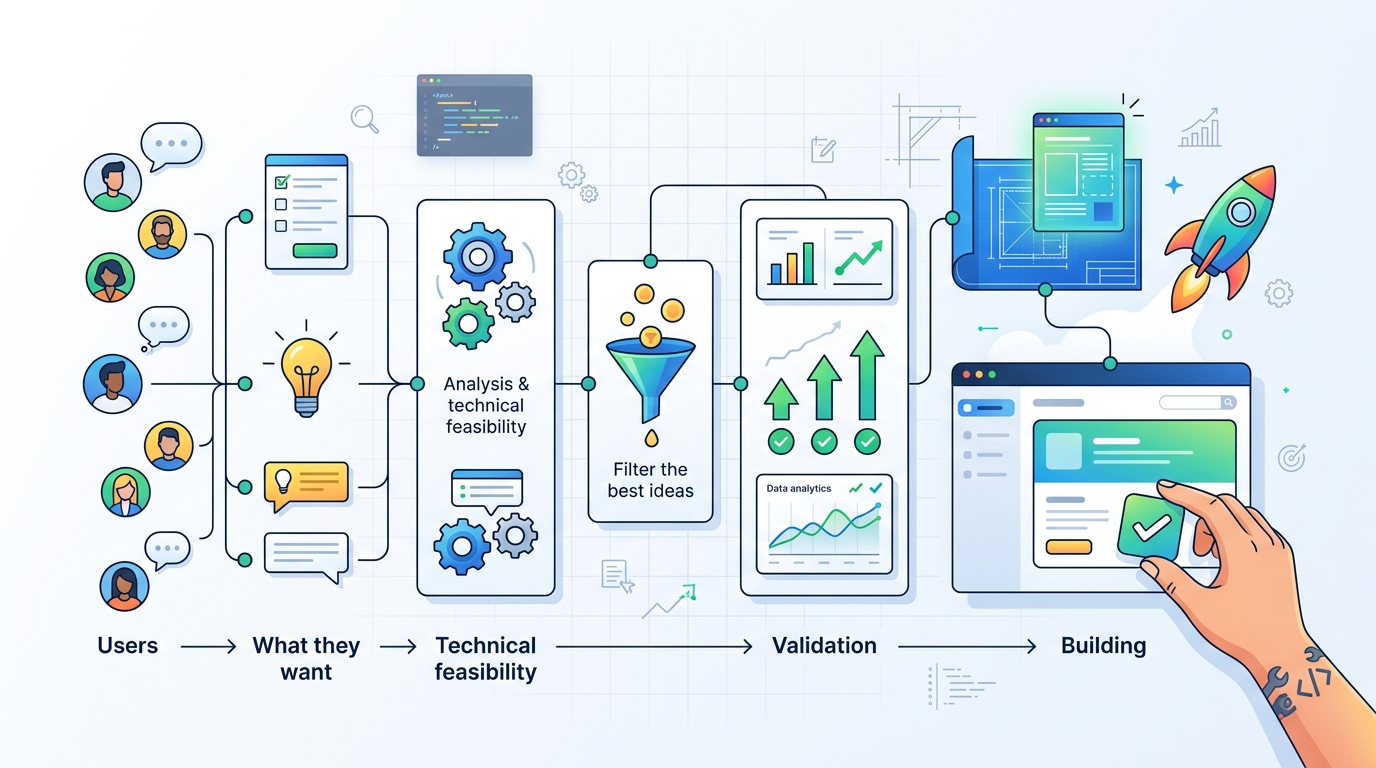
Real validation means proving three things:
- People have the problem you think they have
- They’re actively trying to solve it
- They’ll pay money for your specific solution
Everything else is just noise.
The mistake happens because developers want to build. We’re wired to solve problems with code. Validation feels like a delay. But here’s what actually happens when you skip it: you build for six months, launch, get zero traction, pivot desperately, and burn out.
How to validate your SaaS idea before writing a single line of code requires discipline. You need to resist the urge to open your code editor until you’ve proven demand exists.
The problem interview framework
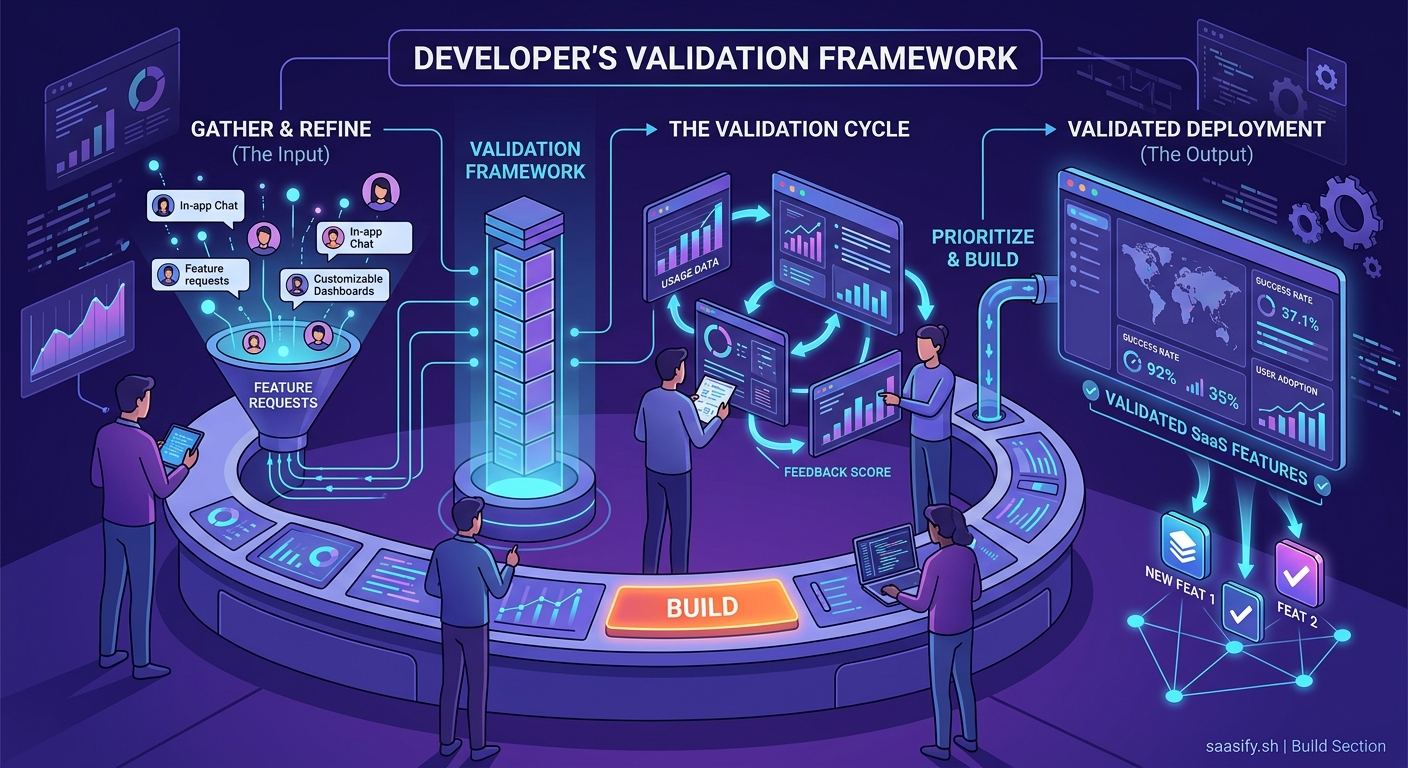
Start with conversations, not code.
Your goal is to talk to 20-30 people who might have the problem you’re trying to solve. Not friends. Not family. Real potential customers.
Here’s the structure that works:
Step 1: Find the right people
Look for communities where your target users already gather. Reddit, Discord servers, LinkedIn groups, Slack communities, or niche forums. Don’t pitch anything yet. Just observe and take notes on who’s complaining about problems related to your idea.
Step 2: Reach out with curiosity
Send a message like this: “Hey, I noticed you mentioned [specific problem] in the [community name]. I’m researching this space and would love to hear more about your experience. Would you have 15 minutes for a call?”
Keep it short. No sales pitch. Pure curiosity.
Step 3: Ask the right questions
During the call, focus on their past behavior, not hypothetical futures:
- “Walk me through the last time this problem came up.”
- “What did you try to solve it?”
- “What tools are you currently using?”
- “How much does this problem cost you in time or money?”
- “Have you looked for solutions before?”
Notice what you’re NOT asking: “Would you use a tool that does X?” That question is worthless. People lie about future behavior, even when they don’t mean to.
The best validation question is always about the past. What did someone actually do, not what they think they might do. Past behavior predicts future behavior better than any hypothetical scenario.
Step 4: Listen for pain intensity
You’re listening for urgency. Are they working around the problem right now? Have they tried multiple solutions? Are they paying for something that only partially works?
If someone says “yeah, that’s annoying” but hasn’t tried to solve it, the pain isn’t strong enough. You need people who are already spending time or money on imperfect solutions.
The landing page validation test
After 15-20 interviews, you should have a clear picture of the problem and how people describe it. Now you test if they’ll actually sign up.
Build a simple landing page. Not a prototype. Not even a mockup. Just a page that explains what you’re planning to build and asks for an email address.
Here’s what goes on the page:
- Headline: State the problem in their words (use exact phrases from your interviews)
- Subheadline: Explain your solution in one sentence
- Three bullet points: The main benefits
- Social proof: Mention how many people you’ve talked to who have this problem
- Call to action: Email signup for early access
That’s it. No fancy design. No animations. Just clear copy and an email form.
Now drive traffic to it. Share it in the same communities where you found interview subjects. Post it on relevant subreddits (check the rules first). Share it in your personal network. Run small paid ads if you have budget.
Your goal: 100 email signups in two weeks.
If you can’t get 100 people to give you their email address for free early access, you definitely won’t get people to pay. This is your first hard filter.
How to build a pre-launch waitlist that actually converts goes deeper into optimizing this step, but don’t overthink it at first. You just need to prove basic interest exists.
The manual delivery validation method
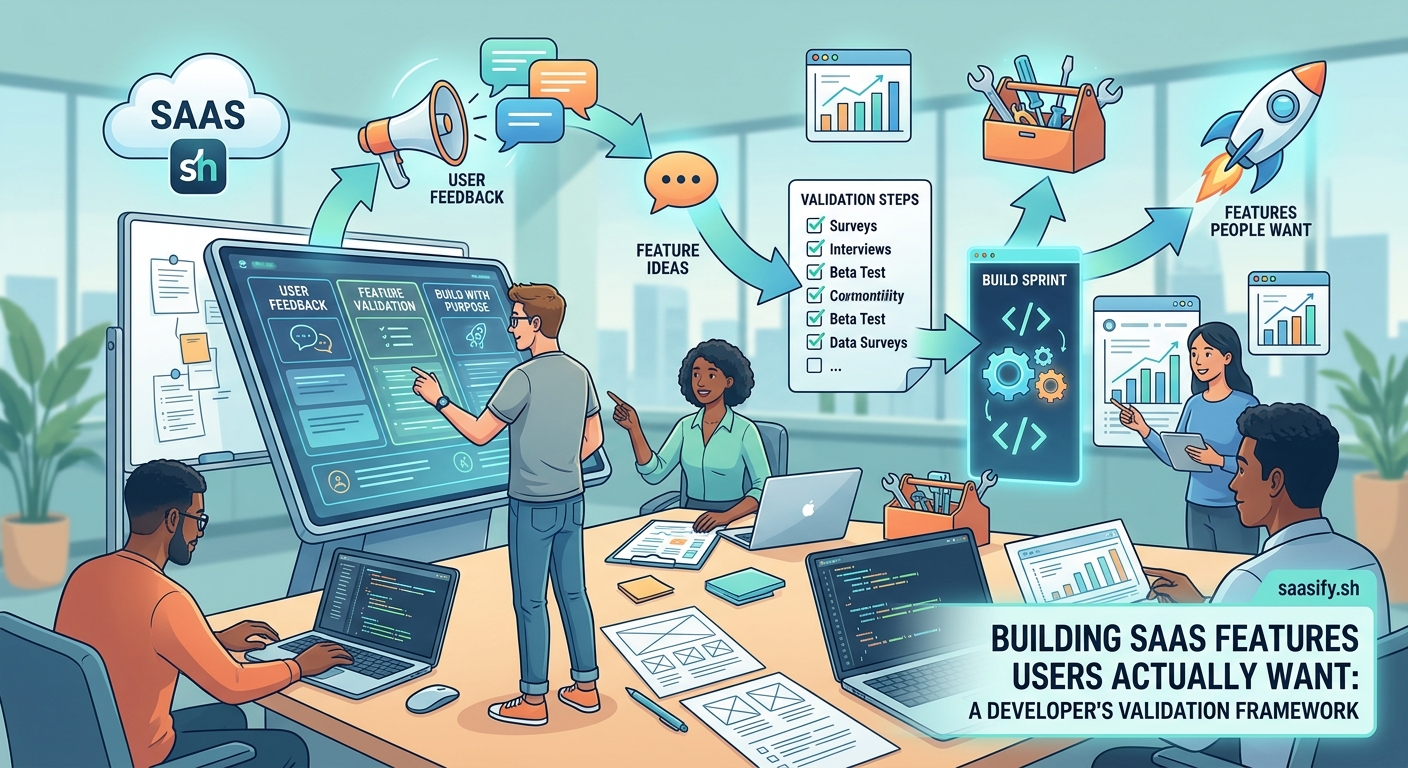
Here’s where most guides stop. But there’s a third validation step that’s even more powerful: deliver your service manually before you build anything.
Let’s say you want to build a tool that automatically generates social media content from blog posts. Instead of building the automation, offer to do it manually for five customers.
Charge real money. Even if it’s just $50. The act of payment changes everything.
Here’s why this works:
- You learn exactly what output quality people expect
- You discover edge cases you never would have thought of
- You see which features actually matter versus which you assumed mattered
- You get paid while you validate
- You build relationships with future beta users
One founder I know wanted to build a competitor analysis tool for e-commerce stores. Instead of coding for six months, she offered to create custom competitor reports manually for $200 each. She sold 15 reports in the first month. Each report took her 3-4 hours to create.
That’s $3,000 in revenue before writing a line of code. More importantly, she learned that customers cared way more about pricing data than traffic data, which completely changed what she built.
Validation signals you can trust
Not all feedback is equal. Here are the signals that actually matter:
Strong signals (trust these):
- Someone pays you money, even a small amount
- Someone refers you to a friend or colleague
- Someone asks when they can start using it
- Someone describes a specific painful incident from the last week
- Someone is currently paying for an inferior solution
Weak signals (ignore these):
- “That’s a cool idea”
- “I would definitely use that”
- “You should build this”
- Generic positive feedback
- Compliments about your pitch or presentation
The difference is commitment. Strong signals involve someone doing something that costs them time, money, or social capital. Weak signals cost nothing and mean nothing.
Common validation mistakes and how to avoid them
Let me save you from the mistakes I see constantly:
| Mistake | Why it fails | What to do instead |
|---|---|---|
| Asking friends for feedback | They want to be supportive, not honest | Talk to strangers who fit your target market |
| Building before talking to users | You’re guessing what they need | Do 20+ interviews first |
| Asking “would you use this?” | People lie about future behavior | Ask about past behavior only |
| Accepting “that’s interesting” as validation | Interest doesn’t equal intent to pay | Look for commitment signals |
| Validating with a prototype | You’ve already invested too much | Validate with conversations and landing pages |
| Targeting “everyone” | No one will care deeply enough | Pick a specific niche first |
The most expensive mistake is building too early. Every hour you spend coding before validation is probably wasted. I know that’s hard to hear as a developer. But it’s true.
How to know when you’re actually validated
You’ve done interviews. You’ve built a landing page. Maybe you’ve even delivered the service manually. But how do you know you’re ready to build?
Look for these three confirmations:
- Problem confirmation: At least 15 people have described the same core problem in similar terms
- Solution confirmation: At least 100 people signed up for your waitlist without you begging
- Payment confirmation: At least 5 people have paid you something, even if you delivered manually
If you have all three, you’re validated. Start building.
If you’re missing one, go back and fix that gap. Missing problem confirmation? Do more interviews. Missing solution confirmation? Rewrite your landing page using better language from your interviews. Missing payment confirmation? Offer manual delivery or pre-orders.
Don’t move forward until you have all three. The temptation to start coding will be strong. Resist it.
Building your minimum viable validation test
You don’t need months to validate. You can do this in two weeks if you’re focused.
Here’s a realistic timeline:
Days 1-3: Research and outreach
– Identify 50 potential interview candidates
– Send outreach messages to all of them
– Set up your landing page (use Carrd, Webflow, or even a Google Form)
Days 4-10: Interviews
– Conduct 20-30 minute calls with anyone who responds
– Take detailed notes on exact phrases they use
– Ask about past behavior only
Days 11-12: Landing page refinement
– Update your landing page copy based on interview insights
– Set up email collection
– Prepare to drive traffic
Days 13-14: Traffic push
– Share in relevant communities
– Post on social media
– Ask interview subjects to share if they’re interested
– Run small paid tests if budget allows
At the end of two weeks, you’ll know if you have something worth building. If you got 20+ quality interviews and 100+ email signups, keep going. If not, either pick a different target market or move on to a different idea.
The two-week timeline forces you to act fast and avoid overthinking. You can always do more validation later. But you need basic proof before you write code.
Finding SaaS ideas in Reddit comments can help you identify problems worth validating in the first place.
What to do with validation data
You’ve collected all this information. Now what?
Create a simple validation document with these sections:
Problem statement
Write 2-3 paragraphs describing the problem in your users’ own words. Use quotes from interviews.
Target user profile
Describe who has this problem most acutely. Be specific. “Marketing managers at B2B SaaS companies with 10-50 employees” is better than “marketers.”
Current solutions and their gaps
List what people are using now and why it doesn’t fully work. This becomes your competitive positioning.
Must-have features
Based on interviews, what are the 3-5 features that solve the core problem? Not nice-to-haves. Must-haves.
Pricing signals
What did people say about pricing? What are they currently paying for similar tools? What did your manual delivery customers pay?
This document becomes your north star when you start building. Every feature decision should tie back to something in this validation research.
When you’re tempted to add a cool feature that nobody asked for, this document reminds you to stay focused. How to build a SaaS MVP in 30 days without burning out becomes much easier when you know exactly what to build.
Validation for different SaaS types
The validation approach changes slightly based on what you’re building:
B2B SaaS
You need fewer users to validate, but the conversations need to be deeper. Talk to 10-15 potential customers. Focus on budget authority and procurement processes. B2B validation often requires getting someone to commit to a pilot or paid proof of concept.
B2C SaaS
You need more volume to validate. Aim for 200+ landing page signups. The conversations can be shorter, but you need more of them. Look for patterns across many users rather than deep insights from a few.
Vertical SaaS
Validation is easier because your target market is specific. You can find them in industry-specific communities. But you need to deeply understand industry workflows and compliance requirements. Your interviews should focus on their entire process, not just one pain point.
Horizontal SaaS
Harder to validate because your market is broader. Pick one specific vertical to validate first, even if you plan to go horizontal eventually. Should you build a horizontal or vertical SaaS helps you think through this choice.
When validation tells you to pivot or quit
Sometimes validation reveals that your idea won’t work. That’s not failure. That’s success. You just saved yourself six months of building something nobody wants.
Here are the signs you should pivot or move on:
- You can’t find 20 people willing to talk about the problem
- People acknowledge the problem but aren’t trying to solve it
- The market is too small (fewer than 10,000 potential customers)
- The problem is real but nobody will pay to solve it
- You discover a dominant competitor that’s solving it well
- The sales cycle or customer acquisition cost makes the economics impossible
If you see these signs, don’t push forward hoping it will work out. It won’t. Either pivot to a related problem you discovered during validation, or move on to a different idea entirely.
Why this profitable SaaS failed after reaching $15K MRR shows what happens when you ignore validation signals.
The best founders validate fast and kill ideas quickly. They’d rather test ten ideas in a year than spend a year building one that doesn’t work.
Turning validation into momentum
Once you’re validated, the work doesn’t stop. Your validation research becomes the foundation for everything that comes next.
Use your interview quotes in your marketing copy. Use your landing page signups as your first beta users. Use your manual delivery customers as case studies and testimonials.
The people who helped you validate are your early advocates. They’re invested in seeing you succeed because they helped shape what you’re building. Stay in touch with them. Update them on progress. Ask for feedback on early versions.
How to build your first 1,000 email subscribers as a solo SaaS founder becomes much easier when you start with a validated waitlist of people who actually want what you’re building.
Your validation research also informs your pricing strategy. You learned what people currently pay and what they value most. How to price your SaaS product when you have zero customers becomes less guesswork when you have real data.
Validation is a continuous process
Here’s the final truth about validation: it never really ends.
You validate the problem before building. You validate features as you add them. You validate pricing as you grow. You validate new markets as you expand.
The difference is that pre-build validation prevents catastrophic failure. Post-build validation optimizes for growth.
Every successful SaaS founder I know treats validation as an ongoing discipline, not a one-time task. They’re constantly talking to users. They’re constantly testing assumptions. They’re constantly looking for signals that they’re on the right track or need to adjust.
The founders who fail are the ones who validate once (or never) and then assume they know what users want. Markets change. User needs evolve. Competitors emerge. You need to keep validating.
But none of that matters if you don’t validate properly in the first place. So before you write that first line of code, do the work. Have the conversations. Build the landing page. Get people to commit.
Your future self will thank you when you’re building something people actually want to pay for, instead of scrambling to find product-market fit after months of wasted development.
Starting your validation journey today
You don’t need permission to start validating. You don’t need a perfect plan. You just need to talk to one person who might have the problem you want to solve.
Send that first outreach message today. Set up a basic landing page this week. Commit to 20 conversations in the next two weeks.
The SaaS graveyard is full of beautiful products that nobody wanted. Don’t let yours be one of them. Validate first, build second, and you’ll join the small percentage of founders who actually achieve product-market fit.