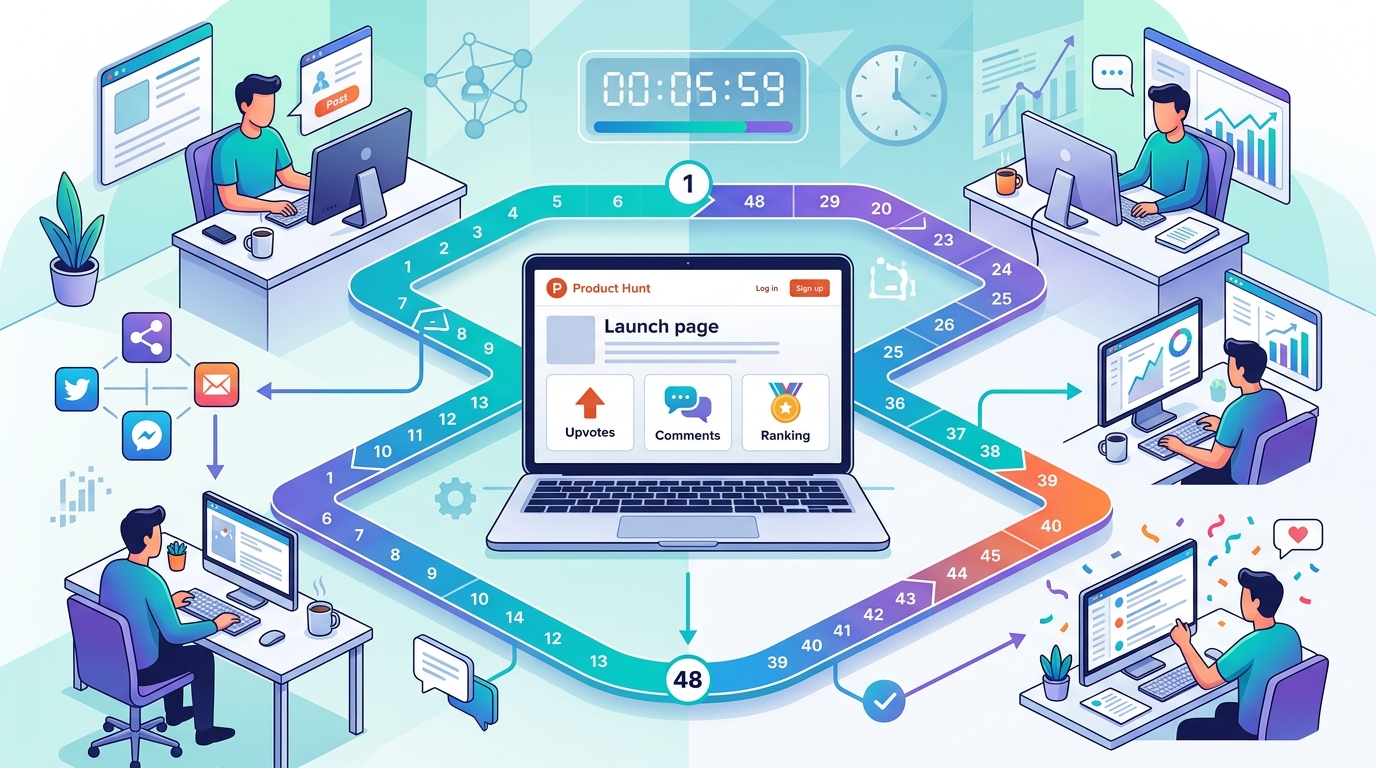
You’ve built something people need. Now you need people to actually see it.
Product Hunt can deliver hundreds of engaged users to your SaaS in a single day. But most first-time founders treat it like posting to social media. They hit publish, wait for magic, and wonder why nobody showed up.
A successful Product Hunt launch requires planning, timing, and genuine community engagement. Not marketing tricks or fake upvotes.
Launching on Product Hunt successfully means starting preparation two weeks early, choosing the right day, crafting a compelling story, engaging authentically with comments, and having your landing page ready to convert visitors. Most founders fail because they treat it as a one-day event instead of a coordinated campaign that builds momentum before, during, and after launch day.
Understanding What Product Hunt Actually Rewards
Product Hunt isn’t just an upvote contest.
The platform rewards products that solve real problems and founders who engage with their community. The algorithm considers upvotes, comments, and how fast you gain traction in the first few hours.
Your goal isn’t to game the system. Your goal is to present something valuable and let the community decide if it resonates.
Products that perform well share common traits:
- Clear value proposition in the first sentence
- Professional screenshots that show the product in action
- Founder who responds to every comment personally
- Launch timing that matches when your audience is most active
- Landing page that converts curious visitors into users
The makers who succeed treat Product Hunt like a conversation, not a billboard.
Two Weeks Before Launch Day
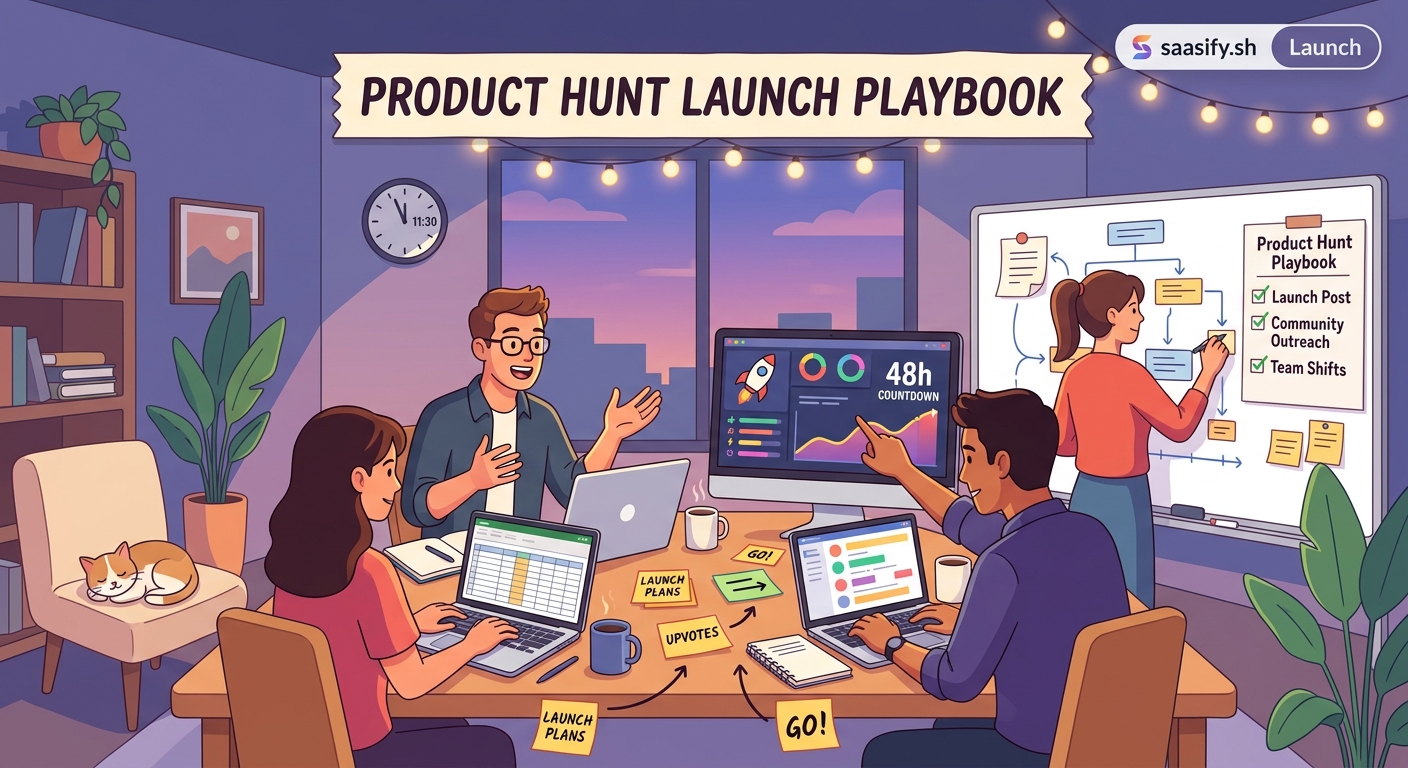
Preparation separates successful launches from forgotten ones.
Start by joining Product Hunt and genuinely participating in the community. Comment on other launches. Upvote products you find interesting. Build relationships with other makers.
This isn’t manipulation. This is how communities work.
Create a maker account and complete your profile. Add a photo, bio, and links to your other work. People support founders they feel connected to.
Here’s your two-week checklist:
- Set up your Product Hunt maker profile completely
- Engage with at least 5 launches per day for 10 days
- Prepare all launch assets (logo, screenshots, tagline, description)
- Write your launch description in a Google Doc for feedback
- Identify 10-15 supporters who can upvote in the first hour
- Optimize your landing page for conversion
- Set up analytics to track Product Hunt traffic
- Create a launch day schedule with hourly tasks
- Prepare responses to common questions
- Test your entire signup flow one more time
Your pre-launch waitlist becomes valuable here. These people already want what you’re building.
Choosing Your Launch Day and Time
Timing matters more than most founders realize.
Product Hunt runs on Pacific Time and resets at 12:01 AM PST. Launching right at midnight gives you the full 24 hours to accumulate upvotes and comments.
But midnight PST might be 3 AM in New York or 8 AM in London. You need to be awake and responsive.
Most successful launches happen Tuesday through Thursday. Avoid Mondays (people are catching up from the weekend) and Fridays (attention drops off).
Never launch on major holidays or during big tech events when attention is elsewhere.
| Day | Launch Success Rate | Why |
|---|---|---|
| Tuesday | High | Full attention, no weekend hangover |
| Wednesday | High | Peak engagement, mid-week energy |
| Thursday | Medium | Good but trailing off toward weekend |
| Monday | Low | Inbox overload, distracted users |
| Friday | Low | Weekend mode starts early |
Schedule your launch for a day when you can be online for 18+ hours straight. You’ll need to respond to comments, fix bugs, and answer questions in real time.
If you’re deciding between soft launching or going big, Product Hunt counts as going big. Have your infrastructure ready.
Crafting Your Product Hunt Page
Your Product Hunt page is your pitch deck compressed into 300 words.
Start with a tagline that explains what you do in one sentence. Not what you are. What you do for users.
Bad tagline: “AI-powered productivity platform”
Good tagline: “Turn meeting recordings into action items automatically”
The first line of your description should expand on the problem you solve. The second line should explain your solution. The third should differentiate you from alternatives.
Use bullet points to highlight key features. Keep each bullet to one line. Make them scannable.
Upload 3-5 screenshots that show your product in action. Not marketing graphics. Actual product screenshots with real data (anonymized if needed).
Include a thumbnail image that stands out in the feed. Bright colors and clear text work better than subtle designs.
Your maker comment (the first comment you post on your own launch) should tell your story. Why did you build this? What problem were you trying to solve? Keep it personal and authentic.
“The best Product Hunt launches feel like a founder sharing something they’re genuinely excited about, not a company pushing a press release. People can tell the difference immediately.” – Indie maker who reached #1
Building Your Launch Day Support Network
You need people ready to engage when you launch.
Not fake accounts. Not upvote farms. Real people who care about what you’re building.
Start with your existing network:
- Email subscribers from your waitlist
- Twitter followers who’ve engaged with your content
- LinkedIn connections in your target market
- Fellow makers you’ve supported on their launches
- Early beta users who love your product
Send them a personal message 24 hours before launch. Not a mass email. Individual messages.
Explain that you’re launching tomorrow and you’d appreciate their support. Give them the exact time you’re going live. Ask them to upvote, comment, and share if they find value in what you’ve built.
Don’t ask for blind support. Ask them to check it out and engage if it resonates.
The first hour determines your trajectory. Products that get 50+ upvotes in the first hour often reach the top 5 for the day.
Your distribution channels matter here. The audience you’ve built before launch becomes your launch team.
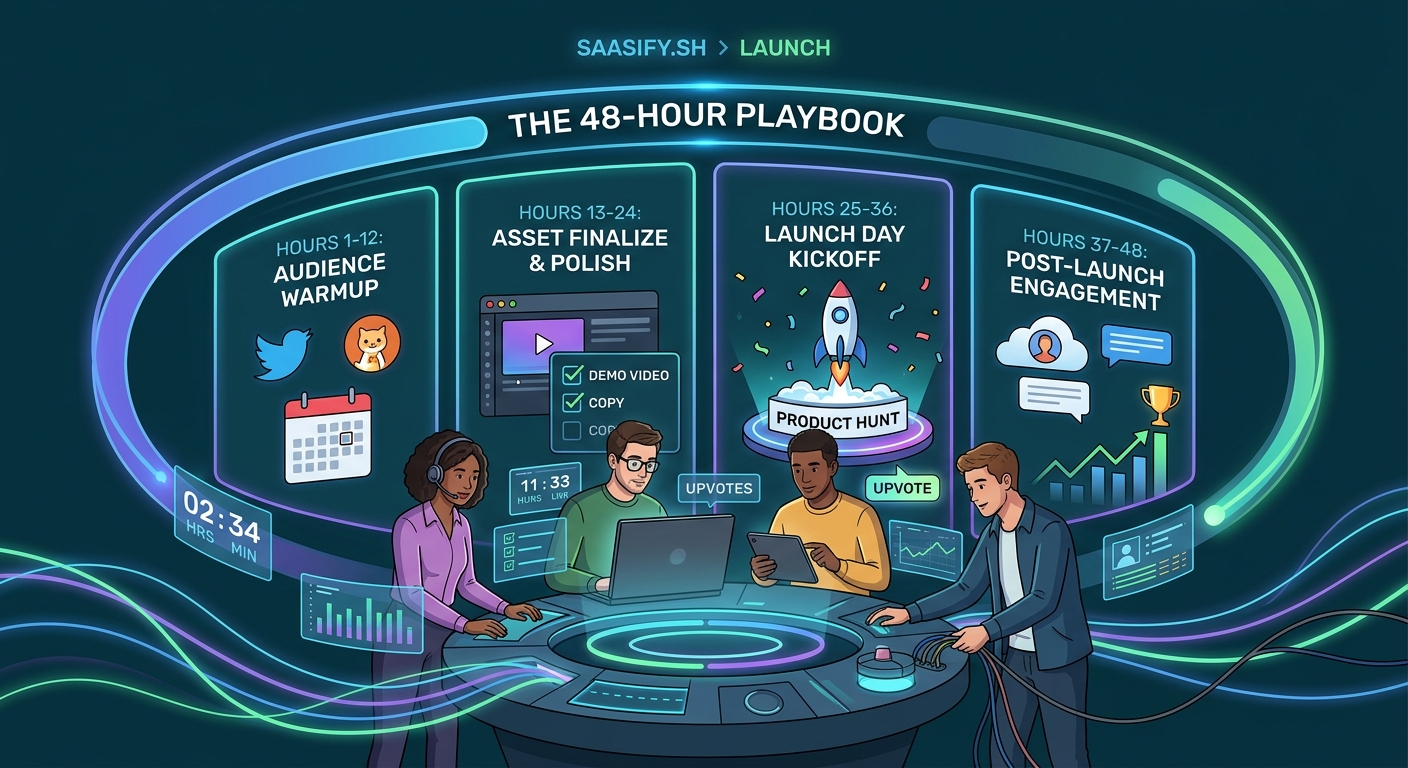
Launch Day Hour-by-Hour Playbook
12:01 AM PST: Hit publish. Immediately post your maker comment with your story.
12:05 AM: Share on Twitter with a thread explaining what you built and why.
12:15 AM: Message your support network with the live link.
12:30 AM: Start responding to every comment on Product Hunt.
1:00 AM: Check your position. Aim for top 10 in the first hour.
2:00 AM: Post in relevant subreddits (carefully, following community rules).
3:00 AM: Share in Slack communities and Discord servers where appropriate.
6:00 AM: Post on LinkedIn with a personal story about building.
9:00 AM: Respond to all new comments (you should be doing this hourly).
12:00 PM: Share an update on Twitter about your ranking.
3:00 PM: Engage with other launches happening today.
6:00 PM: Final push to your email list.
9:00 PM: Thank everyone who supported you publicly.
11:00 PM: Prepare for tomorrow’s follow-up.
Stay online. Stay responsive. Stay authentic.
Responding to Comments and Questions
Every comment deserves a thoughtful response.
Someone took time to engage with your launch. Respect that.
Answer questions thoroughly. If someone points out a bug, acknowledge it and explain when you’ll fix it. If someone suggests a feature, thank them and add it to your roadmap.
Don’t get defensive about criticism. Product Hunt users are often experienced builders who’ve seen thousands of products. Their feedback is valuable.
When someone asks “How is this different from [competitor]?” don’t bash the competitor. Explain your unique approach and who you’re best suited for.
Response speed matters. Aim to reply within 15 minutes during peak hours.
Use the commenter’s name when you respond. It makes the interaction feel personal, not automated.
If the same question comes up multiple times, update your product description to address it proactively.
Converting Product Hunt Traffic Into Users
You’ll get a spike of visitors. Most will bounce unless your landing page is ready.
Your landing page should match the message from your Product Hunt launch. If your tagline says “Turn recordings into action items,” your landing page headline should echo that benefit.
Remove friction from signup. No long forms. No credit card required for trials. Get people into the product fast.
Add a Product Hunt badge to your landing page during launch day. It builds social proof and shows you’re actively launching.
Track where visitors drop off. Use analytics to see if people are bouncing from your homepage, getting stuck in signup, or abandoning after seeing pricing.
Your landing page conversion rate determines whether your launch actually grows your business or just boosts your ego.
Set up a dedicated onboarding flow for Product Hunt users. They’re different from organic users. They’re more technical, more skeptical, and more likely to try competing products.
Common Launch Mistakes That Kill Momentum
Launching too early with an incomplete product. Product Hunt users are forgiving of bugs but not of missing core functionality.
Ignoring comments. If you’re not responding, people assume you don’t care.
Asking for upvotes directly. Product Hunt bans this. Just ask people to “check it out” if they’re interested.
Using the same screenshots everywhere. Show different aspects of your product across your gallery.
Launching without testing your infrastructure. Traffic spikes break things. Test under load before launch day.
Writing a corporate description. Talk like a human, not a press release.
Forgetting to prepare your launch day runbook with every detail mapped out.
| Mistake | Impact | Fix |
|---|---|---|
| No maker comment | Looks impersonal | Post your story immediately |
| Generic tagline | Gets ignored | Focus on specific outcome |
| Late responses | Kills engagement | Stay online all day |
| Broken signup | Wastes traffic | Test everything twice |
| No mobile optimization | Loses 40% of users | Test on actual devices |
After Launch Day Ends
The launch doesn’t end at midnight.
Follow up with everyone who commented. Thank them personally. If they signed up, ask for feedback on their first experience.
Write a post-mortem. What worked? What didn’t? What would you do differently?
Many successful products don’t win their launch day but build momentum over the following week. Stay engaged.
Product Hunt sends a weekly newsletter featuring top products. Getting featured there can bring a second wave of traffic.
Turn your launch experience into content. Write about what you learned. Share your numbers transparently. Other founders will appreciate the honesty.
Your Product Hunt launch should integrate with your broader growth experiments. It’s one channel, not your entire strategy.
Making Your Launch Matter Beyond Day One
Product Hunt gives you visibility. What you do with that visibility determines long-term impact.
Capture emails from everyone who shows interest. Even if they don’t sign up today, they might convert later.
Follow up with users who signed up during launch. Ask what made them try your product. What problem were they trying to solve?
Use launch day feedback to prioritize your roadmap. The comments section is free user research.
Build relationships with other makers who launched around the same time. Support their future launches. They’ll remember.
Track which marketing channels drove the most engaged users, not just the most traffic.
Some of your best customers will come from Product Hunt. Not on launch day, but weeks later when they remember seeing your product and finally have the problem you solve.
Turning Launch Momentum Into Sustainable Growth
A successful Product Hunt launch gives you credibility, users, and feedback.
The real work starts the next day.
Take the momentum and channel it into building something people want to pay for. Respond to every support email. Fix the bugs people mentioned. Ship the features that matter most.
Your launch ranking doesn’t determine your success. Your ability to turn curious visitors into happy customers does.
Stay focused on solving real problems. Keep shipping. Keep listening. Keep building.
The founders who succeed on Product Hunt are the same ones who succeed everywhere else. They build products people need and treat their users like humans, not metrics.
Your launch is just the beginning.