Building and scaling an indie SaaS in 2026 is more approachable than ever, thanks to the rapid advancements in serverless technology. Instead of managing servers, you can focus on crafting features that delight users, while the cloud handles the heavy lifting. As the landscape shifts towards fully serverless solutions, mastering this architecture becomes critical for indie founders aiming to grow quickly without breaking the bank.
In 2026, mastering serverless architecture enables indie SaaS founders to build scalable, affordable, and maintainable apps. Focus on core features, leverage cloud-native services, and avoid common pitfalls for success in today’s fast-moving SaaS world.
Why serverless is the go-to architecture for indie SaaS in 2026
Serverless computing has transformed how small teams and solo developers approach building SaaS products. Instead of provisioning servers, managing infrastructure, or worrying about scaling, you can tap into cloud providers’ managed services. This shift drastically reduces time to market and operational overhead. In 2026, serverless isn’t just an option; it’s the default for indie SaaS founders who want to build fast and scale effortlessly.
Key benefits of mastering serverless architecture
- Cost efficiency: Pay only for what you use. No need to run idle servers or over-provision.
- Scalability: Cloud providers automatically handle traffic spikes, ensuring your app stays responsive.
- Faster development: Focus on features instead of infrastructure setup. Use managed services for databases, authentication, and more.
- Reduced operational burden: Less infrastructure management means more time for product innovation.
- Flexibility and agility: Quickly experiment, deploy, and iterate without complex deployments or downtime.
Core components of a modern serverless SaaS in 2026
To master serverless architecture, understand these key building blocks:
1. Function-as-a-Service (FaaS)
Services like AWS Lambda, Google Cloud Functions, and Azure Functions let you run code in response to events. Use them for backend logic, API endpoints, or integrations.
2. Managed databases
Serverless databases such as Neon, Supabase, or PlanetScale provide scalable, easy-to-maintain data storage. They support multi-tenancy and real-time updates.
3. Authentication and authorization
Use cloud-native auth solutions like Supabase Auth, Firebase Authentication, or Auth0 to handle user sign-up, login, and access control seamlessly.
4. API gateways and orchestration
API management services streamline routing, versioning, and security. Tools like Vercel and Cloudflare Workers help orchestrate your functions and APIs.
5. Storage and file handling
Object storage like AWS S3 or Cloudflare R2 simplifies file uploads, downloads, and content delivery.
6. Monitoring and observability
Tools like Datadog, Honeycomb, or built-in provider dashboards let you track performance, errors, and user behavior.
Practical process for implementing serverless architecture in your SaaS
- Define core features and user flows. Focus on what delivers value.
- Choose a cloud provider based on your tech preferences, budget, and scalability needs.
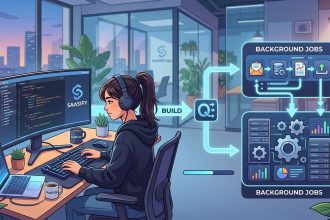
- Set up serverless functions for your backend logic. Use FaaS to handle API requests and background jobs.
- Select a managed database optimized for your data model, ensuring support for multi-tenancy if needed.
- Implement authentication with a managed service to secure user data.
- Configure API gateways and orchestration tools for smooth communication between components.
- Integrate storage solutions for handling files, media, or documents.
- Set up monitoring and alerting systems to catch issues early and optimize performance.
- Test extensively to identify cold starts, latency, or scaling issues.
- Iterate and optimize based on user feedback and metrics.
Navigating common pitfalls and mistakes
| Technique | Mistake to avoid |
|---|---|
| Relying solely on FaaS | Not considering cold start latency can impact user experience. Use warm-up strategies or provisioned concurrency. |
| Ignoring vendor lock-in | Overusing proprietary services might limit flexibility. Balance with open standards or multi-cloud strategies. |
| Underestimating data security | Neglecting proper security measures in a serverless setup can expose user data. Use encryption, access controls, and monitoring. |
| Overloading functions | Making functions do too much can cause latency and failure. Break logic into smaller, focused functions. |
| Skipping performance testing | Failing to simulate real traffic can lead to surprises during growth. Regularly test for scaling bottlenecks. |
“Design your serverless architecture with resilience and observability in mind. Planning for failure and monitoring proactively saves time and headaches later.” – Cloud Architect Expert
How to build a resilient, scalable serverless SaaS in 2026
Building a successful SaaS with serverless architecture requires more than just picking services. It involves designing for failure, optimizing cold starts, and ensuring smooth scaling. Here are some actionable strategies:
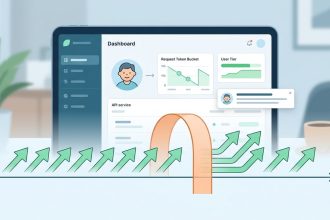
- Use provisioned concurrency on AWS Lambda to reduce cold start times during peak hours.
- Implement fallback mechanisms in your functions to handle timeouts gracefully.
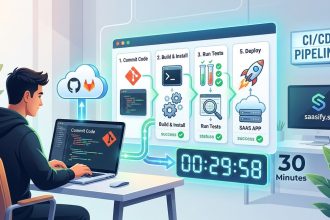
- Automate infrastructure deployment and updates using Infrastructure as Code (IaC) tools like Terraform or Pulumi.
- Separate core business logic from auxiliary functions for easier updates and maintenance.
- Set up comprehensive logging and alerting to catch errors early and act swiftly.
- Regularly review usage metrics to optimize costs and performance.
The future of indie SaaS with serverless in 2026
As cloud providers continue to innovate with native integrations, serverless architecture will become even more accessible and powerful. Expect improvements like better cold start mitigation, real-time event streaming, and seamless multi-cloud support. Building with serverless in mind not only accelerates development but also future-proofs your SaaS against changing demands.
Final thoughts: take action today
Start small by prototyping core features on a serverless platform. Use managed databases and authentication to accelerate your launch. As your user base grows, leverage the scalability and cost benefits of serverless to expand confidently. Remember, the key to mastering serverless is understanding its components, avoiding common mistakes, and continuously optimizing your setup.
Harness the power of serverless in your SaaS journey
Embracing serverless architecture in 2026 unlocks new levels of agility and efficiency. By focusing on delivering value and leveraging cloud-native services, indie SaaS founders can build robust, scalable applications without the operational overhead. With deliberate planning and continuous learning, you can turn your SaaS vision into reality faster and more confidently than ever before. Keep experimenting, stay curious, and let your cloud do the heavy lifting.