Pivoting your startup feels like admitting defeat. You spent months building something, talking to users, refining the product. Now you’re throwing it away and starting over. That emotional weight is real, but it’s also misleading. A pivot isn’t failure. It’s pattern recognition at speed.
Pivoting three times in one year taught us that speed beats perfection, energy management matters more than capital, and most pivots fail because founders run out of stamina, not ideas. Success comes from ruthless disqualification of bad signals and protecting what actually works while changing everything else. This guide shares the exact framework we used to survive multiple pivots without burning out.
What Actually Happens During a Pivot
A pivot isn’t just changing your product. It’s rebuilding your entire operation while keeping the lights on.
You’re rewriting your pitch deck. Updating your website. Changing your social profiles. Redoing all your sales materials. Explaining the change to investors, customers, and your team. All while trying to maintain momentum.
Most founders underestimate the operational burden. They think about the product change but forget about the infrastructure around it.
Here’s what we rebuilt during each pivot:
- Messaging and positioning documents
- Entire website copy and design
- Sales decks and demo scripts
- Onboarding flows and customer support docs
- Pricing models and packaging tiers
- Marketing campaigns and ad creative
- Investor update templates
- Internal team processes
That’s not a weekend project. That’s weeks of work, and if you’re a solo founder or small team, it all falls on you.
The Three Pivots and What Each One Cost Us
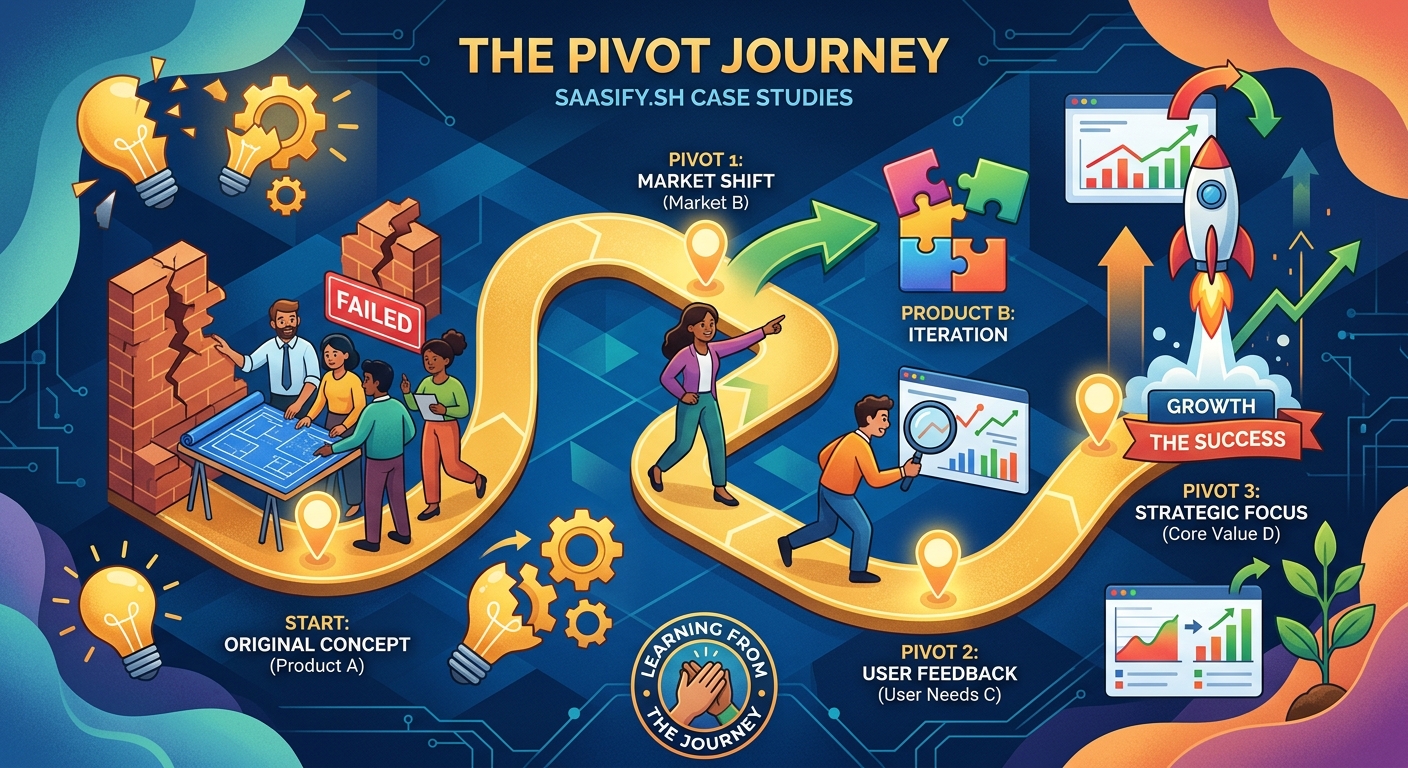
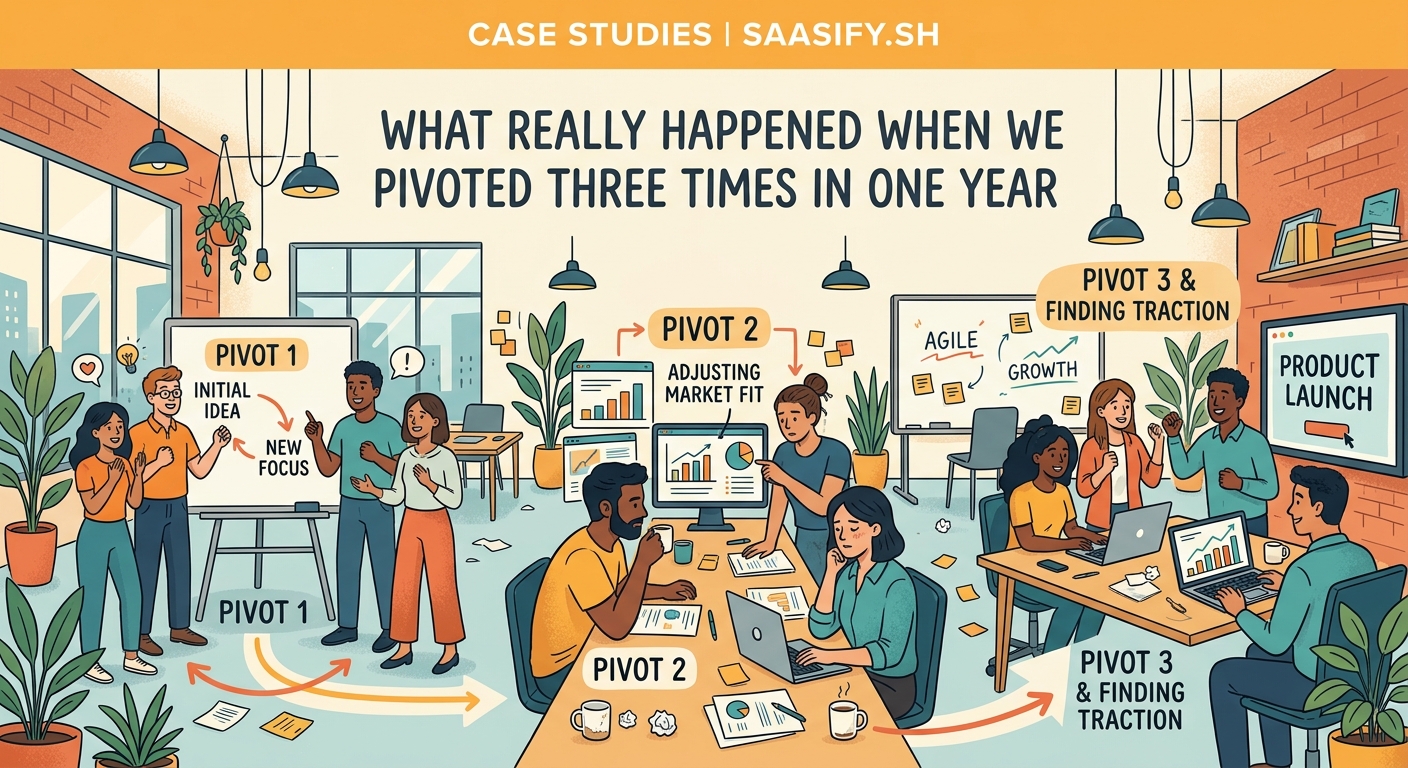
Our first pivot happened four months in. We built a tool for freelance designers but realized the market was too fragmented. No consistent pain point. Everyone wanted something slightly different.
We moved to agency owners. Same core product, different customer. That pivot took three weeks and cost us about $8,000 in development changes and new marketing materials.
The second pivot came two months later. Agency owners liked the tool but weren’t willing to pay what we needed to charge. We shifted to in-house creative teams at mid-size companies.
This one was harder. Different buying process. Different decision makers. We needed case studies we didn’t have and credibility in a space where we had no reputation. That pivot took six weeks and cost us two potential customers who got confused by the messaging change.
The third pivot was the hardest. We realized the problem we were solving wasn’t painful enough. People liked our solution but didn’t need it urgently. We moved to a completely different problem space, keeping only our technical infrastructure.
That pivot took two months and nearly broke us. We had to validate the new idea from scratch while maintaining relationships with existing users.
The Framework That Kept Us Sane
After the second pivot, we built a system. We needed a way to decide faster and execute with less chaos.
Here’s the framework we used:
-
Set a validation deadline. Give yourself one week to find three people with the problem you’re solving who will commit to paying. Not “interested.” Not “maybe.” Actual commitment.
-
Document everything you’re keeping. Write down what’s working. Your tech stack, your distribution channels, your brand voice. Protect these assets during the transition.
-
Kill the rest without ceremony. Everything else goes. Old messaging, old positioning, old customer personas. Don’t try to bridge the old and new. Clean break.
-
Communicate in waves. Tell your team first. Then investors. Then existing customers. Then the market. In that order. Each group needs different context.
-
Rebuild in public. Share what you’re learning. It builds credibility and attracts the right people to your new direction.
This framework cut our pivot time from six weeks to ten days by the third iteration.
What We Got Wrong About Pivoting
We made three major mistakes that cost us time and energy.
First, we tried to keep existing customers happy during pivots. Bad idea. If you’re pivoting away from their problem space, let them go gracefully. Trying to serve two customer bases during a transition splits your focus and slows everything down.
Second, we didn’t communicate enough. We thought people would understand the change from a blog post and some updated website copy. They didn’t. We needed personal outreach, video explanations, and multiple touchpoints.
Third, we pivoted on gut feeling instead of data. Our first pivot was based on three conversations. That’s not validation. That’s hope. By the third pivot, we had a spreadsheet tracking 47 customer conversations with clear pain point scoring.
Here’s a comparison of our approach across the three pivots:
| Pivot | Validation Method | Time to Decision | Customer Conversations | Success Metric |
|---|---|---|---|---|
| First | Gut feeling + 3 calls | 2 weeks | 3 | Signed 1 customer in 6 weeks |
| Second | Survey + 12 calls | 10 days | 12 | Signed 2 customers in 4 weeks |
| Third | Structured interviews + scoring | 7 days | 47 | Signed 5 customers in 3 weeks |
The pattern is clear. More structure, faster decisions, better outcomes.
The Energy Management Problem Nobody Talks About
Pivoting drains you. Not just mentally, but physically.
You’re not making progress. You’re rebuilding. Every day feels like you’re running in place. That psychological weight compounds over weeks.
We learned to protect our energy like a resource. Here’s what worked:
- Batch all pivot work. Don’t spread it across weeks. Block three full days and rebuild everything. Get it done and move forward.
- Celebrate small wins. First customer call in the new space? Celebrate. First sign-up? Celebrate. You need positive momentum.
- Limit explanation fatigue. Create a standard explanation of the pivot. Use the same language every time. Don’t re-litigate the decision in every conversation.
- Take real breaks. After each pivot, we took three days completely off. No Slack, no email, no strategy calls. Just rest.
The founders who survive multiple pivots aren’t the ones with the best ideas. They’re the ones who manage their stamina.
“Most pivots fail not because the new direction was wrong, but because the founder ran out of energy before they could validate it. Treat your energy like your runway. Both will kill you if they hit zero.”
Signs You Need to Pivot vs. Signs You Need to Persist
This is the hardest call. When do you pivot, and when do you push through?
We used three criteria:
Pivot if:
– You can’t find ten people who say your problem is urgent and painful
– Your unit economics don’t work even with optimistic assumptions
– You’ve been at it for three months with no meaningful traction
Persist if:
– You have customers but growth is slow
– Your product works but your messaging doesn’t
– You’re seeing engagement but not conversion
The difference is signal quality. Slow growth with real customers is a distribution problem. No customers after three months of real effort is a product-market fit problem.
We also tracked leading indicators. If we couldn’t book ten sales calls in a week, something was fundamentally wrong. If we could book calls but couldn’t close, that was a different problem with a different solution.
What to Protect During a Pivot
Not everything changes during a pivot. Some assets carry forward.
Your technical infrastructure usually survives. If you built a solid backend, it can often support a different frontend or use case. We kept 70% of our codebase through all three pivots.
Your audience might survive too. If you’ve been building an email list, those subscribers might care about your new direction. We retained about 40% of our email list through the pivots by being transparent about the changes.
Your brand voice and values definitely survive. How you communicate, your design aesthetic, your stance on customer service. These elements create continuity even when your product changes completely.
Your relationships are your most valuable asset. Investors, advisors, early supporters. Keep them informed and engaged. They often open doors in your new direction.
The Pivot Playbook We Wish We Had
Here’s the exact process we’d follow if we had to pivot again tomorrow:
-
Week 1: Validation sprint. Talk to 30 people in the new target market. Use a structured interview script. Score pain points on a 1-10 scale. Look for patterns.
-
Week 2: Minimum viable positioning. Write new homepage copy. Create a simple pitch deck. Build a landing page. Test the messaging with five people from your validation interviews.
-
Week 3: Communication cascade. Tell your team on Monday. Investors on Tuesday. Existing customers on Wednesday. Launch new positioning publicly on Thursday. Spend Friday responding and adjusting.
-
Week 4: Execution mode. Build the MVP for the new direction. Get it in front of early users. Iterate based on feedback.
This timeline assumes you’re pivoting with some validation already done. If you’re starting from zero, add two weeks at the beginning for customer discovery.
Pricing and Positioning After a Pivot
One mistake we made repeatedly: keeping our old pricing model.
Each pivot meant different customers with different willingness to pay. We learned to rethink pricing from scratch with each change.
Our first product was priced at $29/month. Made sense for freelancers. When we moved to agencies, we should have jumped to $299/month immediately. We didn’t. We tried to ease into it. Bad call. We left money on the table and positioned ourselves as a budget tool.
By the third pivot, we started at $499/month. We had zero customers, but we knew our new target market could afford it and expected professional-tier pricing.
Starting high and discounting is easier than starting low and raising prices later.
What Investors Actually Think About Pivots
We were terrified to tell our investors about the first pivot. Turns out they didn’t care as much as we thought.
Good investors expect pivots. They know early-stage startups are searching for product-market fit. What they care about is your reasoning and your speed.
When we told our lead investor about pivot two, here’s what he asked:
- What data drove this decision?
- How long will validation take?
- What’s your burn rate during the transition?
- What are you keeping from the old direction?
He didn’t ask if we were sure or if we’d thought it through. He wanted to understand our process and timeline.
Bad investors panic at pivots. They see it as instability. If your investors react poorly to a well-reasoned pivot, you have the wrong investors.
The Metrics That Matter During a Pivot
Your normal SaaS metrics break during a pivot. MRR goes down or stays flat. User growth stalls. You need different indicators.
We tracked:
- Customer conversations per week. Target: 10 minimum.
- Pain point score average. Target: 7+ out of 10.
- Time to first meeting. Target: Under 3 days from cold outreach.
- Message clarity score. Ask five people to explain your product back to you. Target: 80% accuracy.
These leading indicators told us if we were on the right track before revenue could.
We also tracked energy levels. Sounds soft, but it mattered. If the team was excited about customer calls, we were onto something. If calls felt like a slog, we were probably solving the wrong problem.
When the Third Pivot Finally Worked
Our third pivot took us into a niche that bigger companies ignored. We built tools for small creative teams managing client feedback.
Specific problem. Clear pain point. Customers who would pay.
Within three weeks, we had five paying customers. Within two months, we hit $10K MRR. The product wasn’t better than our previous attempts. The market fit was better.
That’s the lesson. Your execution matters, but if you’re solving the wrong problem for the wrong people, no amount of hustle will save you.
The third pivot worked because we finally had a system. We knew what signals to look for. We knew how to validate fast. We knew what to protect and what to kill.
Building Resilience Into Your Next Pivot
If you’re facing a pivot now, here’s what to remember:
Speed matters more than perfection. You’re not building the final version. You’re testing a hypothesis. Get to validation fast.
Communication matters more than you think. Over-communicate with everyone. Your team needs context. Your investors need confidence. Your early customers need clarity.
Energy management matters most. You can raise more money. You can’t raise more stamina. Protect your energy like your life depends on it, because your startup does.
Set hard deadlines. Give yourself one week to validate, not one month. Constraints force clarity.
Document your process. Write down what you’re learning. It helps you spot patterns and gives you material to share with your audience.
Why Most Founders Give Up Between Pivots
The hardest part isn’t the pivot itself. It’s the gap between pivots.
You just rebuilt everything. You’re exhausted. You’re not sure if this new direction will work either. You’re wondering if you should just get a job.
That’s the moment most founders quit.
We almost quit after pivot two. We had three months of runway left. We’d been at it for ten months with nothing to show. Every conversation with friends and family was awkward. “How’s the startup going?” became the question we dreaded.
What kept us going was a commitment to one more validation sprint. Just one more week of customer calls. If we couldn’t find signal, we’d shut it down.
We found signal on day six. That’s how close we came to quitting before the breakthrough.
Your breakthrough might be six days away too. The only way to find out is to set a deadline and push through one more time.
What Success Looks Like After Multiple Pivots
Success after pivoting doesn’t feel like vindication. It feels like relief.
You’re not proving doubters wrong. You’re finally solving a real problem for people who care.
Our metrics improved across the board after pivot three. Customer acquisition cost dropped. Conversion rates went up. Churn went down. But the biggest change was internal.
The team was energized. Customer calls were fun again. We were building something people actually needed.
That’s what you’re looking for. Not just better numbers, but better energy. When you find real product-market fit, you feel it before you see it in the data.
Moving Forward With What You’ve Learned
Pivoting three times in one year taught us more than three years of steady growth would have. We learned to validate faster, communicate better, and manage our energy like a finite resource.
If you’re considering a pivot right now, you’re not alone. Most successful startups pivoted at least once. Many pivoted multiple times.
The question isn’t whether to pivot. It’s whether you have a system for deciding and executing fast enough to survive the transition.
Build that system now. Document your validation criteria. Set your deadlines. Protect your energy. Then move with confidence, knowing you can survive whatever comes next.