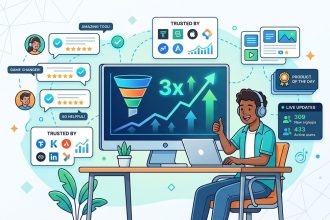
Launching a SaaS product in today’s crowded market demands more than just a great idea. It requires a strategic, data-backed approach to marketing that can cut through the noise and connect with your ideal customers. A well-executed data-driven SaaS marketing plan transforms raw data into actionable insights, helping you optimize every step from pre-launch to scale. In 2026, leveraging analytics is not optional — it’s essential for indie founders and product teams aiming for impactful growth.
A data-driven SaaS marketing plan combines analytics, targeted messaging, and continuous optimization to maximize launch impact and sustain growth. Using data helps identify the right audiences, refine campaigns, and improve ROI, making every marketing dollar count in 2026.
Understanding the Power of Data in SaaS Marketing
A data-driven approach means making decisions based on evidence rather than assumptions. For SaaS products especially, it involves tracking key metrics, analyzing customer behavior, and adjusting strategies in real time. In 2026, the best marketing plans are those that adapt quickly to insights pulled from tools like customer analytics platforms, ad dashboards, and user engagement data.
By harnessing data, you can uncover which channels are bringing in high-quality leads, understand how users interact with your onboarding, and identify untapped customer segments. This visibility allows you to allocate resources more efficiently, craft personalized messaging, and anticipate customer needs before they arise.
Building Your Data-Driven SaaS Marketing Framework
Creating an effective marketing plan rooted in data involves a clear, step-by-step process. Here are the core steps to follow:
-
Define Clear Objectives and Metrics
Set specific goals aligned with your overall business targets. Whether it’s increasing signups, reducing churn, or boosting lifetime value, having measurable objectives guides your data collection efforts and keeps your team focused. -
Collect and Integrate Relevant Data
Use tools like Google Analytics, Mixpanel, or Segment to gather data from your website, onboarding flows, and app usage. Integrate this data into a centralized dashboard to view all key metrics at once. This unified view helps spot patterns and anomalies quickly. -
Analyze and Interpret Data for Insights
Look at conversion rates, user engagement, CAC, LTV, and churn rates. Use segmentation to understand different customer groups. For example, analyze how free trial users convert to paying customers based on their activity levels or source channels.
“Data is only as good as what you do with it,” advises SaaS growth expert Emily Chen. “Regular analysis helps you refine your messaging, identify bottlenecks, and discover new opportunities that might be invisible otherwise.”
Key Metrics and KPIs to Track in 2026
To make data meaningful, focus on the right metrics. Here’s a quick rundown:
| Technique | Mistake to Avoid |
|---|---|
| Tracking CAC and LTV | Ignoring the impact of churn on LTV |
| Monitoring churn and retention | Only focusing on acquisition metrics |
| Analyzing conversion rates | Neglecting the customer journey nuances |
| Using dashboards for real-time insights | Relying on outdated data |
Focusing on these KPIs helps you understand how well your marketing efforts translate into revenue, and where adjustments are needed.
Practical Steps to Implement Your Data-Driven Strategy
Here’s a straightforward process to put your plan into motion:
-
Identify your target audience segments based on demographics, behaviors, and pain points. Use data segmentation to tailor messaging effectively.
-
Set up tracking and analytics tools to monitor user interactions, campaign performance, and onboarding flows. Ensure data collection is accurate and comprehensive.
-
Run targeted campaigns across channels like email, content marketing, and paid ads. Use insights to optimize messaging, timing, and offers.
-
Continuously analyze campaign results and user feedback. Use this information to refine your tactics and improve conversion funnels.
-
Automate reporting and alerts for key metrics. This ensures you stay proactive rather than reactive.
-
Adjust your marketing tactics based on what the data reveals. For example, if users from a specific channel show low retention, refine your messaging or shift budget.
-
Test new hypotheses regularly. Use A/B testing to validate assumptions about your audience, pricing, or messaging.
Common Mistakes and How to Avoid Them
| Technique | Mistake | How to Fix |
|---|---|---|
| Relying on vanity metrics | Focusing on signups without engagement | Prioritize metrics like activation, retention, and LTV |
| Not segmenting data | Treating all customers the same | Use segmentation to personalize campaigns and improve relevance |
| Ignoring qualitative feedback | Only analyzing quantitative data | Incorporate customer interviews and support data for a fuller picture |
| Failing to iterate | Setting and forgetting | Regularly review data, run experiments, and adapt strategies |
Final Tips for a Successful Data-Driven SaaS Marketing Plan
- Make data collection a core part of your product development cycle.
- Use automation tools to streamline reporting and analysis.
- Foster a culture of curiosity and experimentation within your team.
- Keep your focus on customer lifetime value rather than just acquisition.
- Stay current with emerging analytics tools and techniques to stay ahead.
A Final Word on Impactful Growth in 2026
Implementing a data-driven SaaS marketing plan isn’t a one-time task. It’s an ongoing journey that requires curiosity, flexibility, and a commitment to learning from your numbers. Start with clear goals, set up your analytics, and let the data guide your decisions. As you refine your tactics based on insights, you’ll find your marketing efforts more efficient and your growth more sustainable.
Remember, every piece of data is a story waiting to be uncovered. Use it wisely, and watch your SaaS product thrive in the competitive landscape of 2026.