
You’re about to launch your SaaS product, but there’s a problem. You have no idea if anyone will actually pay for it. Building a pre-launch waitlist solves this by letting you validate demand, gather feedback, and create momentum before writing a single line of production code.
A high-converting pre-launch waitlist combines a clear value proposition, strategic incentives, and ongoing engagement. Focus on solving a specific problem, offer early access benefits, and validate demand through signup quality rather than quantity. Use email sequences and surveys to maintain interest and gather product feedback before launch day arrives.
Why waitlists work better than silent launches
Most founders build in secret, then wonder why nobody shows up on launch day.
A waitlist flips this script. You test your positioning before investing months in development. You build an audience that’s already interested. You create social proof that attracts more signups.
The best part? You learn what people actually want. Early signups tell you which features matter most, what pricing feels right, and whether your messaging resonates.
But only if you build the waitlist correctly.
Setting up your waitlist foundation
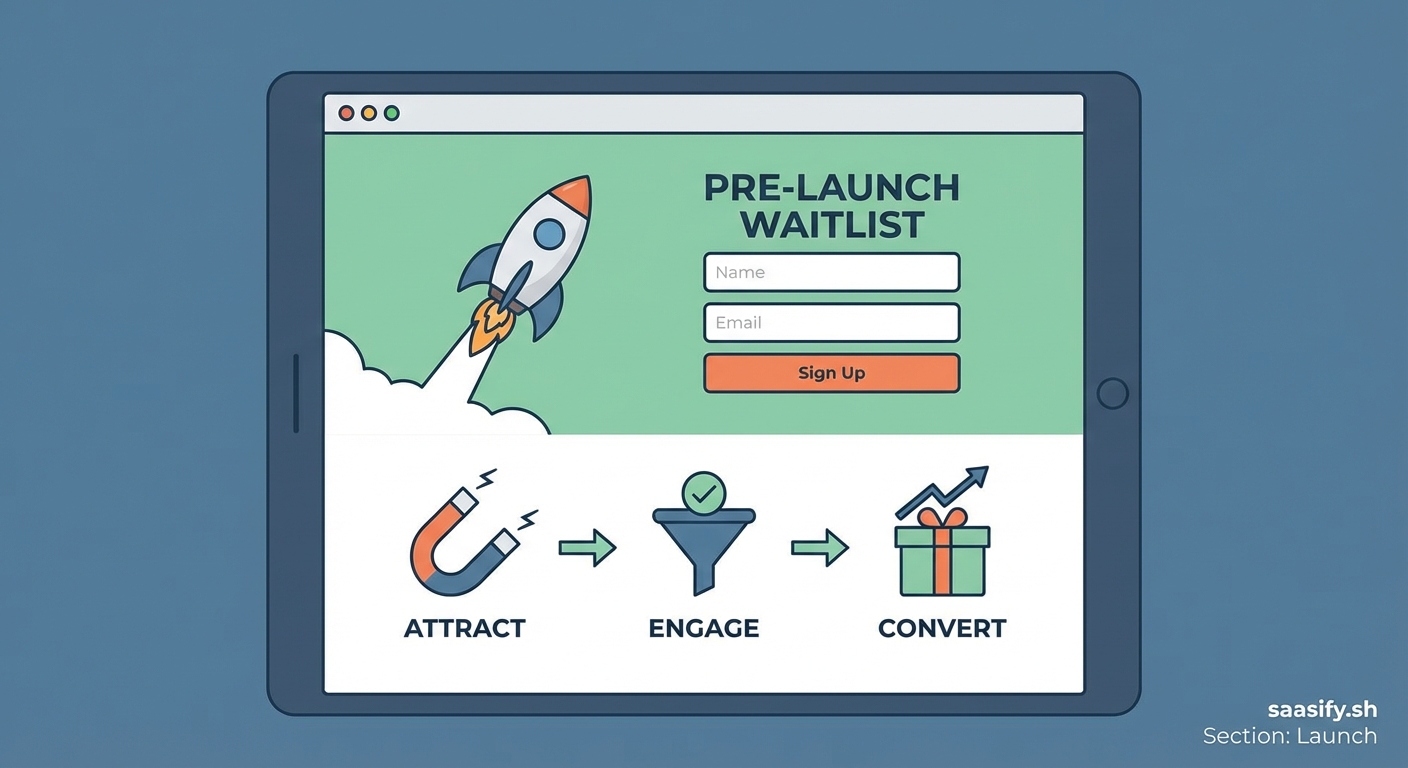
Start with a single landing page. Don’t overcomplicate this. You need five elements that work together.
Your headline answers one question: What problem do you solve? Skip the clever wordplay. Be direct. “Turn customer feedback into product roadmaps” beats “The future of product management” every time.
Your subheadline adds context. Explain who this helps and how. Keep it to one sentence. “For SaaS founders who waste hours sorting through scattered user requests.”
Benefits over features. People don’t care about your tech stack. They care about outcomes. List three to five specific results they’ll get. Use concrete language. “Cut feature prioritization time from 5 hours to 30 minutes” works better than “Save time on roadmapping.”
Social proof builds trust early. Even without customers, you have something. Share your background, previous projects, or industry experience. If you have early testers, mention them. “Trusted by 12 beta users at YC companies” carries weight.
One clear call to action. Ask for an email address. That’s it. Every additional field cuts conversions. You can gather more details later.
Creating incentives that actually motivate signups
Free access isn’t enough anymore. Everyone offers that.
Your waitlist needs a compelling reason to join now instead of later. Here are incentives that move the needle:
- Lifetime deals for first 100 signups. Creates urgency and rewards early believers.
- Exclusive feature access. Let early users vote on the roadmap or access premium features free.
- Founding member status. People love being part of something from the start.
- Extended trial periods. 90 days instead of 14 gives serious evaluation time.
- Priority support. Direct access to you during onboarding.
Stack two or three of these. Make the offer expire after a specific number of signups or date. Display a counter showing spots remaining.
But here’s what matters more than the incentive itself: communicate the value clearly. Don’t just say “lifetime deal.” Explain what that means in dollars. “Lock in $49/month pricing forever. That’s $588 saved every year.”
The signup form that converts browsers into subscribers
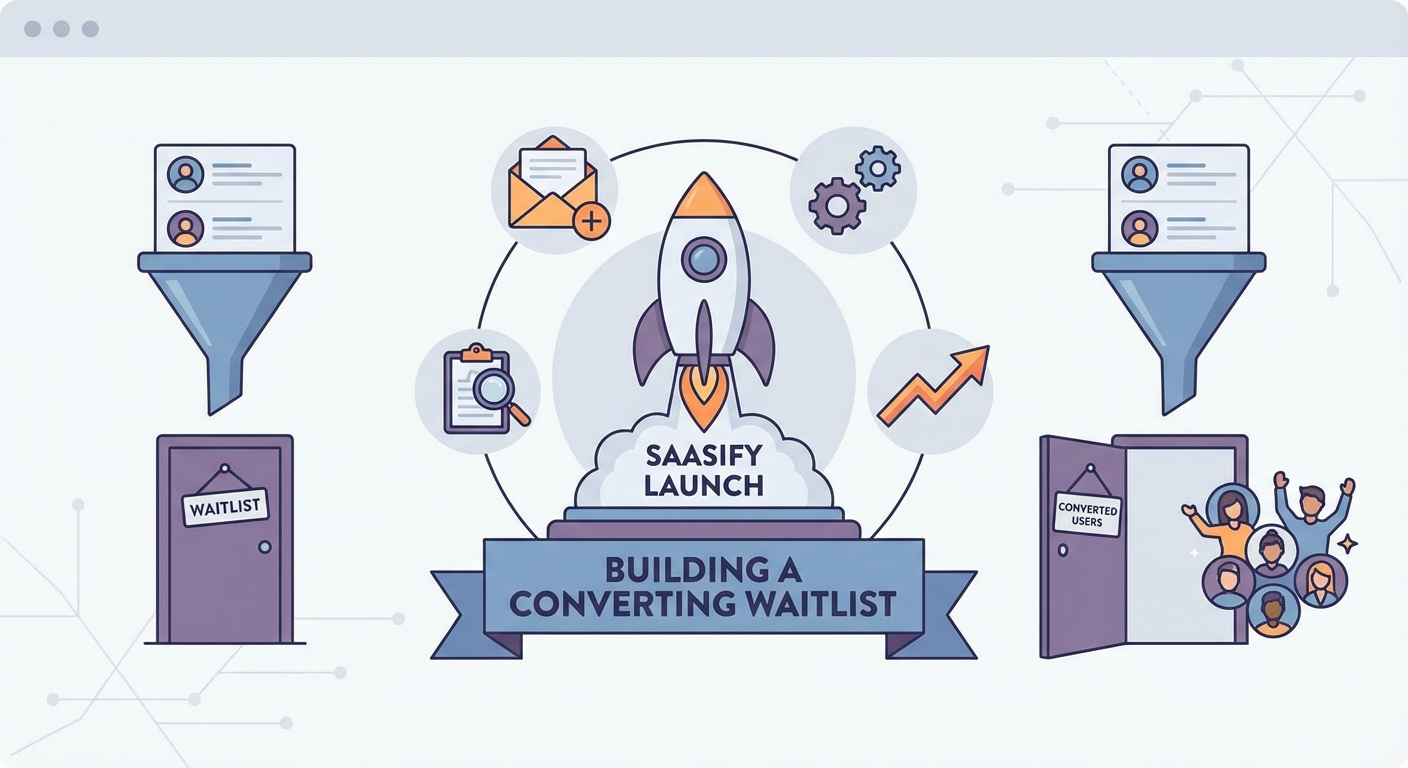
Your form appears in two places. Above the fold on your landing page. In a popup that triggers after 30 seconds or when someone scrolls 50% down the page.
Keep it minimal:
- Email address (required)
- First name (optional but helpful)
- One qualifying question (optional)
That qualifying question matters. It filters serious users from tire kickers. Ask something like “What’s your biggest challenge with [problem area]?” or “How many team members would use this?”
The responses give you gold for product development. They also let you segment your list later.
Add a checkbox for GDPR compliance if you’re targeting European users. Keep the language simple: “I want product updates and early access info.”
Your submit button text should reinforce the benefit. “Get early access” outperforms “Submit” or “Join waitlist.” Test variations like “Save my spot” or “Claim founder pricing.”
Building momentum with referral mechanics
The fastest growing waitlists turn every signup into a referral source.
After someone joins, show them a unique referral link. Offer rewards for sharing:
| Referrals | Reward |
|---|---|
| 1 friend | Move up 50 spots in line |
| 3 friends | Exclusive feature preview |
| 5 friends | Lifetime discount upgrade |
| 10 friends | Free year of premium |
This creates a game. People share because they want to climb the leaderboard.
Make sharing effortless. Pre-populate tweets and LinkedIn posts. Provide email templates they can send to colleagues. Create graphics they can post to Instagram stories.
Track everything. You need to know which referral sources work best. That tells you where your audience hangs out and how to allocate marketing budget later.
Some founders worry this feels manipulative. It’s not. You’re rewarding people for spreading something they already believe in. If your product solves a real problem, they want to tell others.
Keeping your waitlist warm before launch
Most waitlists die from neglect. People sign up, hear nothing for months, then forget you exist.
Send emails every two weeks minimum. Share progress updates, feature previews, and behind-the-scenes content. Make subscribers feel like insiders.
Here’s a simple email sequence:
- Welcome email (immediate): Thank them, explain what happens next, share the referral link.
- Week 1: Your origin story. Why you’re building this and what problem it solves.
- Week 3: Feature spotlight. Show one capability with screenshots or a demo video.
- Week 5: Customer research survey. Ask about their workflow and pain points.
- Week 7: Pricing preview. Float your model and ask for feedback.
- Week 9: Beta access announcement. Invite top referrers or engaged subscribers.
- Week 11: Launch countdown. Build excitement for the official release.
Between scheduled emails, share milestone updates. “We just hit 500 signups” or “Here’s the dashboard we shipped today” keeps you top of mind.
The best waitlists feel like a conversation, not a broadcast. Reply to every response. Ask questions. Show you’re listening. This builds relationships that convert into customers and advocates.
Validating demand through waitlist metrics
Signups alone don’t prove product-market fit. You need to measure engagement quality.
Track these numbers weekly:
- Signup rate: Visitors who join your waitlist
- Referral rate: Subscribers who share your link
- Email open rate: People reading your updates
- Survey response rate: Subscribers giving feedback
- Unsubscribe rate: People losing interest
Good benchmarks for pre-launch waitlists:
- 15-25% signup rate from landing page traffic
- 20-30% referral participation
- 40-50% email open rates
- 30-40% survey responses
- Under 2% unsubscribes per email
If your numbers fall short, test different elements. Change your headline, adjust incentives, or rewrite email content. Run A/B tests on your landing page. Try different subject lines.
But here’s the real validation: are people willing to prepay? Offer a founder’s deal before launch. “Pay $99 now, get $500 in value when we launch.” The conversion rate on that offer tells you everything about demand strength.
Segmenting your list for targeted messaging
Not all waitlist subscribers are the same. Some are ready to buy on day one. Others are just curious.
Segment based on engagement and fit:
Hot leads opened every email, completed surveys, and referred friends. They’re your launch day customers. Give them first access and white-glove onboarding.
Warm leads opened some emails and showed interest. They need more nurturing. Share case studies and detailed feature breakdowns.
Cold leads signed up but rarely engage. Send a re-engagement campaign. Ask if they still want updates. Clean your list of non-responders.
Also segment by use case or company size if you asked qualifying questions. A freelancer needs different messaging than an enterprise team.
This lets you personalize launch communications. Your email to hot leads focuses on getting started fast. Your email to warm leads addresses remaining objections.
Turning waitlist subscribers into beta testers
Beta testing serves two purposes. It validates your product works. It creates case studies and testimonials for launch.
Invite your most engaged subscribers four to six weeks before public launch. Keep the group small. 20 to 50 users gives you manageable feedback.
Set clear expectations:
- How long beta lasts
- What features are available
- How to report bugs
- Whether data persists after beta
Give beta users a private Slack channel or Discord server. This builds community and makes feedback collection easier. You see patterns in requests and can respond to questions once instead of individually.
Offer something in return. Extended free trials, lifetime discounts, or founder status. Make them feel valued.
The feedback you get shapes your final product. Beta testers tell you what’s confusing, what’s missing, and what works great. They become your best advocates because they influenced the product.
Preparing for launch day conversion
Your waitlist exists for one reason: converting subscribers into customers.
Two weeks before launch, send a final push:
- Announce the exact launch date and time
- Preview pricing tiers
- Remind them of early access benefits
- Create urgency with limited-time offers
On launch day, email your list in segments. Hot leads get access first. Warm leads follow a few hours later. This prevents server overload and lets you fix issues before wider release.
Your launch email needs three elements:
- Clear value reminder: Why they joined in the first place
- Simple next step: One button to sign up or claim their offer
- Urgency element: Founder pricing expires in 48 hours
Track conversion rates by segment. This tells you which subscribers were actually qualified leads. It informs your customer acquisition strategy going forward.
Follow up with non-converters after three days. Ask what’s holding them back. Their objections reveal positioning problems or missing features.
Common mistakes that kill waitlist conversions
Building a waitlist sounds simple. Most founders still get it wrong.
Asking for too much information upfront. Every form field cuts conversions by 10-20%. Stick to email only.
Ignoring subscribers after signup. Send that welcome email immediately. Then maintain regular contact.
Offering weak incentives. “Be the first to know” doesn’t motivate anyone. Give concrete value.
Building in complete secrecy. Share progress. Show screenshots. Let people see what’s coming.
Focusing on quantity over quality. 100 engaged subscribers beat 1,000 random emails.
Launching without warning. Give your list advance notice. Let excitement build.
Not segmenting your audience. Personalized messages convert better than generic blasts.
The biggest mistake? Treating your waitlist as a marketing tactic instead of a conversation. These are real people interested in your solution. Talk to them like humans.
Making your waitlist work harder
A pre-launch waitlist does more than collect emails. It validates your idea, builds an engaged audience, and creates momentum that carries through launch day.
Start simple. One landing page, clear value proposition, and compelling incentive. Then focus on engagement. Send regular updates, ask for feedback, and make subscribers feel like part of your journey.
The signups you gather today become your first customers, your case studies, and your advocates. Treat them well. They’re investing their attention in your success before you’ve proven anything.
Build your waitlist like you’d build your product. With intention, care, and focus on solving real problems. The conversion rate will follow.