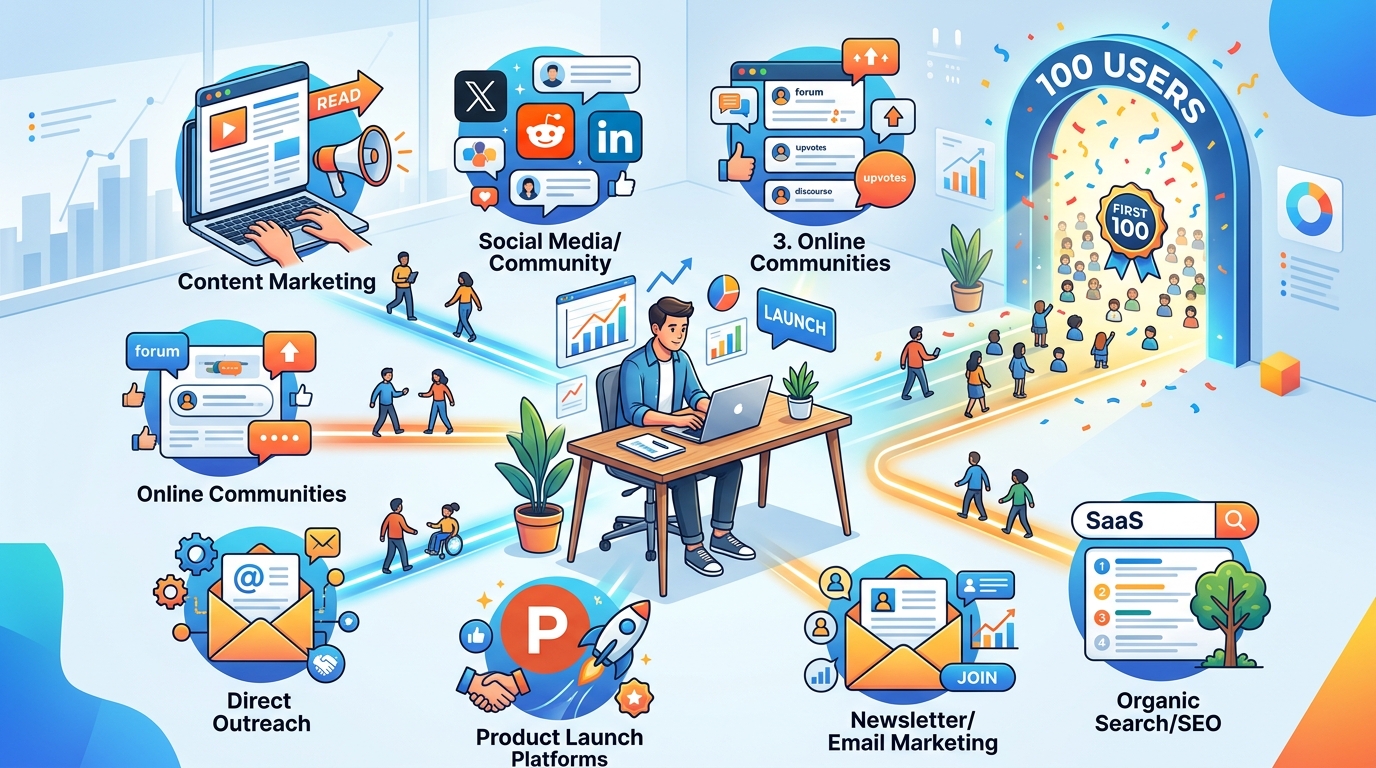
You’ve built your SaaS product. You’ve tested it. You’re ready to find real paying customers. But your marketing budget is zero, and you have no idea where to start. The good news? Every successful founder started exactly where you are right now. Getting your first 100 customers isn’t about having money to spend on ads. It’s about being scrappy, strategic, and willing to do things that don’t scale.
Getting your first 100 customers requires manual outreach, community engagement, and solving problems where your audience already gathers. Focus on one or two channels, validate [product-market fit](https://en.wikipedia.org/wiki/Product-market_fit) through direct conversations, and build relationships before scaling. Most successful founders acquire their initial users through personal outreach, content in niche communities, and leveraging existing networks rather than paid advertising.
Why the first 100 customers are different
Your first customers won’t find you through search engines or viral loops.
They’ll come from direct, often uncomfortable, manual work.
This phase isn’t about building a repeatable acquisition engine. It’s about learning who your customers are, what they actually need, and whether your product solves a real problem worth paying for.
The tactics that get you to 100 users are completely different from what gets you to 1,000. That’s fine. You need different skills at different stages.
Start with people who already know you
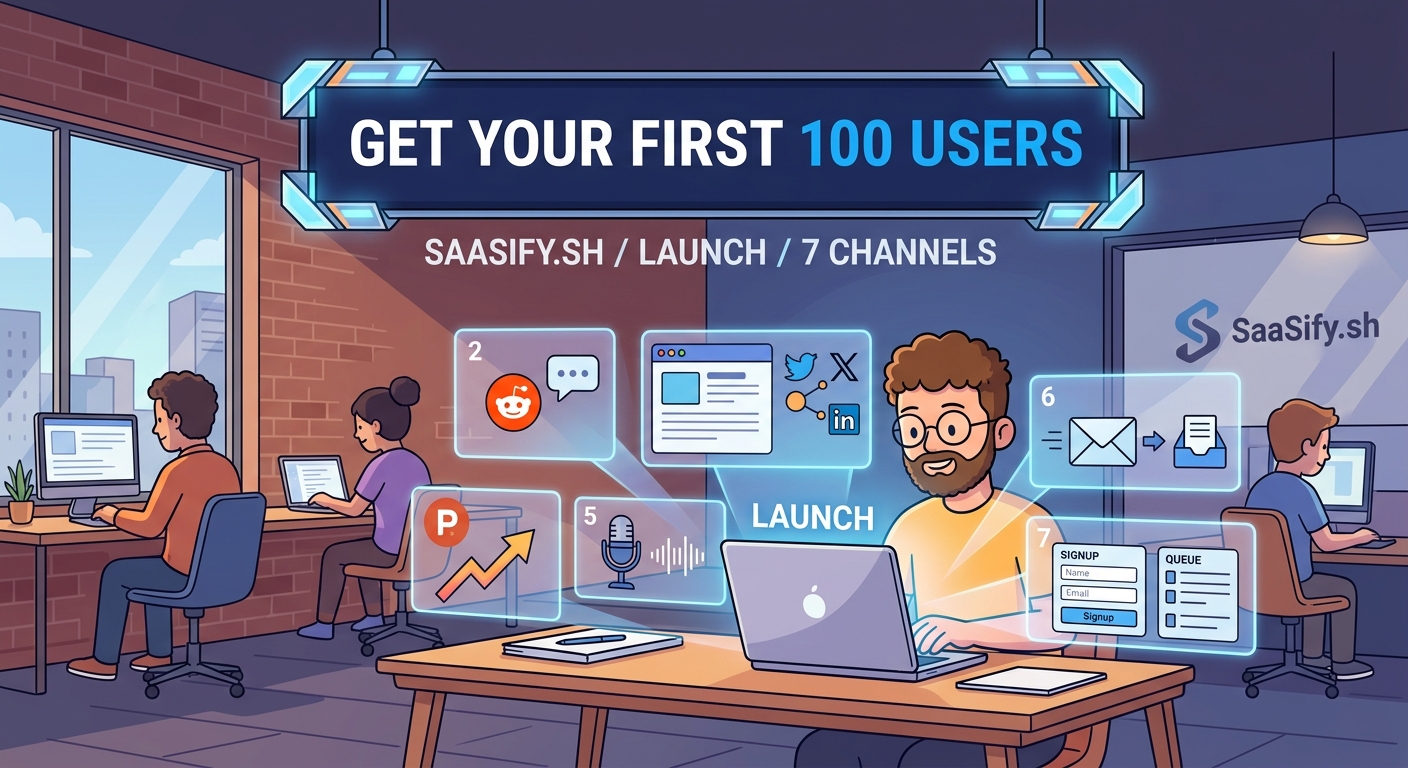
Your network is your first distribution channel.
Former colleagues, classmates, people you’ve worked with on side projects. These are the easiest people to reach and the most likely to give you honest feedback.
Send personal messages. Not a mass email. Individual notes explaining what you built and why you think it might help them.
Here’s what works:
- Mention a specific conversation or shared experience
- Explain the problem you’re solving in one sentence
- Ask if they’d be willing to try it and give feedback
- Offer it for free or heavily discounted
Most people won’t convert. That’s fine. You’re looking for early signal, not scale.
The ones who do sign up will give you invaluable insights. They’ll tell you what’s confusing, what’s missing, and whether you’re solving a real problem.
Find your people in online communities
Your target customers are already gathering somewhere online.
Reddit, Discord servers, Slack communities, niche forums. Find where they hang out and become a helpful member first.
Don’t show up and spam your product link. That gets you banned and builds zero trust.
Instead, spend time answering questions, sharing knowledge, and understanding the problems people face. When someone describes a problem your product solves, mention it naturally.
Here’s a framework that works:
- Join 3-5 communities where your target users gather
- Spend two weeks just reading and understanding the culture
- Answer questions and provide value for at least a month
- When relevant, mention your product as one possible solution
- Track which communities drive actual signups
The complete guide to reddit marketing for SaaS without getting banned covers this strategy in detail.
The founders who succeed in communities are the ones who give more than they take. Build trust first, promote second.
Create content that solves specific problems
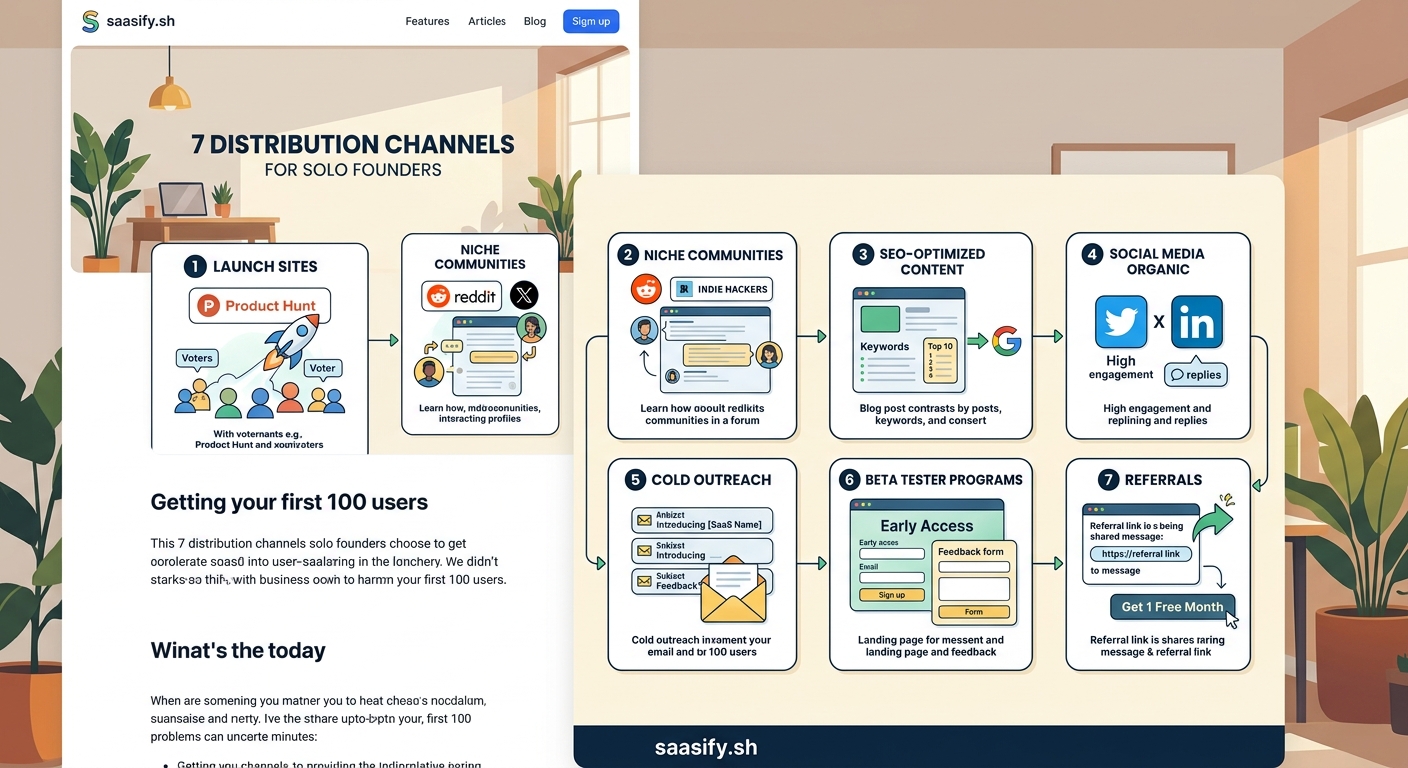
Content marketing sounds like it takes months to work.
It does, if you’re trying to rank for competitive keywords.
But you can get customers this week by creating content that answers very specific questions your target users are asking right now.
Look at what questions appear repeatedly in communities. Write detailed answers. Publish them on your blog, Medium, or dev.to. Share them back in those communities when relevant.
The content doesn’t need to be long. It needs to be helpful.
A 500-word post that solves one specific problem beats a 3,000-word guide that tries to cover everything.
Focus on:
- Problems you’ve solved while building your product
- Comparisons between tools your users are evaluating
- Step-by-step tutorials for common workflows
- Mistakes you made and how to avoid them
Link to your product naturally when it’s the right solution. Don’t force it.
How to create a content marketing engine that runs on 2 hours per week shows you how to systematize this without burning out.
Reach out to potential customers directly
Cold outreach feels uncomfortable. Do it anyway.
Make a list of 100 people or companies who fit your ideal customer profile. Find their email addresses. Send personalized messages.
Not templates. Not mail merges. Actual personalized emails.
Here’s what to include:
- Why you’re reaching out to them specifically
- One sentence about what your product does
- How it solves a problem they likely have
- A low-commitment ask (free trial, demo, or feedback call)
Your conversion rate will be low. Maybe 2-5%. That’s normal.
But if you send 100 thoughtful emails, you’ll get 2-5 conversations. Some of those will convert.
How to write cold emails that actually get SaaS demo bookings has templates and examples that work.
Build in public and share your progress
People love following along as someone builds something.
Share what you’re working on, the challenges you’re facing, and the lessons you’re learning.
Twitter, LinkedIn, and Indie Hackers are great platforms for this.
Post updates about:
- Feature releases and why you built them
- Customer feedback and how you’re responding
- Metrics and what you’re learning
- Mistakes and how you’re fixing them
The key is consistency and honesty. Don’t just share wins. Share the messy middle too.
Building in public attracts early adopters who want to support indie founders. They become customers, advocates, and sources of valuable feedback.
Offer to solve problems manually first
Your product probably doesn’t do everything yet.
That’s fine. Offer to do some parts manually for your first customers.
If your tool automates reporting but doesn’t have all the integrations yet, offer to pull the data yourself for the first month.
If your platform connects buyers and sellers but you don’t have enough supply yet, be the supply yourself.
This doesn’t scale. It’s not supposed to.
You’re learning what customers actually need, building relationships, and proving you can deliver value even if your product isn’t perfect yet.
Many successful SaaS companies started this way. They did things manually until they understood the problem well enough to automate it properly.
Get your first users from product launches
Launch platforms like Product Hunt, Hacker News, and BetaList can drive hundreds of visitors in a single day.
Not all of them will convert. But some will, especially if your product solves a real problem.
Prepare before you launch:
- Have a clear, compelling landing page ready
- Make signup and onboarding as smooth as possible
- Plan to be available all day to answer questions
- Have a system to capture feedback
The traffic spike won’t last. But the users you get, the feedback you collect, and the initial momentum can carry you forward.
The indie founder’s guide to coordinating a multi-platform launch without a team walks through the entire process.
Turn early users into advocates
Your first customers are your best marketing channel.
If they love your product, they’ll tell others. Make it easy for them.
Ask for testimonials. Request case studies. Encourage them to share their experience.
Consider building a referral program, even a simple one. Give existing users a reason to invite others.
The best referral incentives align with how your product creates value. If you save users time, offer more free time. If you help them make money, share the revenue.
Track what actually works
You can’t improve what you don’t measure.
Set up simple tracking for each acquisition channel:
| Channel | Users Acquired | Time Invested | Conversion Rate | Cost per User |
|---|---|---|---|---|
| Personal network | 12 | 5 hours | 24% | $0 |
| Reddit communities | 8 | 15 hours | 3% | $0 |
| Cold outreach | 5 | 10 hours | 5% | $0 |
| Product Hunt | 18 | 20 hours | 2% | $0 |
| Content marketing | 3 | 8 hours | 1% | $0 |
This helps you see which channels deserve more attention and which aren’t worth your time.
Double down on what works. Cut what doesn’t.
Common mistakes that slow down customer acquisition
Most founders make the same errors when trying to get their first customers.
Avoid these:
- Trying to be everywhere instead of mastering one channel
- Waiting for the product to be perfect before talking to users
- Focusing on features instead of solving customer problems
- Being too passive and hoping customers will find you
- Not following up with people who showed interest
- Giving up on a channel after one week
- Treating every potential customer the same way
The founders who get to 100 customers fastest pick 1-2 channels, commit to them for at least a month, and relentlessly iterate based on what they learn.
What to do once you hit 100 customers
Getting your first 100 customers proves you’ve built something people want.
Now you can start thinking about scale.
Look at which acquisition channels worked best. Can you systematize them? Can you hire someone to help? Can you build tools to make them more efficient?
Start thinking about your pre-launch waitlist that actually converts for your next feature or product tier.
Consider when it makes sense to start spending money on paid acquisition.
But don’t abandon the manual tactics too soon. Many successful SaaS companies continue doing things that don’t scale well past their first 100 customers.
Your first 100 customers teach you how to get the next 900
The strategies that got you here won’t get you to 1,000 users.
But they teach you everything you need to know to get there.
You’ve learned who your customers are, where they hang out, what problems they care about, and how to talk about your product in a way that resonates.
You’ve built relationships, gathered feedback, and validated that people will pay for what you’ve built.
Now take those lessons and start building repeatable systems around them. Test low-cost growth experiments to find your next growth channel.
The hard part is behind you. You’ve proven your product works. Everything from here is about doing more of what’s already working.