
You have an idea that feels like it could work. Maybe it solves a problem you’ve personally faced. Maybe you’ve seen others complain about the same friction point. But before you spend three months coding, you need proof that people will actually pay for it.
Validation isn’t about building a perfect product. It’s about testing demand before you invest serious time and money. The goal is simple: figure out if your idea has legs without writing a single line of code.
Validating a SaaS idea means testing real demand before you build. Talk to potential users, create a simple landing page, and measure interest through email signups or pre-orders. If people are willing to give you their email or money, you have something worth pursuing. If not, pivot fast and save yourself months of wasted effort.
Start by defining the problem, not the solution
Most founders fall in love with their solution before they understand the problem. They build features nobody asked for. They solve edge cases that don’t matter.
Start with the pain point. Write it down in one sentence. Be specific. “Freelancers struggle to track invoices” is vague. “Freelance designers waste 3 hours per week chasing late payments” is concrete.
Once you have clarity, ask yourself: is this problem urgent? Is it frequent? Is it expensive to ignore? If the answer to all three is yes, you might have something.
The best SaaS ideas solve problems that cost people time, money, or sanity. If your target user can live without your solution, they probably will.
Talk to real people before you build anything
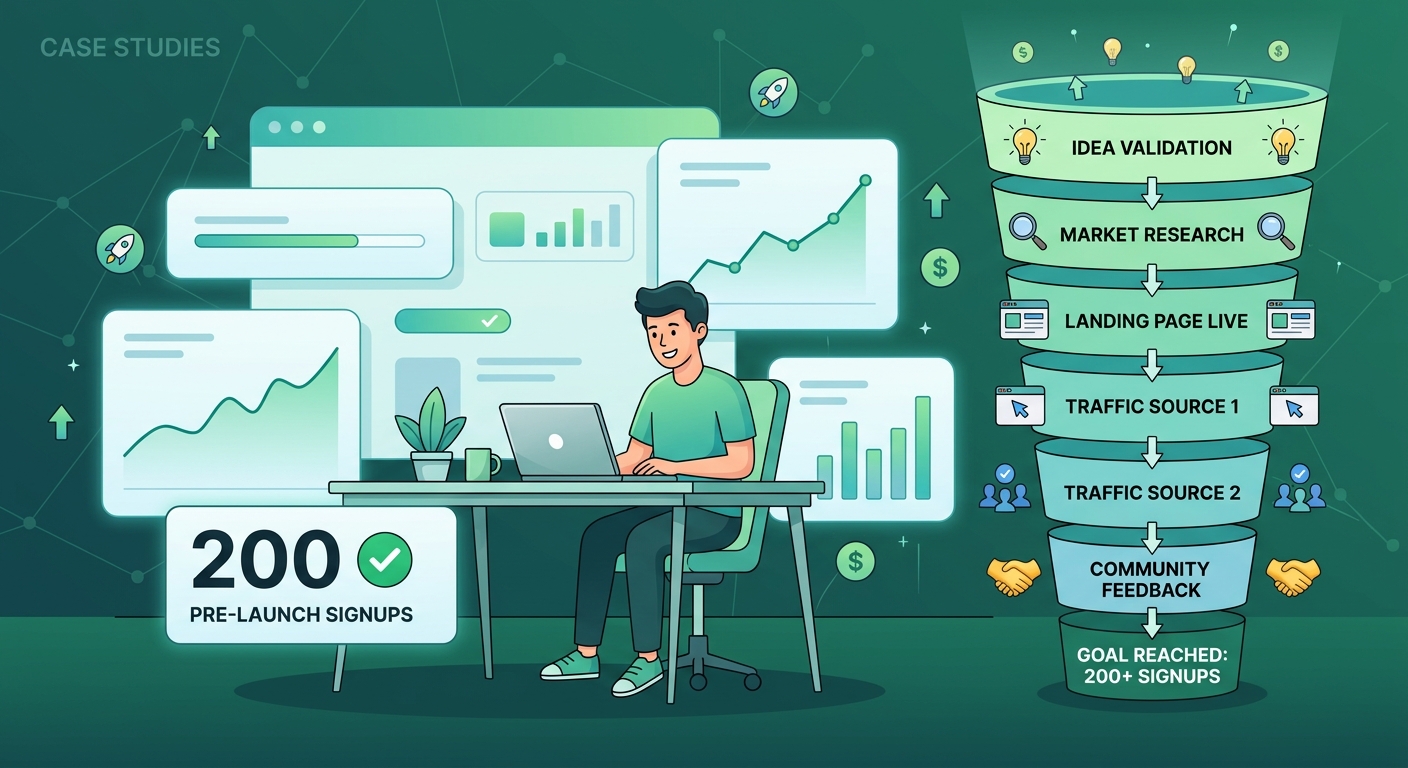
Validation starts with conversations. Not surveys. Not polls. Actual one-on-one discussions with people who experience the problem you’re trying to solve.
Find 5 to 10 people in your target audience. Reach out on LinkedIn, Twitter, Reddit, or niche communities. Be honest about what you’re doing. Most people are happy to share their frustrations if you’re genuinely listening.
Here’s what to ask:
- How are you solving this problem today?
- What tools or workarounds are you using?
- What’s the most frustrating part of your current process?
- If I could wave a magic wand and fix one thing, what would it be?
Listen for patterns. If three people mention the same pain point, that’s a signal. If everyone describes the problem differently, you might need to narrow your focus.
Avoid pitching your solution during these calls. Your job is to understand their world, not to sell them on yours.
Build a simple landing page to test interest
A landing page is your first real test. It doesn’t need to be fancy. It just needs to explain the problem, hint at the solution, and capture emails.
Use a tool like Carrd, Webflow, or even Notion with a custom domain. Spend a few hours, not a few days.
Your landing page should include:
- A headline that speaks to the pain point
- A brief explanation of what you’re building
- Social proof if you have it (testimonials from interviews, logos, etc.)
- An email signup form
- A clear call to action
Drive traffic to the page. Share it in communities where your target users hang out. Post it on Twitter. Send it to the people you interviewed. Track how many people sign up.
If you’re getting signups, that’s validation. If you’re not, revisit your messaging or your audience.
Test willingness to pay, not just interest
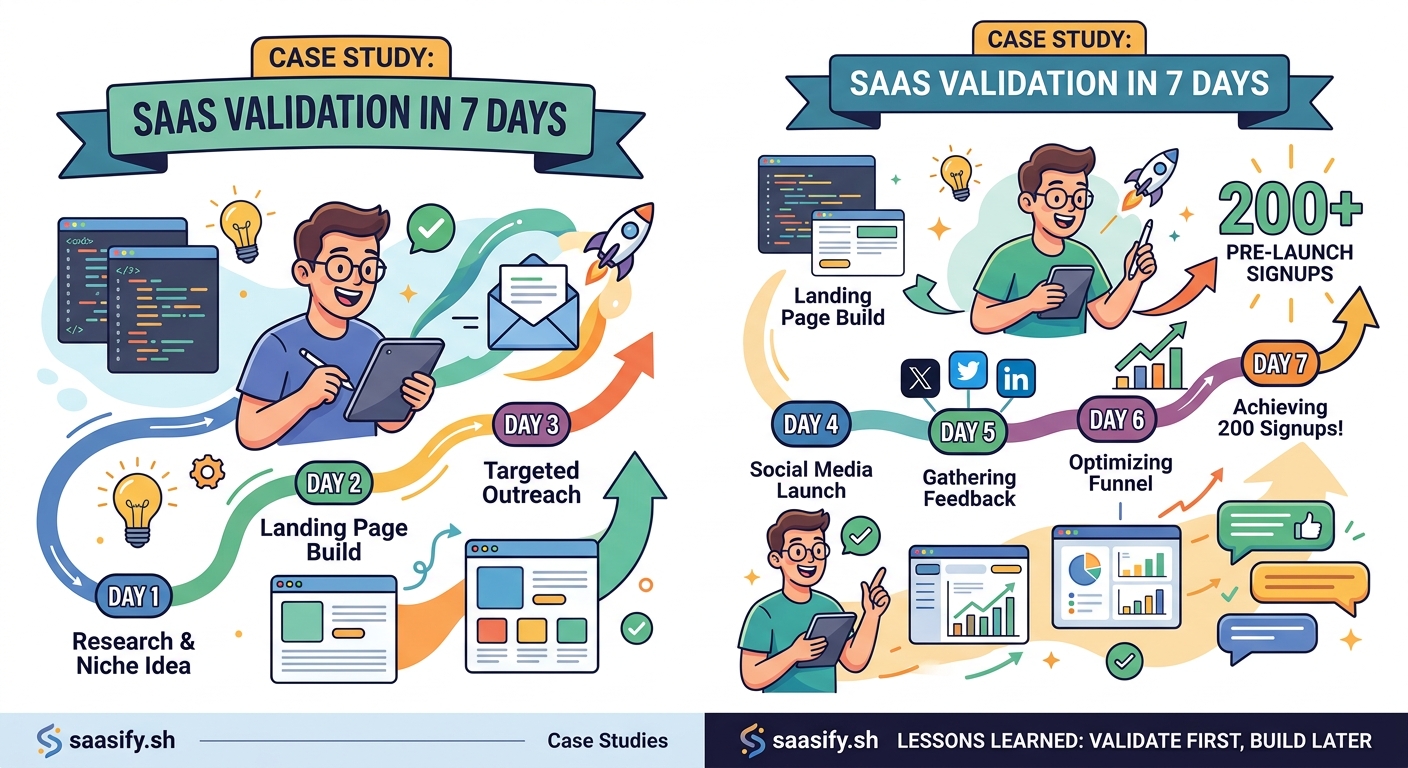
Email signups are nice. But they don’t prove people will pay. You need to test pricing before you build.
One way to do this is to add a pricing page to your landing page. List your tiers. Show what’s included. Make it look real, even if the product doesn’t exist yet.
When someone clicks “Get Started,” redirect them to a page that says something like: “We’re not live yet, but we’ll notify you when we launch. Want early access? Leave your email.”
Track how many people click through to pricing. Track how many submit their email after seeing the price. If people bounce the moment they see your pricing, you have a pricing problem or a value problem.
Another option is to offer pre-orders. Tools like Gumroad or Stripe Payment Links make this easy. Offer a discount for early supporters. If people are willing to pay before the product exists, you have strong validation.
Run a small paid ad test to measure real demand
Organic traffic is great, but it’s slow. Paid ads let you test demand in days, not weeks.
Set a small budget. $100 to $200 is enough to get meaningful data. Run ads on Google, Facebook, or LinkedIn, depending on where your audience spends time.
Point the ads to your landing page. Track clicks, signups, and cost per signup. If you’re spending $5 per signup and your product will eventually cost $50 per month, the math works. If you’re spending $50 per signup, you have a problem.
This test isn’t about profitability yet. It’s about proving that people care enough to click and share their email.
Use a no-code prototype to validate the core workflow
If you’re getting strong signals from your landing page and conversations, consider building a no-code prototype. This isn’t a full product. It’s a stripped-down version that tests the core workflow.
Tools like Airtable, Zapier, Bubble, and Softr let you build functional prototypes without writing code. You can test the user experience, gather feedback, and iterate fast.
Invite a small group of early users to try it. Watch how they interact with it. Ask what’s confusing. Ask what’s missing. Use their feedback to refine the concept before you commit to a full build.
For more on this approach, check out how to validate your SaaS idea before writing a single line of code.
Compare your idea against these validation criteria
Not all ideas are worth pursuing. Use this table to evaluate whether your concept has real potential.
| Criteria | Good Sign | Red Flag |
|---|---|---|
| Problem urgency | Users need a solution now | Users say “maybe someday” |
| Current workarounds | Manual, time-consuming processes | Free tools already solve it well |
| Willingness to pay | Users ask about pricing unprompted | Users expect it to be free |
| Market size | Thousands of potential users | Fewer than 100 potential customers |
| Competition | A few competitors with gaps | Either zero competitors or a saturated market |
| Your edge | Unique insight or unfair advantage | Generic solution anyone could build |
If most of your answers land in the “Good Sign” column, keep going. If you’re seeing red flags, it’s time to rethink the idea.
Avoid these common validation mistakes
Validation is simple, but founders still mess it up. Here are the traps to watch out for.
Talking only to friends and family. They’ll tell you what you want to hear. Find strangers who have no reason to be polite.
Confusing interest with intent. “That sounds cool” is not validation. “Where do I sign up?” is.
Skipping the pricing conversation. If you’re afraid to talk about money, you’re not ready to build a business.
Building before you validate. The whole point is to test before you invest months of work. Don’t skip this step.
Ignoring negative feedback. If people don’t get it, don’t blame them. Fix your messaging or your idea.
Set a clear decision point before you start
Before you begin validation, decide what success looks like. Write down your criteria. Be specific.
For example:
- Get 50 email signups in 7 days.
- Have 10 people click through to the pricing page.
- Receive at least 3 requests for early access.
If you hit those numbers, move forward. If you don’t, pause and reassess. Maybe the messaging is off. Maybe the audience is wrong. Maybe the idea isn’t as strong as you thought.
Having a decision point keeps you honest. It prevents you from moving goalposts and wasting time on ideas that don’t have traction.
Measure these key metrics during validation
Track the right numbers. Here’s what matters:
- Landing page visitors: How many people are seeing your pitch?
- Email signups: How many are interested enough to share their contact info?
- Pricing page clicks: How many want to know what it costs?
- Pre-orders or payment intent: How many are willing to pay?
- Conversation quality: Are people describing the problem the same way?
These metrics tell you whether you’re onto something. If the numbers are low, dig into why. Is the traffic wrong? Is the messaging unclear? Is the problem not urgent enough?
Use audience research to sharpen your positioning
Validation isn’t just about proving demand. It’s about understanding your audience well enough to position your product correctly.
During your interviews and tests, pay attention to the language people use. What words do they repeat? What metaphors do they reach for? What outcomes do they care about?
Use that language in your landing page, your ads, and your pitch. When your messaging mirrors how your audience thinks, conversion rates go up.
If you’re still figuring out who to target, explore 23 profitable micro-SaaS niches that big companies ignore in 2026 for inspiration.
Build a waitlist that keeps momentum alive
Once you’ve validated demand, don’t let the momentum die. Keep your early supporters engaged while you build.
Send regular updates. Share progress. Ask for feedback. Make them feel like part of the journey.
A well-managed waitlist can turn into your first paying customers. For tactics on how to do this right, read how to build a pre-launch waitlist that actually converts.
Decide whether to build an MVP or pivot
After validation, you’ll have one of three outcomes:
- Strong demand and clear feedback. Build an MVP.
- Moderate interest but unclear positioning. Refine and retest.
- Weak signals across the board. Pivot or move on.
If you’re moving forward, keep the scope tight. Don’t build everything at once. Focus on the core workflow that solves the main pain point. For guidance on this, check out how to build a SaaS MVP in 30 days without burning out.
If you’re pivoting, don’t see it as failure. You just saved yourself months of building something nobody wanted. That’s a win.
Think of validation as an ongoing process
Validation doesn’t stop after the first test. It continues through your MVP, your beta, and your first 100 customers.
Keep talking to users. Keep testing assumptions. Keep iterating based on feedback.
The best SaaS products evolve with their users. Stay close to the problem, and you’ll stay relevant.
Why testing beats guessing every time
Building a SaaS without validation is like driving with your eyes closed. You might get lucky, but the odds aren’t in your favor.
Validation gives you confidence. It tells you whether to build, pivot, or walk away. It saves you time, money, and sanity.
Start small. Test fast. Listen hard. And only build when the signals are clear. That’s how you turn an idea into a product people actually want.