Launching an indie game feels like standing at the edge of a cliff with your parachute folded in your backpack. You’ve spent months building something you believe in, but now you need to make sure people actually see it, play it, and hopefully buy it.
Most solo developers focus so much on building the game that launch planning becomes an afterthought. Then launch day arrives and you’re scrambling to remember passwords, fix broken links, and coordinate announcements across platforms while your heart races.
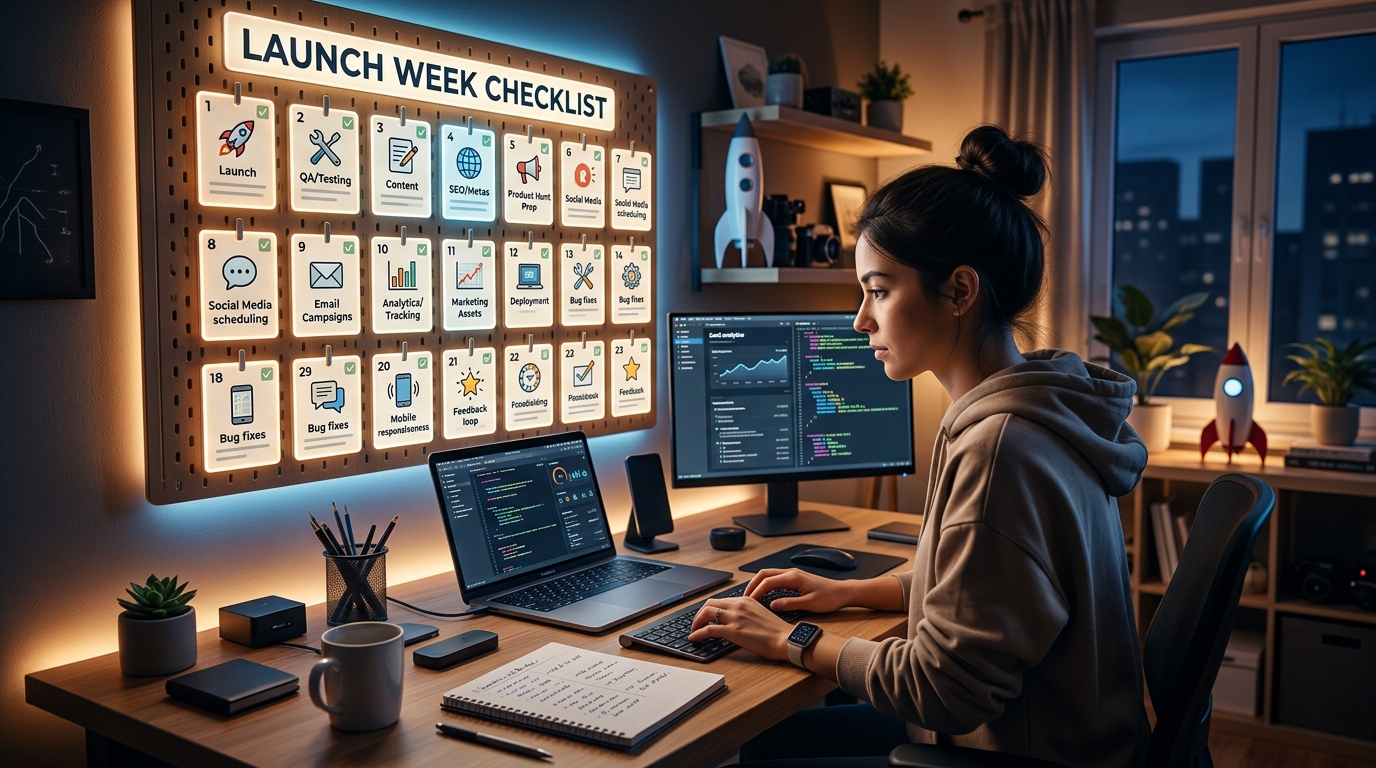
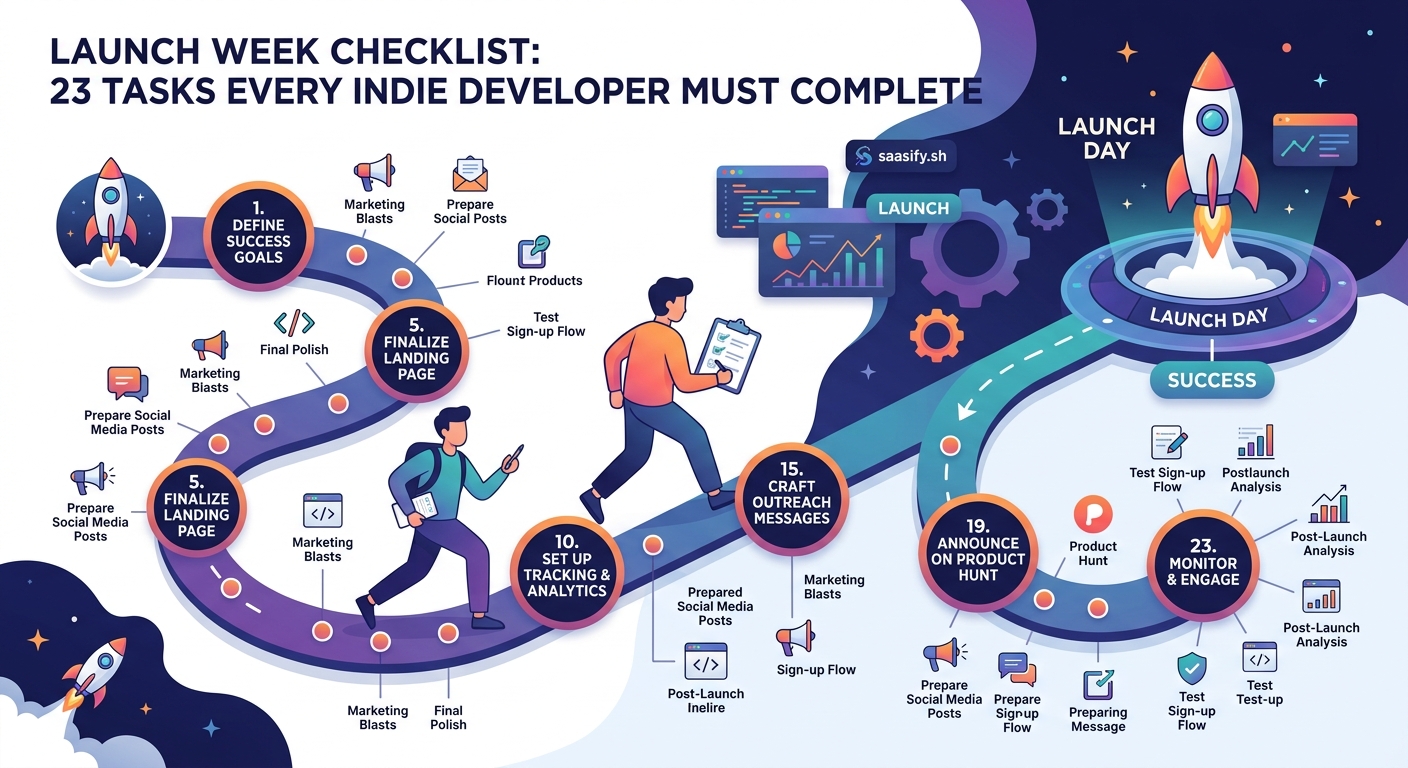
An indie game launch checklist breaks down the overwhelming process into manageable tasks across three phases: pre-launch preparation, launch day execution, and post-launch momentum. This structured approach helps solo developers avoid common mistakes like missing platform deadlines, forgetting to prepare press materials, or losing track of community engagement during the critical first week when visibility matters most.
Pre-launch preparation starts earlier than you think
Most developers underestimate how long pre-launch activities actually take. You can’t just flip a switch on launch day and expect everything to work perfectly.
Start your pre-launch phase at least 30 days before your target date. This gives you breathing room for unexpected delays and platform approval processes.
Build your store presence first
- Create your Steam page (or itch.io, Epic, etc.) at least two weeks before launch
- Write your game description focusing on what players actually do, not your development journey
- Upload high-quality screenshots that show actual gameplay, not concept art
- Record a trailer under 90 seconds that hooks viewers in the first 10 seconds
- Set your pricing based on comparable games in your genre and length
Store pages need time to get indexed by search engines and recommendation algorithms. A page that sits for two weeks before launch performs better than one created the day before.
Prepare your marketing materials
You need a press kit ready before anyone asks for it. When a content creator or journalist shows interest, you have maybe 24 hours to respond before they move on.
Your press kit should include:
- High-resolution logo (PNG with transparent background)
- 5-10 gameplay screenshots at 1920×1080 or higher
- Your trailer in downloadable format
- One-paragraph game description
- Longer description with key features
- Developer bio
- Contact information
Host this on a simple webpage or use a service like presskit(). Don’t make people email you for basic assets.
Test your build until you’re sick of it
Nothing kills launch momentum faster than game-breaking bugs discovered on day one. Your launch build needs to be rock solid.
Run through these tests:
- Fresh install on a clean machine
- Complete playthrough from start to finish
- Save/load functionality in different scenarios
- Graphics settings on minimum and maximum specs
- Controller support if applicable
- Achievement triggers and unlock conditions
Ask 3-5 trusted friends to playtest the final build. They’ll find issues you’ve become blind to after months of development.
Building anticipation without burning out
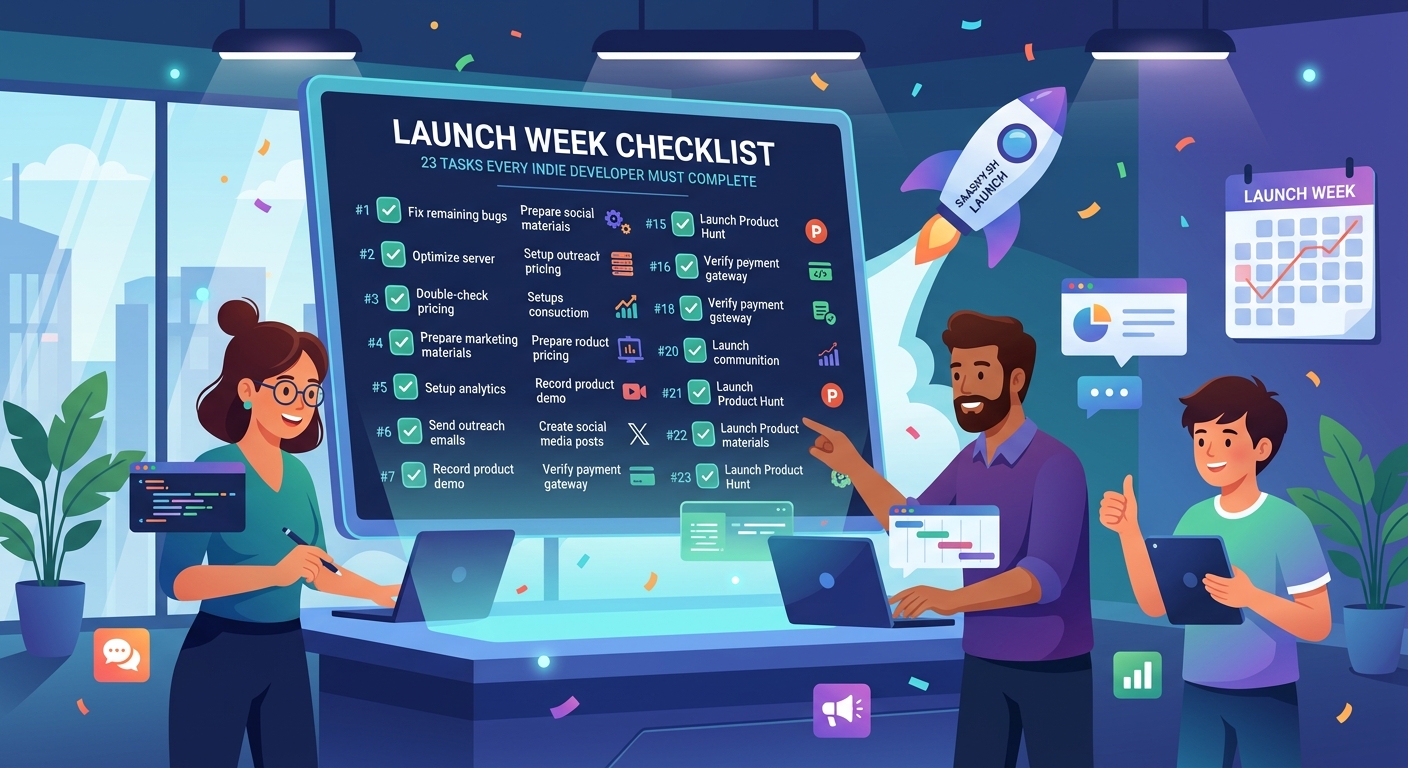
Pre-launch marketing doesn’t mean posting “coming soon” messages every day. That approach fatigues your audience before launch even happens.
Focus on showing progress and building genuine interest. Share short gameplay clips, development challenges you’ve solved, or interesting mechanics.
The 30-day pre-launch marketing plan for solo developers breaks down exactly what to post and when, but here’s the core principle: provide value, not hype.
Create a wishlist campaign
Wishlists directly impact your launch day visibility on most platforms. Steam’s algorithm particularly favors games with strong wishlist-to-purchase conversion rates.
Start building wishlists as soon as your store page goes live. Every piece of content you share should include a clear call to action pointing to your store page.
Don’t overthink the messaging. “Wishlist now to get notified at launch” works better than clever marketing speak.
Reach out to content creators early
YouTubers and streamers plan their content calendars weeks in advance. If you want coverage during launch week, you need to contact them now.
Make a spreadsheet of 20-30 creators who cover games similar to yours. Focus on channels with 1,000 to 50,000 subscribers. They’re more likely to respond than massive channels, and their audiences are often more engaged.
Your outreach email should be short:
- One sentence about who you are
- Two sentences about your game
- Why you think their audience would enjoy it
- Offer of a free key (no strings attached)
- Release date
Don’t ask for guaranteed coverage. Just offer the key and let them decide.
Launch day execution requires a runbook
Launch day will be chaotic no matter how prepared you are. A written runbook keeps you on track when your brain is running on adrenaline and caffeine.
Your launch day runbook should list every task in chronological order with exact times and responsible parties (even if that’s just you).
Morning of launch checklist
- Verify your game build is live on all platforms
- Test purchase flow on each store
- Confirm pricing is correct in all regions
- Check that achievements/trophies are working
- Verify download sizes match expectations
- Test the game launches properly after purchase
Do this before you announce anything publicly. You want to catch problems while you can still fix them quietly.
Announcement coordination
Launch announcements should hit multiple channels simultaneously for maximum impact. Prepare everything in advance and schedule posts where possible.
Your announcement should go to:
- Email list (if you have one)
- Twitter/X
- Reddit (relevant subreddits, following each community’s rules)
- Discord communities you’re part of
- Your own Discord server
- Facebook groups
- LinkedIn (yes, really, especially for certain genres)
Stagger these by 5-10 minutes so you can monitor responses and adjust if something goes wrong.
Monitor and respond
The first few hours after launch are critical for momentum. You need to be present and responsive.
Watch for:
- Bug reports on social media and Discord
- Questions about gameplay or features
- Technical issues preventing people from playing
- Positive feedback you can amplify
Respond to everything. Even a simple “thanks for playing!” builds goodwill and shows you’re listening.
Platform-specific requirements vary wildly
Each platform has its own quirks and requirements. Missing one can delay your launch or limit your visibility.
| Platform | Key Requirement | Lead Time | Common Mistake |
|---|---|---|---|
| Steam | Store page review | 2-3 days | Forgetting to set release date visibility |
| Itch.io | None (instant) | 0 days | Not setting up proper tags for discovery |
| Epic Games Store | Application process | 4-6 weeks | Assuming approval is guaranteed |
| Console (Switch/Xbox/PS) | Dev kit, certification | 3-6 months | Underestimating cert requirements |
| Mobile (iOS/Android) | App review | 1-7 days | Not preparing for rejection scenarios |
Console launches require the most planning. If you’re targeting Nintendo Switch, Xbox, or PlayStation, start that process 6+ months before your intended launch date.
Community engagement makes or breaks momentum
Your launch week determines how algorithms treat your game for months afterward. Strong initial engagement signals to platforms that your game deserves visibility.
Set up your community hub
Before launch, establish one primary place for your community. This could be:
- A Discord server
- A subreddit
- A Steam community hub
- A dedicated forum
Don’t try to maintain all of these at once. Pick one and do it well. Discord works best for most indie games because it allows real-time interaction.
Seed your community with a few beta testers or early supporters before launch. An empty community space feels unwelcoming to new members.
Plan your first week content
Don’t disappear after launch day. Your presence during week one matters enormously.
Post daily updates covering:
- Player count milestones
- Interesting gameplay clips from the community
- Bug fixes and patches
- Thank you messages to supporters
- Behind-the-scenes development stories
This consistent presence keeps your game in people’s feeds and encourages ongoing discussion.
Post-launch tasks most developers forget
The work doesn’t stop when the game goes live. Post-launch activities determine whether your game has legs or fades into obscurity.
Gather and implement feedback
Players will tell you exactly what’s wrong with your game if you listen. Create a system for tracking feedback:
- Set up a public roadmap or Trello board
- Create a feedback channel in your Discord
- Monitor Steam reviews and comments
- Check subreddits and forums
- Track common complaints across all channels
Prioritize fixes based on frequency and severity. A bug that affects 50% of players matters more than a feature request from one person.
Plan your first update
Announce a timeline for your first major update within the first week. This gives players something to look forward to and shows you’re committed to supporting the game.
Your first update should focus on:
- Critical bug fixes
- Quality of life improvements
- Addressing the most common player complaints
Save major new content for later updates. Get the foundation solid first.
Maintain marketing momentum
Launch week visibility doesn’t last. You need ongoing marketing to sustain sales.
Weekly tasks:
- Share player creations or achievements
- Post development updates
- Engage with community discussions
- Reach out to new content creators
- Participate in relevant online communities
Monthly tasks:
- Analyze sales data and adjust pricing if needed
- Review and respond to all reviews
- Plan content updates or DLC
- Evaluate which marketing channels work best
- Adjust your store page based on player feedback
The distribution channels that work for solo founders apply just as well to indie games as they do to SaaS products.
Technical preparation prevents launch day disasters
Your technical infrastructure needs to handle launch day traffic and player load. Even single-player games have backend systems that can fail.
Set up analytics before launch
You need to understand how players interact with your game from day one. Implement analytics that track:
- Session length
- Completion rates for different levels or chapters
- Where players quit or get stuck
- Feature usage
- Crash reports and error logs
Tools like Unity Analytics, GameAnalytics, or custom solutions give you this data. Just remember to comply with privacy regulations and disclose data collection in your privacy policy.
Prepare your server infrastructure
If your game has any online components (leaderboards, multiplayer, cloud saves), stress test everything before launch.
Run load tests simulating 10x your expected player count. Better to over-prepare than watch your servers crash when you hit the front page of a subreddit.
Consider using scalable cloud services that can handle traffic spikes automatically. The cost is worth the peace of mind.
Have a rollback plan
Sometimes launches go wrong despite perfect preparation. You need a plan for rolling back to a previous version if a critical bug slips through.
Document:
- How to revert to the previous build on each platform
- Who has access to make emergency changes
- Communication templates for different failure scenarios
- Contact information for platform support teams
“The best launch plan is the one you never need to use, but having it means you can sleep the night before launch day instead of lying awake imagining disaster scenarios.” – Indie developer with 3 successful launches
Pricing strategy impacts everything
Your launch price sets expectations and determines your initial audience. Get it wrong and you’ll struggle to course-correct.
Research comparable games in your genre. Look at games with similar length, scope, and production values. Don’t price based on how many hours you worked. Price based on market value.
Consider a launch discount of 10-20% for the first week. This rewards early adopters and creates urgency. Just make sure your base price is set correctly first.
The pricing framework for products with zero customers applies here too. You’re making educated guesses, not scientific calculations.
Regional pricing matters
Don’t use automatic regional pricing without reviewing it. Some regions need significant adjustments to match local purchasing power.
Steam provides recommended regional prices, but they’re starting points. Research what similar games charge in each major region and adjust accordingly.
Games priced appropriately for regions like Brazil, Russia, and Southeast Asia often see 20-30% of their sales from those markets.
Press and influencer outreach needs timing
Your press strategy should start 2-3 weeks before launch, not on launch day.
Build your media list
Create a spreadsheet of gaming press outlets and influencers. Include:
- Outlet/channel name
- Contact email
- Follower/subscriber count
- Content focus
- Last contacted date
- Response status
Focus on outlets that cover indie games and your specific genre. Sending your puzzle game to an FPS-focused channel wastes everyone’s time.
Craft your pitch email
Press emails should be scannable in 30 seconds. Journalists get hundreds of pitches weekly.
Structure:
- Subject line: “[Game Name] – [Genre] launching [Date]”
- First sentence: Hook that explains why their audience cares
- Second paragraph: What makes your game unique
- Third paragraph: Key features and platforms
- Call to action: Offer review key
- Link to press kit
Include 2-3 screenshots directly in the email. Don’t make them click through to see your game.
Follow up appropriately
One follow-up email is acceptable. Two is pushy. Three gets you ignored forever.
Send your initial pitch 2 weeks before launch. If you don’t hear back, follow up 3 days before launch. Then move on.
Platform-specific launch strategies differ
Launching on Steam requires different tactics than launching on itch.io or mobile stores.
Steam launch optimization
Steam’s algorithm rewards strong performance in the first few days. This creates a positive feedback loop where initial sales drive more visibility.
Tactics that help:
- Build wishlists for at least 2 weeks before launch
- Launch on Tuesday, Wednesday, or Thursday (avoid weekends)
- Set your launch time for 10 AM Pacific (when Steam updates)
- Participate in Steam Next Fest if possible before launch
- Use all available tags and categories
- Respond to every review in the first week
The launch strategy comparison between soft launches and big reveals applies to games too.
Itch.io launch approach
Itch.io favors community engagement over pure sales numbers. The platform works well for experimental or niche games.
Optimize by:
- Pricing lower than Steam (itch.io audiences expect this)
- Offering a “pay what you want” option
- Creating a detailed devlog before launch
- Participating in relevant game jams
- Using comprehensive tags
- Joining itch.io community discussions
Mobile store considerations
Mobile launches face unique challenges with app store review processes and discovery algorithms.
iOS App Store:
- Submit for review 5-7 days before planned launch
- Prepare for rejection and resubmission time
- Optimize your app name for search
- Create compelling preview videos
- Respond to every review
Google Play:
- Review process is faster but less predictable
- Focus heavily on screenshots and description
- Use Google Play Console experiments for A/B testing
- Consider soft launching in select countries first
- Monitor crash reports obsessively
Managing launch day stress
Launch day will be stressful regardless of preparation. Accept this and plan accordingly.
Take care of yourself
- Sleep well the night before
- Eat actual meals, not just snacks
- Take breaks from monitoring social media
- Have someone you can talk to about the stress
- Remember that one launch doesn’t define your career
Burnout right after launch is common. You’ve been sprinting for months, and suddenly the finish line is behind you. The emotional crash is real.
Set realistic expectations
Most indie games don’t explode on launch day. Success usually builds gradually over weeks or months.
If you sell 10 copies on day one, that’s 10 people who believed in your work enough to pay for it. That’s worth celebrating.
The recovery strategies when launches underperform can help reframe disappointment into productive next steps.
Documentation saves future you
During launch chaos, you’ll discover things you wish you’d known earlier. Document everything.
Keep a launch journal noting:
- What worked better than expected
- What failed or underperformed
- Timing issues and delays
- Platform-specific problems
- Community reactions
- Personal stress points
This documentation becomes invaluable for your next launch or when helping other developers.
Your launch checklist becomes your playbook
Every launch teaches you something new. Your checklist should evolve with each project.
After launch, schedule a post-mortem review. What would you do differently? What surprised you? What can you systematize better next time?
The difference between a first-time indie developer and an experienced one isn’t talent or luck. It’s having systems that reduce chaos and free up mental energy for the decisions that actually matter.
Your indie game launch checklist isn’t just a task list. It’s your roadmap through one of the most stressful and exciting experiences in game development. Treat it as a living document that grows with your experience.
Launch day will still be chaotic. But with a solid checklist, it’ll be controlled chaos instead of complete panic. And that difference is everything when you’re trying to get your game in front of players who’ll love it as much as you do.