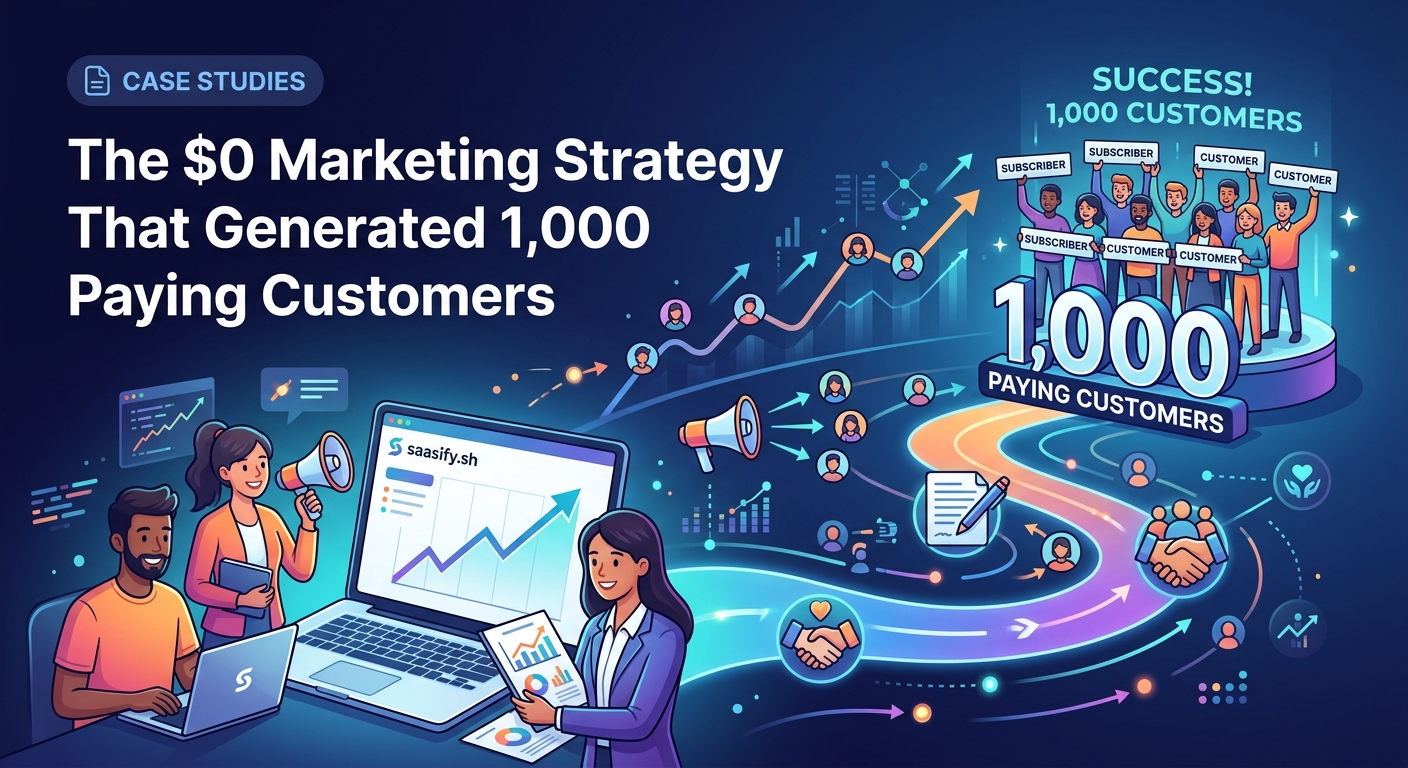
Getting your first thousand paying customers without a marketing budget sounds impossible. But bootstrapped founders do it every month using tactics that cost nothing but time and creativity.
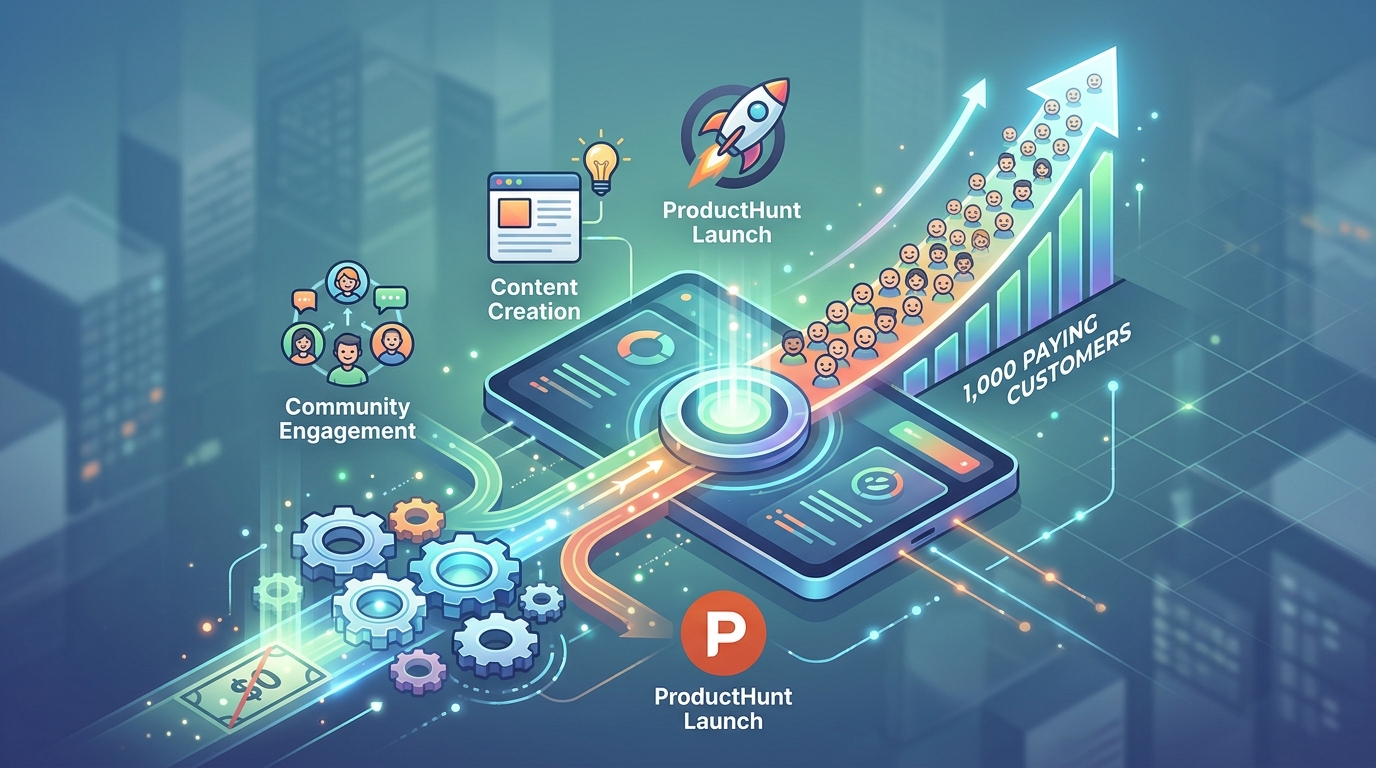
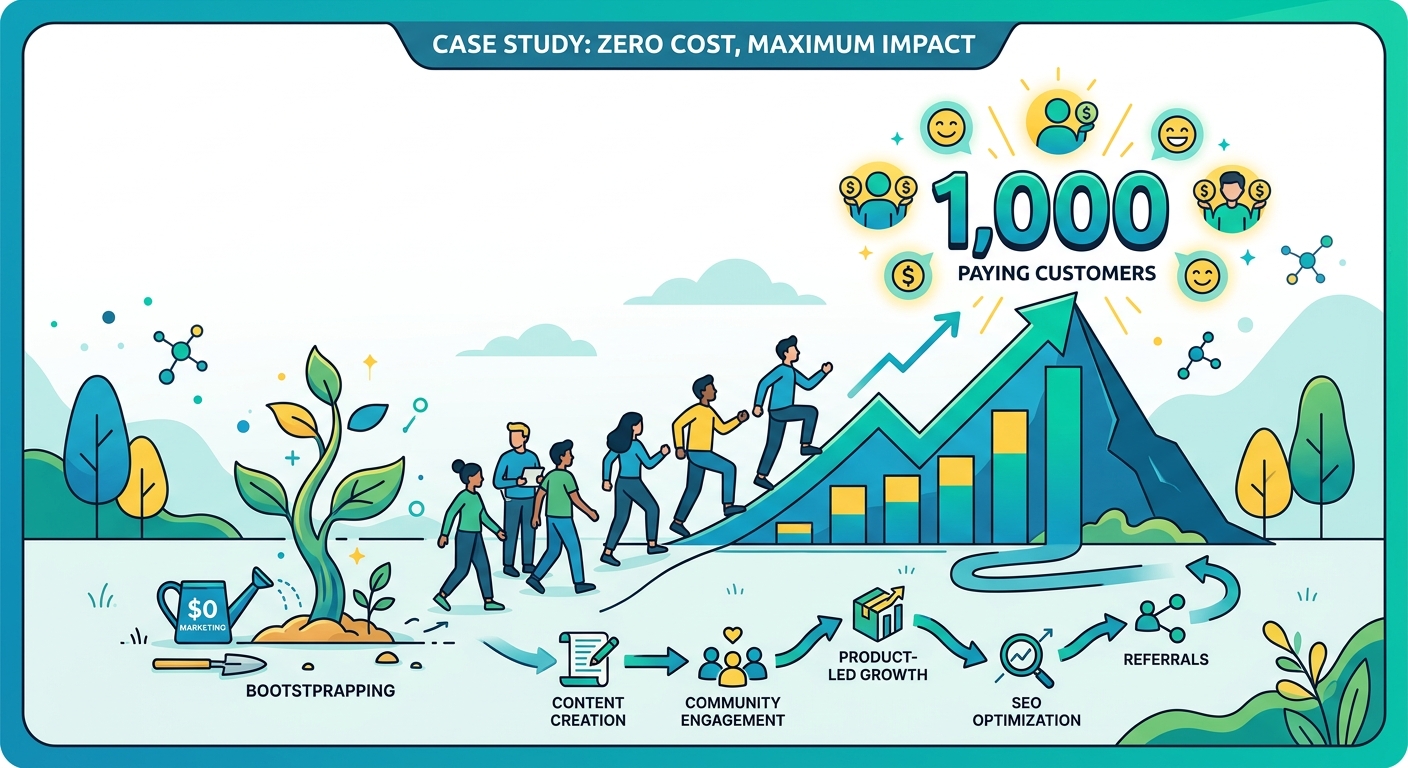
This $0 marketing strategy relies on seven proven tactics: building in public, community engagement, content creation, strategic partnerships, cold outreach, product-led growth, and launch platforms. These methods have helped thousands of bootstrapped SaaS founders reach 1,000 paying customers without spending money on ads. Success comes from consistent execution across multiple channels rather than perfecting a single approach.
Why the $0 Marketing Strategy Works for Bootstrapped Founders
Most early-stage founders face the same problem. You have a working product but no budget for Facebook ads or Google campaigns.
That constraint becomes your advantage.
Paid advertising rewards companies with deep pockets and established conversion funnels. Budget-free marketing rewards creativity, persistence, and genuine relationship building.
The founders who reach 1,000 paying customers without ad spend share three characteristics:
- They show up consistently in the same places their customers gather
- They provide value before asking for anything in return
- They treat every interaction as a chance to learn about customer problems
This approach takes longer than buying traffic. But it builds a foundation that paid ads never can.
Your early customers become advocates. Your content compounds over time. Your reputation grows organically.
Building in Public as Your Primary Growth Engine
Building in public means sharing your startup journey transparently on social platforms.
Post your revenue numbers. Share what failed. Show screenshots of customer conversations. Document your decision-making process.
This strategy works because people connect with stories, not products.
A founder sharing their struggle to implement payments gets more engagement than a polished product demo. Transparency builds trust faster than any marketing copy.
Here’s how to execute this effectively:
- Choose one primary platform where your target customers spend time (Twitter, LinkedIn, or IndieHackers work best for SaaS)
- Commit to posting at least once daily for 90 days minimum
- Share specific metrics, not vague updates (“Added 12 users today” beats “Great progress!”)
- Respond to every comment and question personally
- Document both wins and losses with equal honesty
The compound effect takes 60 to 90 days to kick in. Your follower count grows slowly at first. Then one post resonates, gets shared widely, and brings a flood of new signups.
“I spent six months building in public before seeing real traction. Then a single thread about my biggest mistake brought 400 signups in one weekend. The audience was already there, waiting for the right story.” – Solo founder who reached $40K MRR
Your building-in-public content serves multiple purposes. It attracts customers. It connects you with other founders who become partners or advisors. It creates a library of content you can repurpose later.
Community Engagement That Converts Lurkers Into Customers
Joining communities where your customers already gather costs nothing but generates consistent signups.
The mistake most founders make is treating communities like advertising platforms. They join, drop a link, and disappear.
The approach that works requires genuine participation:
- Answer questions in your area of expertise without mentioning your product
- Share helpful resources created by others
- Engage with other members’ posts regularly
- Build relationships before ever sharing what you’re building
Target these community types:
- Subreddits related to your niche (but read the rules about self-promotion carefully)
- Slack or Discord groups for your target audience
- Facebook groups focused on specific industries or problems
- Online forums and communities like IndieHackers or Hacker News
Spend at least 30 minutes daily in two to three communities. Focus on being helpful first. Your product becomes relevant when someone asks a question you can answer.
The complete guide to Reddit marketing for SaaS without getting banned covers specific tactics for one of the most valuable but strict platforms.
Track which communities generate actual signups versus just upvotes. Double down on the ones that convert.
Content Marketing Without a Content Team
Content creation remains one of the most effective $0 marketing strategies for SaaS products.
You don’t need a blog with 100 articles. You need a handful of pieces that directly address the problems your product solves.
Start with these three content types:
Problem-focused tutorials that show how to solve a specific issue (with or without your product). These rank well in search engines and attract people actively looking for solutions.
Comparison guides that help readers choose between different approaches or tools. Include your product as one option among several. Honest comparisons build more trust than biased reviews.
Case studies showing how real customers achieved specific results. Even with just five customers, you can create compelling stories that resonate with prospects.
Write for humans, not search engines. Use the exact words your customers use when describing their problems.
One well-researched, genuinely helpful article beats ten generic posts. Aim for 1,500 to 2,000 words that thoroughly answer a specific question.
Publish one new piece every week for the first three months. Then analyze which topics drove the most signups and create more content around those themes.
Creating a content marketing engine that runs on 2 hours per week shows how to systematize this process as a solo founder.
Strategic Partnerships That Multiply Your Reach
Finding partners who already serve your target customers gives you instant access to qualified audiences.
These partnerships work best when both sides provide clear value. You’re not asking for favors. You’re proposing mutually beneficial arrangements.
Three partnership types that work for bootstrapped founders:
Integration partnerships where you build a connection with a complementary tool. Their users need what you offer. Your users benefit from the integration. Both products become more valuable.
Content collaboration where you co-create something with another founder or company. You both promote it to your audiences. Everyone wins.
Affiliate relationships where existing tools or creators recommend your product to their audience in exchange for a commission. This costs nothing upfront and only pays when it generates results.
Approach potential partners with specific proposals:
- Explain exactly what you’re suggesting and why it benefits them
- Show that you understand their audience and goals
- Start small with a single collaboration before proposing ongoing partnerships
- Make it easy for them to say yes by doing most of the work yourself
The best partnerships come from relationships you build over time. Connect with other founders in your space. Support their launches. Share their content. Help without expecting immediate returns.
Cold Outreach That Actually Gets Responses
Cold email still works for acquiring early customers. But generic mass emails get ignored or marked as spam.
The outreach that converts follows a specific pattern:
Extreme personalization where you reference something specific about the recipient or their company. This proves you’re not sending the same message to 1,000 people.
Lead with value by pointing out a specific problem you noticed or sharing a relevant insight. Give before asking.
Make a small ask instead of requesting a 30-minute demo call. Ask for feedback, or offer a free trial, or request permission to share something relevant.
Here’s the structure that works:
- Personal opener showing you researched this specific person
- One sentence about what you do
- Specific value or insight related to their situation
- Small, easy request
- Simple signature without marketing fluff
Send 10 to 20 highly personalized emails daily rather than 100 generic ones. Track open rates and responses to refine your approach.
How to write cold emails that actually get SaaS demo bookings provides specific templates and examples.
Target customers who are likely to respond:
- Companies already using tools similar to yours
- People who recently posted about problems your product solves
- Businesses in your niche that match your ideal customer profile
Follow up once or twice if you don’t get a response. Then move on. Persistence matters, but pestering hurts your reputation.
Product-Led Growth Through Exceptional Free Trials
Your product itself can be your best marketing channel. Product-led growth means users can try, adopt, and pay for your product without talking to sales.
This approach requires three elements:
Self-serve signup where anyone can create an account and start using your product immediately. No forms requesting company size or booking demo calls.
Immediate value delivery where users experience a win within their first session. They solve a real problem or see clear benefits before the trial ends.
Natural upgrade path where free users hit limits that make paying feel like an obvious choice rather than a hard sell.
The trial period matters less than the activation rate. A 7-day trial where 40% of users activate beats a 30-day trial with 10% activation.
Focus on these metrics:
| Metric | What It Tells You | Target Range |
|---|---|---|
| Activation rate | Percentage who complete key action | 25% to 40% |
| Time to value | How long until first win | Under 10 minutes |
| Trial conversion | Free to paid percentage | 10% to 25% |
| Upgrade trigger | What causes users to pay | Specific feature or limit |
Improve activation by removing friction. Every extra form field, confirmation email, or setup step reduces the percentage of signups who become active users.
Watch recordings of users trying your product for the first time. The confusion points you notice are conversion killers.
Launch Platforms That Deliver Instant Traffic Spikes
Strategic launches on the right platforms can bring hundreds or thousands of visitors in a single day.
The three platforms that consistently work for SaaS products:
Product Hunt remains the most effective launch platform for indie products. A successful launch brings 500 to 2,000 visitors and 50 to 200 signups.
The 48-hour Product Hunt launch playbook for first-time founders walks through the entire process step by step.
Prepare for at least two weeks before launch day. Build relationships with other makers. Create all your assets in advance. Schedule the launch for Tuesday through Thursday for maximum visibility.
Hacker News can deliver even more traffic than Product Hunt but requires a different approach. The community values technical depth and honest discussion over marketing hype.
Share your product as a “Show HN” post. Focus on what you built and why, not marketing copy. Respond thoughtfully to every comment and question. The discussion matters as much as the initial post.
BetaList and similar directories provide smaller but more targeted traffic. Users browsing these platforms actively look for new products to try.
Submit to 10 to 15 relevant directories. Each brings modest traffic, but the cumulative effect adds up.
Plan your launches strategically:
- Build a small waitlist first using tactics from how to build a pre-launch waitlist that actually converts
- Launch on BetaList and smaller platforms to practice and gather feedback
- Use Product Hunt for your main launch after refining your messaging
- Submit to Hacker News when you have something technically interesting to share
Treat each launch as a learning opportunity. Track which messages resonate. Note which features generate the most interest. Use those insights to improve your positioning.
Combining Channels for Compounding Growth
No single tactic gets you to 1,000 paying customers. The strategy works through consistent execution across multiple channels.
Your weekly routine should include:
- Publishing content (blog posts, tutorials, or guides)
- Engaging in two to three communities daily
- Sending 10 to 20 personalized cold emails
- Sharing your journey publicly on social platforms
- Following up with trial users who haven’t activated
- Reaching out to potential partners
This might seem like a lot. But each activity takes 30 to 60 minutes once you build the habit.
The channels reinforce each other. Your building-in-public posts drive traffic to your content. Your content establishes expertise that makes cold outreach more effective. Community engagement surfaces partnership opportunities.
Track your efforts in a simple spreadsheet:
| Channel | Weekly Time | Signups This Week | Paid Conversions |
|---|---|---|---|
| Building in public | 3 hours | 12 | 2 |
| Community engagement | 3.5 hours | 8 | 1 |
| Content creation | 4 hours | 15 | 3 |
| Cold outreach | 2.5 hours | 5 | 1 |
| Partnerships | 2 hours | 3 | 0 |
Review your numbers weekly. Double down on channels that convert. Don’t abandon channels too early, but recognize when something genuinely isn’t working.
Most founders see this pattern:
Weeks 1 to 4 feel like shouting into the void. You’re creating content, posting updates, and sending emails with minimal response.
Weeks 5 to 12 bring sporadic wins. A post gets traction. A cold email converts. You land your first partnership.
Weeks 13 to 24 show compound growth. Your content ranks in search. Your social following grows. Your reputation spreads through word of mouth.
Months 7 to 12 feel easier because multiple channels produce consistent results. You’re not starting from zero each week.
Common Mistakes That Kill $0 Marketing Efforts
Even with the right tactics, execution mistakes prevent founders from reaching 1,000 customers.
Spreading too thin across too many channels. Focus on three to four tactics maximum. Master those before adding more.
Giving up too early. Most channels need 90 days of consistent effort before showing real results. Switching strategies every month guarantees failure.
Focusing on vanity metrics. Social media followers and website visitors matter less than trial signups and paying customers. Optimize for conversions, not attention.
Selling too hard, too soon. Build relationships and provide value first. The sales pitch comes later, once trust exists.
Ignoring what’s working. When you find a channel or message that converts, do more of it. Too many founders keep searching for the next tactic instead of scaling what works.
Neglecting existing customers. Your current users are your best source of new customers through referrals and word of mouth. Invest time in making them successful.
The path from zero to 1,000 paying customers takes most bootstrapped founders 12 to 18 months using these tactics. Some move faster. Some take longer.
The timeline matters less than the trajectory. As long as you’re adding customers every week and learning from what works, you’re on the right path.
Making $0 Marketing Work for Your Specific Product
Different products require different channel emphasis. B2B tools benefit more from cold outreach and partnerships. Consumer products see better results from building in public and launch platforms.
Adjust your approach based on your audience:
For technical products, focus on content that showcases your technical depth. Hacker News and technical communities become priority channels.
For business tools, emphasize case studies and ROI-focused content. LinkedIn and industry-specific communities work better than Twitter.
For creator tools, building in public and showing your own results becomes crucial. Your product becomes a case study for itself.
For niche vertical SaaS, finding the specific communities where your audience gathers matters more than broad reach.
Test different messages and channels during your first 90 days. The data will tell you where to focus.
Some founders reach 1,000 customers primarily through content and SEO. Others do it through community engagement and partnerships. A few manage it almost entirely through cold outreach.
There’s no single right path. The strategy that works is the one you can execute consistently with the time and skills you have.
Measuring Progress Without Getting Discouraged
Growth without paid advertising feels slow compared to stories about viral launches and overnight success.
Set realistic weekly goals based on your available time:
- 5 to 10 new trial signups per week in months 1 to 3
- 15 to 25 new trial signups per week in months 4 to 6
- 30 to 50 new trial signups per week in months 7 to 12
These numbers assume 15 to 20 hours weekly on marketing activities. Adjust based on your situation.
Track leading indicators that predict future growth:
- Number of pieces of content published
- Community interactions and relationship-building conversations
- Cold emails sent and response rates
- Social media engagement (not just follower count)
- Partnership conversations initiated
These activities drive results even when signups lag. Consistent input creates output over time.
Celebrate small wins. Your first paying customer. Your first piece of content that ranks. Your first partnership. These milestones prove the strategy works.
Scaling Beyond 1,000 Customers
The tactics that get you to 1,000 paying customers continue working beyond that milestone. But the execution changes.
You can’t personally respond to every comment or send every cold email once you reach scale. The activities that worked become templates and systems.
Your early content becomes the foundation for a larger content library. Your building-in-public posts become case studies and marketing materials. Your community relationships turn into formal partnerships.
Many founders start adding paid advertising around 500 to 1,000 customers. Not because organic channels stop working, but because paid acquisition becomes profitable with proven conversion funnels.
The $0 marketing strategy builds the foundation that makes paid advertising work. You understand your customers. You know which messages convert. You have social proof and case studies.
Paid ads accelerate growth that already exists. They rarely create it from scratch.
Your First 90 Days of $0 Marketing
Start with this 90-day plan:
Month 1: Foundation
– Choose your primary building-in-public platform and post daily
– Identify three communities where your customers gather
– Publish your first two pieces of in-depth content
– Send 10 personalized cold emails per week
– Set up tracking for signups by source
Month 2: Consistency
– Continue daily posting and community engagement
– Publish two more content pieces
– Increase cold outreach to 15 emails per week
– Initiate three partnership conversations
– Analyze which channels are driving signups
Month 3: Optimization
– Double down on the channels showing results
– Prepare for your first major launch (Product Hunt or similar)
– Create your first case study if you have paying customers
– Build relationships with other founders in your space
– Plan your next 90 days based on what worked
This plan assumes you’re working on marketing 15 to 20 hours weekly. Adjust the volume based on your available time, but keep the variety of channels.
The goal isn’t perfection. It’s consistent presence across multiple channels that compounds over time.
Why This Strategy Beats Paid Advertising for Early-Stage Products
Paid advertising works brilliantly for established products with proven conversion funnels and known customer lifetime values.
For early-stage products, it usually fails.
You’re still learning who your customers are. Your messaging hasn’t been refined through hundreds of conversations. Your product might need significant changes based on user feedback.
Spending money on ads at this stage means paying to learn lessons you could learn for free.
The $0 marketing strategy forces you to:
- Talk directly with potential customers
- Understand their problems deeply
- Refine your positioning based on real feedback
- Build relationships that provide insights beyond just conversions
These activities make your product better while acquiring customers.
By the time you reach 1,000 paying customers through organic channels, you understand your market better than most competitors. That knowledge becomes your competitive advantage.
Building a Marketing System That Runs Itself
The initial months require hands-on effort across all channels. But you can systematize much of this work over time.
Create templates for:
- Cold outreach emails that you personalize with specific details
- Social media posts that you adapt to different situations
- Content outlines for common topics in your niche
- Partnership proposals that you customize for each opportunity
Build a library of frequently used assets:
- Screenshots and product demos
- Customer testimonials and case studies
- Explanation of key features and benefits
- Responses to common questions and objections
Document your processes. When you find an approach that works for cold outreach or community engagement, write down the exact steps. This makes it easier to maintain consistency and eventually delegate.
Using automation tools that save indie SaaS founders 10+ hours every week can help streamline repetitive tasks without losing the personal touch.
The goal is making your marketing feel less like starting from scratch each week and more like executing a proven playbook.
Turning Customers Into Your Marketing Team
Your best marketing asset isn’t any tactic covered here. It’s your satisfied customers.
Every customer who gets real value from your product becomes a potential advocate. They mention you in communities. They recommend you to colleagues. They create content featuring your tool.
Make this easy for them:
- Ask happy customers if they’d be willing to share their experience
- Create shareable assets they can use (templates, case studies, tutorials)
- Build referral incentives that reward both the referrer and new customer
- Feature customer stories prominently in your marketing
One customer posting about your product in their industry community can bring more qualified signups than weeks of cold outreach.
Focus on making your current customers incredibly successful. That investment pays dividends through word of mouth and organic advocacy.
Why Most Founders Quit Before This Strategy Works
The biggest challenge with $0 marketing isn’t the tactics. It’s maintaining consistency long enough to see results.
Most founders quit after 30 to 45 days when initial efforts produce minimal signups. They switch to a different approach, then another, never staying with any strategy long enough for compound effects to kick in.
The pattern that leads to 1,000 customers looks like this:
Months 1 to 2: Lots of activity, minimal results, growing doubt.
Months 3 to 4: Sporadic wins, inconsistent growth, temptation to try something new.
Months 5 to 6: Momentum builds, multiple channels start producing, renewed confidence.
Months 7 to 12: Compound growth, word of mouth increases, systems start working.
The founders who succeed are the ones who push through months 1 to 4 without giving up or constantly changing direction.
Set a 90-day commitment to your chosen channels. Evaluate and adjust after that period, but don’t abandon the strategy during the initial ramp-up phase.
Making Zero-Budget Marketing Sustainable
Spending 15 to 20 hours weekly on marketing while building your product and supporting customers gets exhausting.
Sustainability comes from integration and efficiency:
Integrate marketing with product development. Share what you’re building as you build it. Customer conversations inform both product decisions and marketing messages.
Batch similar activities. Write multiple pieces of content in one session. Send all your cold emails in a focused block. Record several building-in-public updates at once.
Reuse and repurpose everything. A customer conversation becomes a tweet thread, which becomes a blog post, which becomes an email newsletter. Create once, distribute everywhere.
Focus on activities that energize you. If writing drains you but conversation energizes you, emphasize community engagement over content creation. Work with your natural strengths.
Set boundaries. Marketing 20 hours weekly beats burning out after two months. Sustainable effort wins over unsustainable sprints.
The path to 1,000 paying customers is a marathon, not a sprint. Pace yourself accordingly.
From Zero to One Thousand Without Spending a Dollar
Reaching 1,000 paying customers without a marketing budget is absolutely possible. Thousands of bootstrapped founders have done it using the tactics covered here.
The strategy requires three things: consistency, patience, and genuine value creation.
Show up daily in the places your customers gather. Create content that actually helps people. Build relationships before asking for anything. Execute across multiple channels instead of betting everything on one approach.
The first 90 days will test your commitment. Results come slowly. You’ll question whether it’s working.
Push through that phase. The compound effects of consistent effort become visible around month four. By month six, you’ll have multiple channels producing regular signups.
Your journey from zero to 1,000 customers won’t look exactly like anyone else’s. You’ll find that certain channels work better for your specific product and audience. You’ll develop your own voice and approach.
But the underlying principles remain constant. Provide value first. Build genuine relationships. Stay consistent long enough for compound effects to work.
Start today with one piece of content, one community interaction, or one cold email. Then do it again tomorrow. And the next day. And the day after that.
Your first thousand customers are out there, waiting to discover the solution you’ve built. These tactics will help them find you.