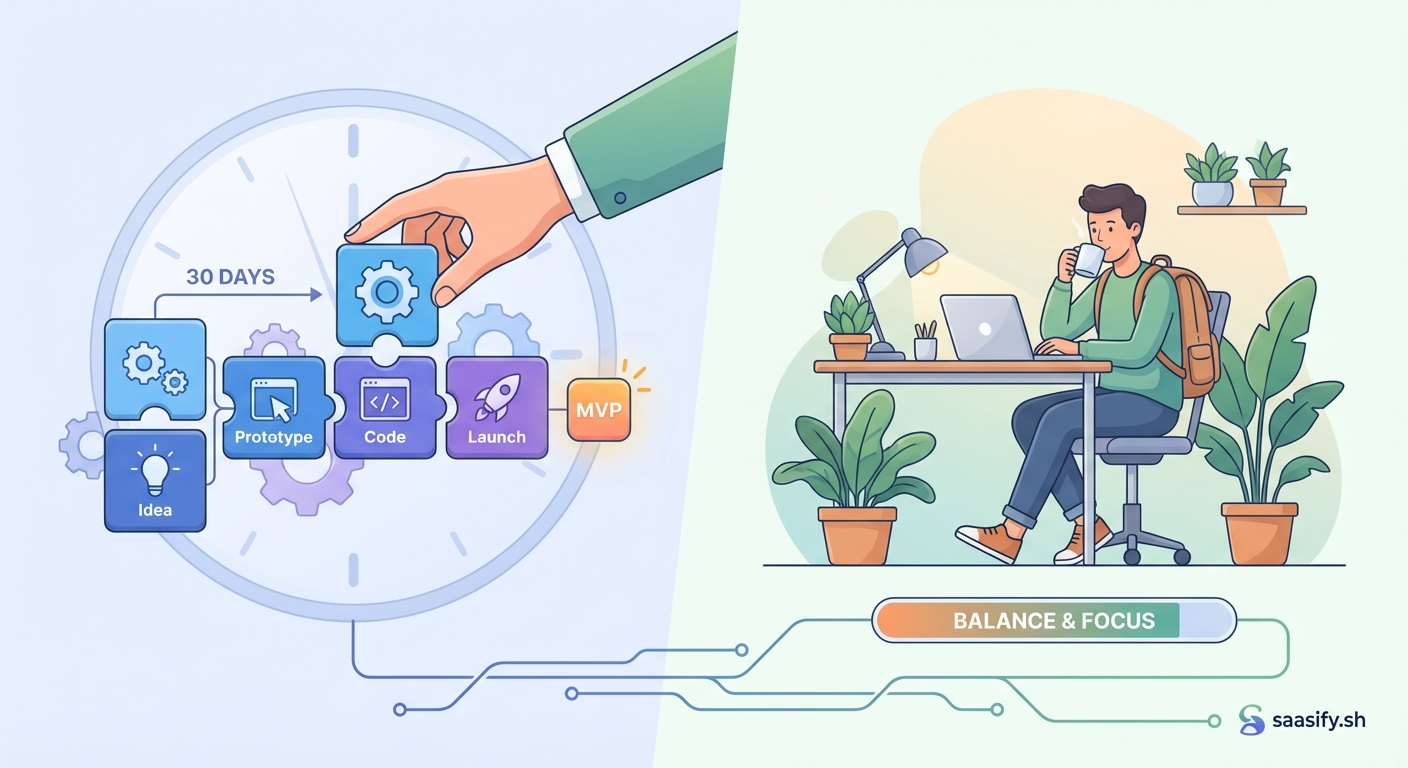
Building a SaaS product feels impossible when you’re staring at a blank screen with zero lines of code written. You’ve got an idea that could actually solve a real problem, but the path from concept to working product seems like it requires a computer science degree and six months of your life.
Building a SaaS MVP in 30 days is achievable for non-technical founders using a structured four-week framework. Focus on solving one core problem, use no-code tools strategically, validate with real users by week three, and ruthlessly cut features that don’t directly prove your concept works. This approach prevents burnout while getting you to revenue faster.
Why 30 Days Is the Perfect Timeline
Thirty days creates just enough pressure to keep you focused without crushing your soul.
Longer timelines invite feature creep. You start adding user profiles with avatars, dark mode, and social sharing before anyone has even signed up. Shorter timelines force panic decisions and sloppy foundations that break the moment real users touch them.
A month gives you four clear weeks to build, test, and validate. Week one is planning and setup. Week two is building your core feature. Week three is getting real humans to use it. Week four is refinement based on actual feedback, not your assumptions.
This timeline works because it aligns with how people actually make decisions. A potential customer who sees your MVP can give you feedback within the same month. You’re not waiting three months to find out your idea doesn’t solve the problem you thought it did.
Week One: Define Your One Thing
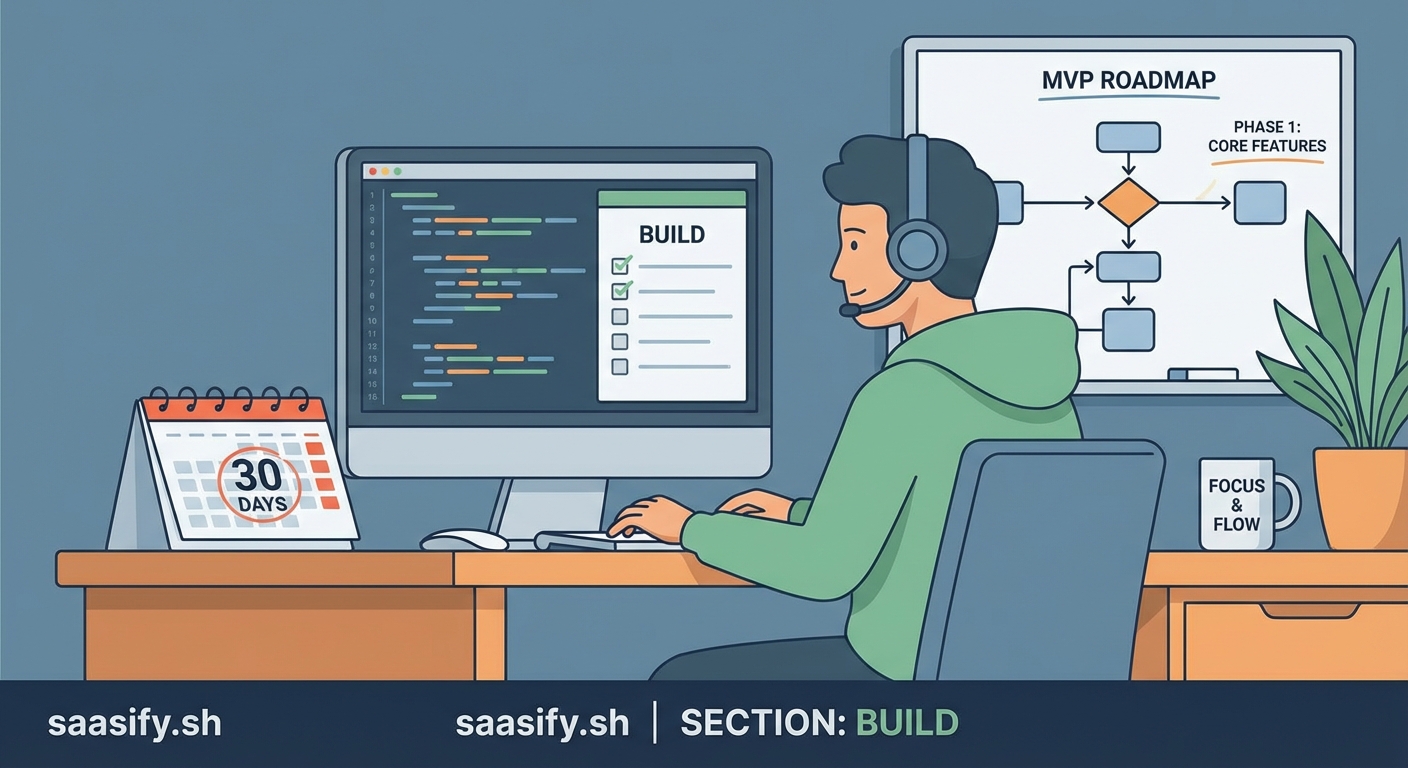
Most MVPs fail because they try to do twelve things poorly instead of one thing well.
Your first week is about brutal clarity. What is the single problem your SaaS solves? Not the vision for year three. Not the feature that would be cool to have. The one pain point that makes someone pull out their credit card.
Write down your core value proposition in one sentence. If you can’t explain it to your neighbor in ten seconds, you don’t understand it well enough yet.
Here’s what week one actually looks like:
- Spend day one writing down every feature you think you need, then cross out 80% of them.
- Use days two and three to talk to five potential customers about their actual problem, not your solution.
- Day four is for mapping out your absolute minimum feature set.
- Days five through seven are for setting up your tools and picking your tech stack.
The tech stack decision matters less than you think. Pick tools you can actually use without a three-week learning curve.
Choosing Your Building Method
You have three realistic paths as a non-technical founder.
No-code platforms let you build without writing code. Tools like Bubble, Webflow with Airtable, or Softr give you visual builders. The tradeoff is less flexibility and sometimes clunky user experiences. But you can build and ship in days, not months.
Low-code platforms require some technical knowledge but handle the complex stuff. Retool, Xano, or Supabase with a frontend framework give you more control. You’ll need to learn some basics, but you’re not building everything from scratch.
Hiring a developer makes sense if you have budget and a crystal-clear spec. The danger is spending $10,000 before you know if anyone wants what you’re building. Save this option for after you’ve validated with a scrappier version.
For a true 30-day timeline, no-code or low-code is your friend. You can always rebuild with custom code once you have paying customers and proof your idea works.
Week Two: Build the Core Loop
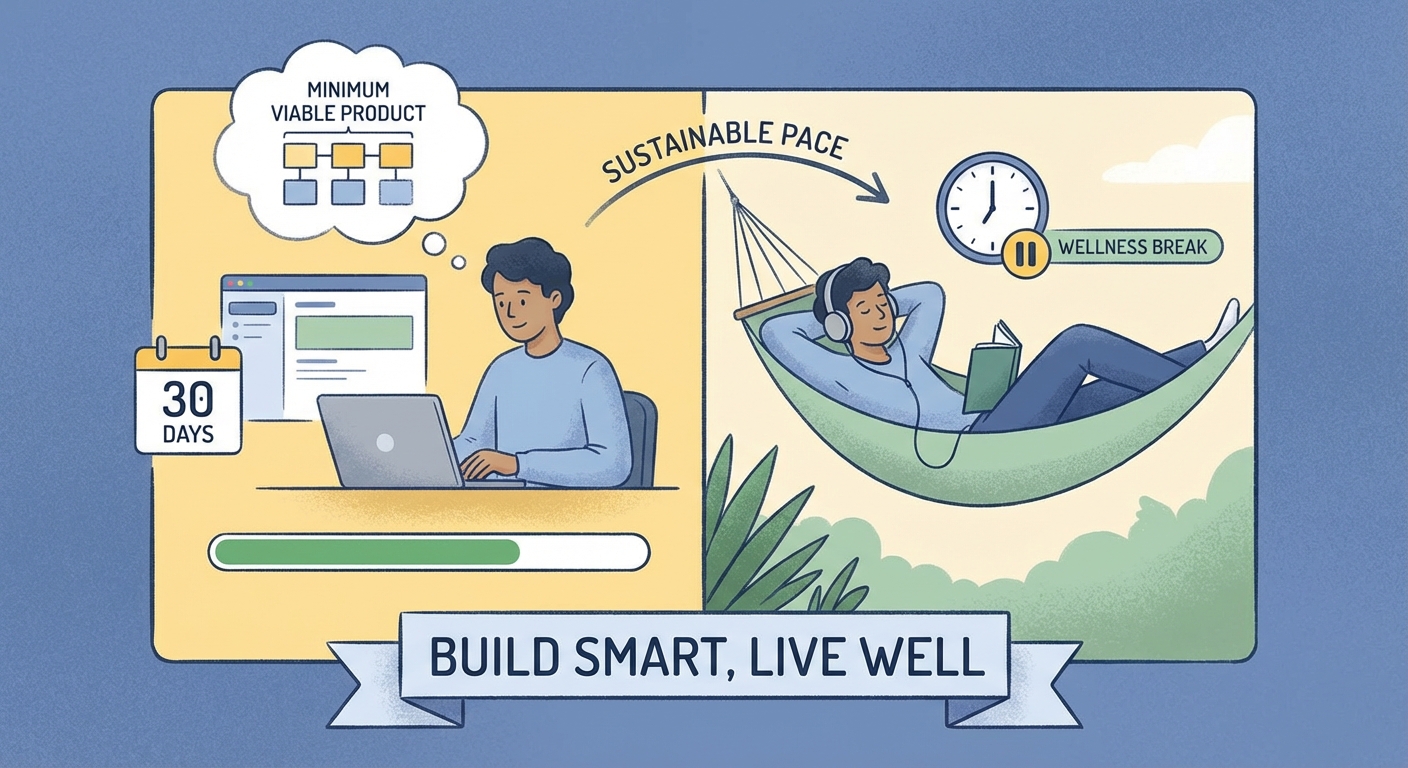
Week two is where your idea becomes something you can click.
Focus on the core user loop. What does someone do when they first land on your product? What action creates value for them? What makes them want to come back?
For a project management tool, the loop might be: create a task, assign it, mark it complete. That’s it. No gantt charts. No time tracking. No team analytics dashboard.
For an email tool, the loop is: write email, pick recipients, send, see if they opened it. You can add templates and scheduling later.
Build this loop first. Make it work end to end. A user should be able to complete the core action and see a result.
Here’s a simple framework:
- Input: How does data get into your system?
- Processing: What does your tool do with that data?
- Output: What value does the user see?
Test each piece as you build it. Don’t wait until day fourteen to see if your database connection works.
The Mistakes That Kill MVPs
| Mistake | Why It Happens | How to Avoid It |
|---|---|---|
| Building features nobody asked for | You assume you know what users want | Talk to five potential customers before writing code |
| Perfect design before validation | Design is more fun than validation | Use a template and customize after you have users |
| Complex onboarding flows | You want to collect data for future features | Get users to value in under two minutes |
| Building for scale you don’t have | Fear of technical debt | Build for ten users first, not ten thousand |
| Waiting to ship until it’s polished | Perfectionism and fear of judgment | Set a hard launch date and stick to it |
The biggest killer is building in isolation. If you’re not showing your half-built product to real humans by day ten, you’re already off track.
Week Three: Get Real Users Testing
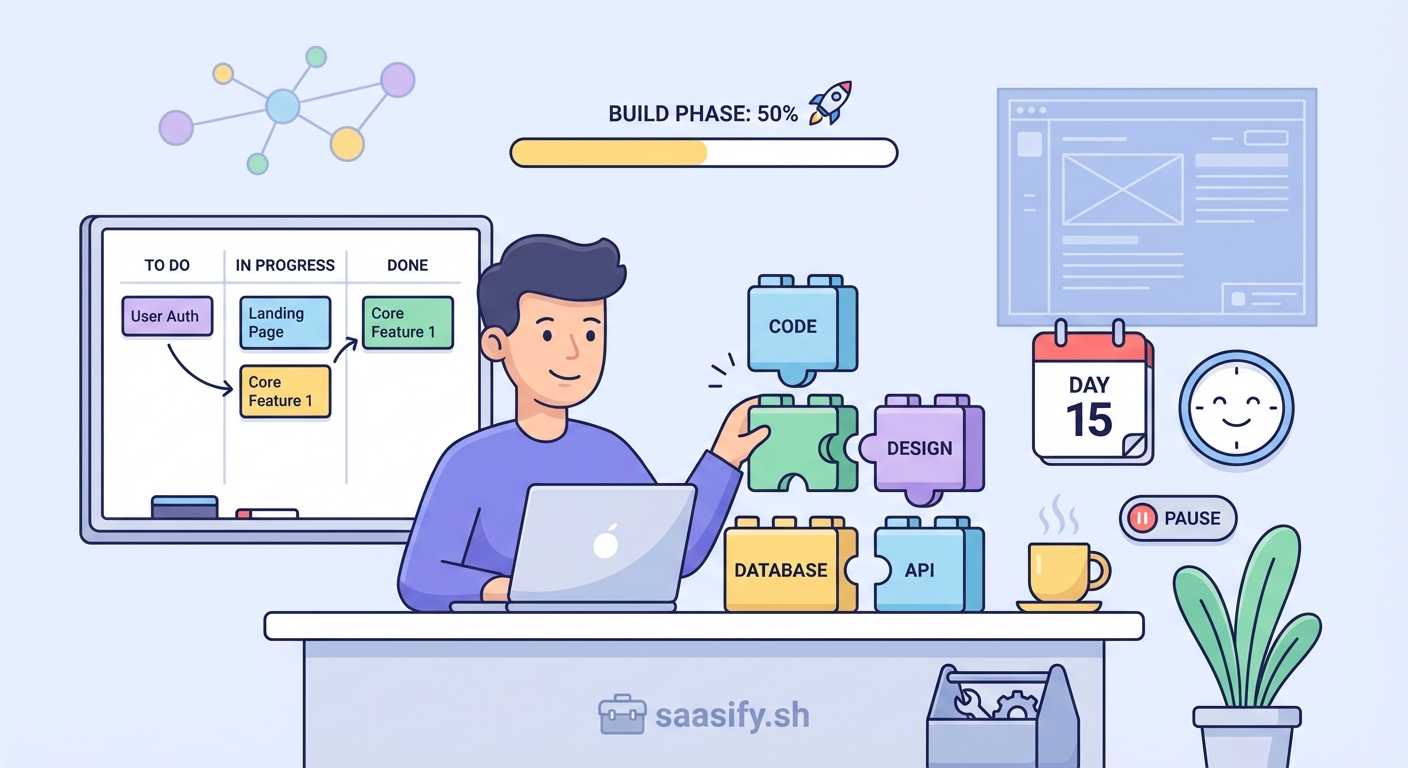
Week three is when theory meets reality.
You need at least ten people using your MVP. Not friends who will lie to make you feel better. Real potential customers who have the problem you’re solving.
Find them in communities where they already hang out. Reddit, Facebook groups, Slack communities, Twitter, LinkedIn. Don’t spam. Offer genuine value and mention you built something that might help.
Your pitch should be honest: “I built a basic version of a tool that helps with X problem. It’s rough around the edges, but I’m looking for feedback from people who deal with this regularly. Would you be willing to try it for a week?”
Some will say yes. Most will ignore you. That’s normal.
Watch how they use it. Set up a 20-minute call and have them share their screen. Don’t explain how it works. See where they get confused. Notice what they ignore completely.
“The best feedback comes from watching someone struggle with your product in silence. Every time you want to jump in and explain, bite your tongue. Their confusion is data.”
Take notes on every session. Look for patterns. If seven out of ten people can’t figure out how to do the main thing, your interface needs work.
Week Four: Refine and Prepare to Launch
Your final week is about polish and confidence.
Fix the top three problems that showed up in user testing. Not every piece of feedback matters equally. Focus on the issues that blocked people from getting value.
Add the minimum viable payment system. Stripe is the standard for a reason. You don’t need complex pricing tiers yet. One price, one plan. You can add complexity after you have revenue.
Write your launch post. Explain what problem you solve, who it’s for, and why you built it. Be human. People connect with stories, not feature lists.
Prepare for three launch channels:
- Your personal network (email, social media)
- One relevant online community
- Product Hunt or a similar platform
Don’t launch everywhere at once. Pick one channel, see what happens, learn, then try the next.
Set up basic analytics. You need to know how many people visit, how many sign up, and how many complete your core action. Google Analytics works. Plausible or Fausible are simpler alternatives.
The Technical Essentials You Actually Need
Your MVP needs five technical components. Nothing more.
Authentication lets users create accounts and log in. Most no-code platforms include this. If you’re building custom, use Auth0 or Supabase Auth instead of building it yourself.
Database stores your user data. Airtable works for early MVPs. PostgreSQL through Supabase or Railway is better if you know basic SQL.
Frontend is what users see and click. A no-code builder handles this. If you’re coding, Next.js or a simple HTML/CSS/JavaScript setup works fine.
Backend logic processes actions. This is where no-code platforms shine. They handle the connection between frontend and database without you writing API endpoints.
Hosting puts your product on the internet. Vercel and Netlify are free for small projects. No-code platforms include hosting.
Don’t overthink infrastructure. You can move to better tools once you’re making $1,000 a month.
Staying Sane During the Build
Thirty days is intense. Burnout is real.
Set a daily time limit. Four focused hours beats eight distracted ones. When your time is up, stop. Your brain needs rest to solve problems.
Build in public if it motivates you. Tweet your progress. Post updates in founder communities. The accountability helps some people. It stresses others out. Know which type you are.
Take at least one full day off per week. Your MVP will still be there on Monday. Your mental health might not be if you grind for 30 straight days.
Expect to feel like an imposter around day twelve. Everyone does. The gap between your vision and your half-built product feels massive. Push through. It gets better in week three when real people start using it.
What Happens After Day 30
Your MVP on day 30 will feel incomplete because it is.
That’s the point. An MVP proves your core idea works. It’s not the finished product. It’s the foundation you build on.
Launch it anyway. Get it in front of people. Charge money if you can. Free users don’t give you the same quality of feedback as paying customers.
Some people will love it. Most will be indifferent. A few will hate it. All of that is useful data.
Spend the next 30 days talking to users and making targeted improvements. Don’t add new features yet. Make the core experience better.
Revenue in month two is possible but not guaranteed. Getting to $100 in monthly recurring revenue is a huge milestone. It proves someone values what you built enough to pay for it.
Your 30 Day Blueprint Starts Now
You don’t need to be technical to build a SaaS MVP in 30 days. You need focus, a willingness to ship something imperfect, and the discipline to cut features ruthlessly.
Start with one problem and one solution. Pick tools you can actually use. Get real humans testing by week three. Launch on day 30 even if it feels too early.
The founders who succeed aren’t the ones with the best first version. They’re the ones who ship, learn, and iterate. Your 30-day MVP is just the beginning of that cycle.
Block off the next month on your calendar. Tell people you’re building something. Set a launch date and make it public. Then start building your one thing.